AirNav Indonesia and Boeing signed a Sept 15 deal to lift Bali airport from 33 to 40 flights an hour via simulation-led sequencing. A year-long study starts now.
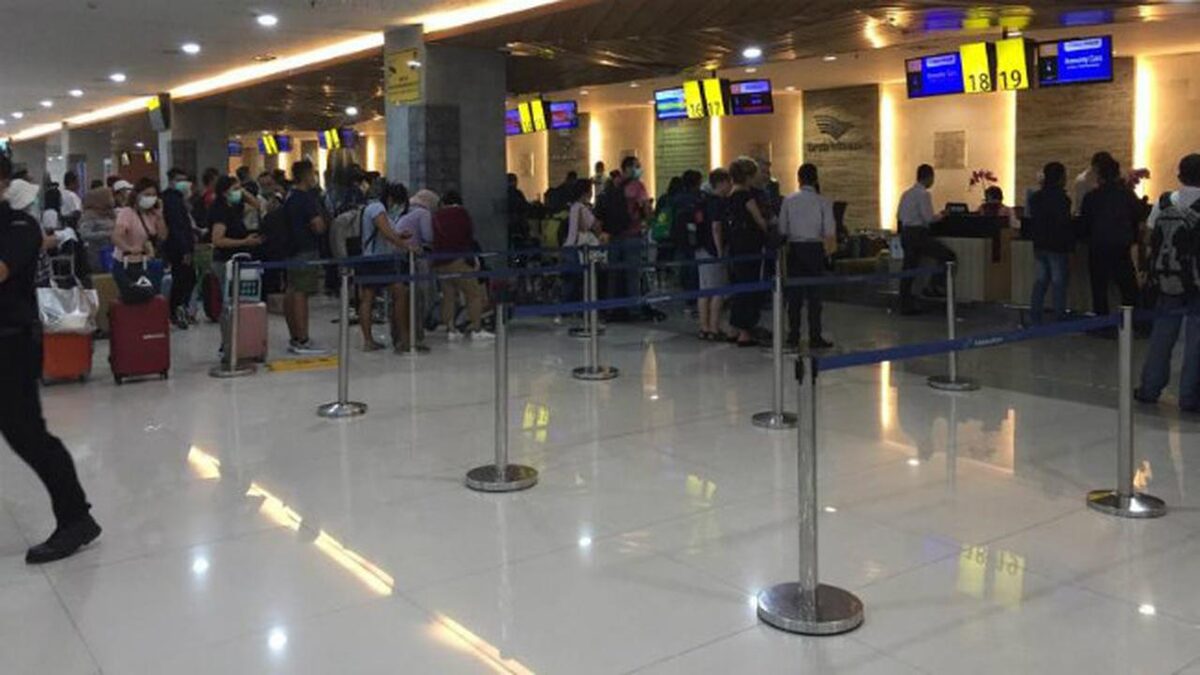
Cover image: crowded check-in queues inside Bali Ngurah Rai Airport terminal — photo by Angkasa Pura I, Public domain, via Wikimedia Commons.
Bali's I Gusti Ngurah Rai International Airport is set to handle 40 flights an hour, up from around 30 today, under a cooperation deal signed by AirNav Indonesia and Boeing on September 15, 2026. The letter of intent, inked at the Sheraton Hotel near Jakarta's Soekarno-Hatta Airport, kicks off a year-long study into sequencing aircraft more tightly through one of Asia's most congested single-runway gateways.
AirNav chief executive Capt. Avirianto Suratno said the airport currently manages 33 movements an hour, adding that improved procedures could lift that "to 34, [even] 40 movements per hour". For an island that received millions of visitors this year, and where Bali trips from India keep growing, the extra headroom translates directly into fewer delays at peak hours.
Why does Bali airport need more capacity?
Ngurah Rai handles heavy wide-body and narrow-body traffic on infrastructure that has never caught up. Avirianto noted the airport "lacks parallel taxiways despite handling heavy flight traffic", creating "potential overlaps where departing and arriving aircraft share the same space", including during pushback. Wide-body jets need different handling time from narrow-bodies, so sequencing at morning and evening peaks is the binding constraint.
Travellers feel it as holding patterns, late departures and missed connections. Anyone planning a Bali trip around the year-end holidays, when loads peak, should still allow generous connection buffers: the capacity gains arrive through procedure changes over the coming year, not overnight.
What will AirNav and Boeing actually do?
The LoI builds on a 2023 memorandum covering airspace management, technical training and strategic traffic planning. Operations director Setio Anggoro said the joint study runs about a year: first mapping baseline operations, then developing alternative procedural scenarios for both ground movement and airspace.
The method is simulation before disruption. AirNav contributes live-condition visualisation tools while Boeing supplies traffic modelling, so "new scenarios can be digitally simulated without disrupting live flight operations", in Setio's words. Candidate scenarios get scored against the baseline on capacity, time savings, fuel burn and CO2 reduction. Boeing Indonesia managing director Indra Duivenvoorde framed it as pairing Boeing's aircraft-performance and traffic-management expertise with AirNav's operational experience.
| Bali capacity plan | Detail |
|---|---|
| Airport | I Gusti Ngurah Rai International, Bali |
| Current throughput | About 33 movements an hour |
| Target | Up to 40 movements an hour |
| Deal | Letter of intent, signed Sept 15, 2026 |
| Study length | About one year |
| Measured on | Capacity, time, fuel savings, CO2 reduction |
Will this cut flight delays to Bali?
That is the explicit goal, alongside safety and ground efficiency gains. Squeezing seven more movements an hour from the same runway would absorb roughly 20 percent more traffic at peaks, which is where delay cascades start. Airlines scheduling extra seasonal Bali frequencies get more reliable slots, and passengers get fewer tarmac waits.
The caveat is physical. Procedures can only stretch a single runway without parallel taxiways so far, and the airport's ultimate ceiling stays concrete-bound. The study's CO2 and fuel metrics matter here too: tighter sequencing burns less fuel in holds, a small but real emissions win.
Could other Indonesian airports follow?
AirNav says yes if Bali works. Setio noted that "most airports across Indonesia still operate with a single runway or lack parallel taxiways", so a proven simulation-led playbook could roll out nationally. Watch hubs straining under growth, from Jakarta to Surabaya and Makassar, as candidates.
Frequently asked questions
How many flights an hour can Bali airport handle?
Bali's Ngurah Rai airport currently manages about 33 aircraft movements an hour. A new AirNav Indonesia and Boeing study aims to raise that to 40 an hour through better sequencing of departures and arrivals.
When will Bali airport delays improve?
The joint AirNav-Boeing study runs about a year from September 2026, so procedural improvements phase in gradually. Travellers flying in the 2026 year-end peak should still allow generous connection times.
Why is Bali airport so congested?
Heavy wide-body and narrow-body traffic shares a single runway system with no parallel taxiways, forcing departing and arriving aircraft to share the same space. Peak-hour sequencing is the main bottleneck the new study targets.
Will the Bali model expand to other airports?
AirNav says the simulation-led approach could be replicated elsewhere in Indonesia, where most airports still run single runways or lack parallel taxiways, if the Bali study delivers.