NTSB: all 5 killed in the Sept 6 Miami Prime Air 767 crash were in two vehicles the jet struck. Van and SUV details, injuries, crew status and what investigators do next.
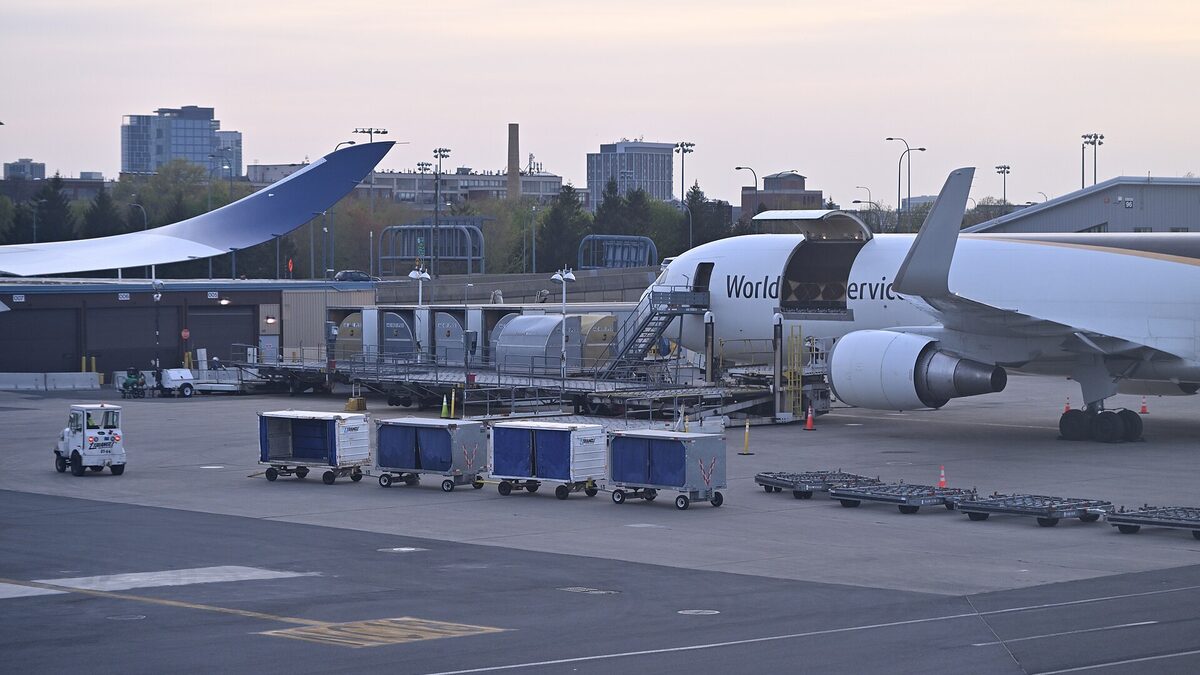
Cover image: a Boeing 767 cargo freighter being unloaded on the ramp at dawn — photo by 4300streetcar, CC BY 4.0, via Wikimedia Commons.
All five people killed in Sunday's Amazon Prime Air crash at Miami International Airport were on the ground, not aboard the aircraft. NTSB chair Jennifer Homendy confirmed Monday that the Boeing 767 struck two vehicles as it overran the runway: a cleaning-company van inside the airport perimeter and a Toyota SUV travelling on a public road outside. The crash, which we first reported on September 7, killed five, injured five more, and left what Homendy called utter devastation across the run-off area.
The update reframes the accident. The two people aboard the freighter, a pilot and co-pilot, survived the overrun and fire; every fatality was a motorist or airport worker in the 767's path. Investigators from the NTSB, the FAA and Miami authorities are now reconstructing why the jet could not stop, with the aircraft coming to rest about 1,300 feet beyond the runway after catching fire.
What did the NTSB reveal on Monday?
Homendy said the 767 hit a Ford Econoline van owned by Professional Ocean Service Corporation, a cleaning contractor for airlines at Miami, and a Toyota compact SUV. Seven people were in the van; she did not say how many were in the SUV. The van was within the airport boundary while the SUV was outside it on Northwest 67th Avenue, which tells investigators the aircraft crossed the perimeter with destructive energy remaining.
Homendy also confirmed for the first time that two crew, a pilot and co-pilot, were aboard the freighter. She declined to discuss their condition. Fire crews extinguished the burning engines and helped the pilots out through the front cockpit windows, while one person had to be extricated from a vehicle crushed beneath the aircraft. Hundreds of Miami-Dade first responders attended the scene on Sunday afternoon.
How bad was the crash site?
Homendy's language was unusually blunt. She described utter devastation: debris strewn across the ground, swaths of airport fencing ripped loose, and the van torn apart by the impact. Three of the five injured were in critical condition as of Sunday, according to Miami officials.
The aircraft overran around 2pm local time on Sunday, caught fire, and stopped roughly 1,300 feet past the runway threshold, sending thick dark smoke across the airport's north side. That distance matters to investigators because it bounds the energy the jet carried off the paved surface, a key input to the braking, thrust-reverser and runway-condition analysis now under way. For readers, the wider safety context around evacuation and survivability is covered in our account of IndiGo's Goa–Delhi emergency landing, where preparation made the difference.
| Confirmed fact (Sept 8 briefing) | Detail |
|---|---|
| Fatalities | 5, all occupants of two struck vehicles; none aboard the aircraft |
| Vehicles hit | Ford Econoline van (airport cleaning contractor, inside perimeter) and Toyota SUV (public road outside) |
| Injured | 5, three critical as of Sunday per Miami officials |
| Crew | Pilot and co-pilot aboard; condition undisclosed; exited via cockpit windows |
| Aircraft rest position | About 1,300 feet beyond the runway, after fire on overrun |
What happens in the investigation now?
The NTSB leads with FAA and local participation, working through flight recorders, ATC audio, weather and runway-friction data, and the 767's maintenance and loading records. Early factual updates typically arrive within weeks; a probable-cause finding takes a year or more. Two threads will dominate: why the aircraft overran, and how perimeter-road exposure is assessed when heavy jets depart toward public roads. The operator, 21 Air flying for Amazon's Prime Air network, faces parallel scrutiny of its procedures, a commercial story with echoes across the air-cargo market's difficult 2026.
Frequently asked questions
Did anyone aboard the 767 die?
No. The NTSB confirmed all five fatalities were occupants of the two vehicles the aircraft struck. The pilot and co-pilot survived and were helped from the cockpit by fire crews.
What vehicles were hit in the Miami crash?
A Ford Econoline van owned by airport cleaning contractor Professional Ocean Service Corporation, carrying seven people, and a Toyota compact SUV on Northwest 67th Avenue outside the airport. Five people across the two vehicles were killed and five injured.
Is Miami airport operating normally?
The crash disrupted operations on Sunday with cancellations and delays. Check live airport status before travelling; the disabled-aircraft recovery and investigation activity affected the surrounding runways and roads in the days after.
When will the cause be known?
The NTSB typically releases preliminary factual information within weeks of a major accident, covering recorders, weather and runway data. A final probable-cause determination, complete with findings and safety recommendations, generally takes 12 to 24 months from the event.