ATR is assessing a final assembly line in India after Fly91's record 40-aircraft order, but says it needs 200-300 combined Indian orders first. Order facts, delivery timeline and what it means.
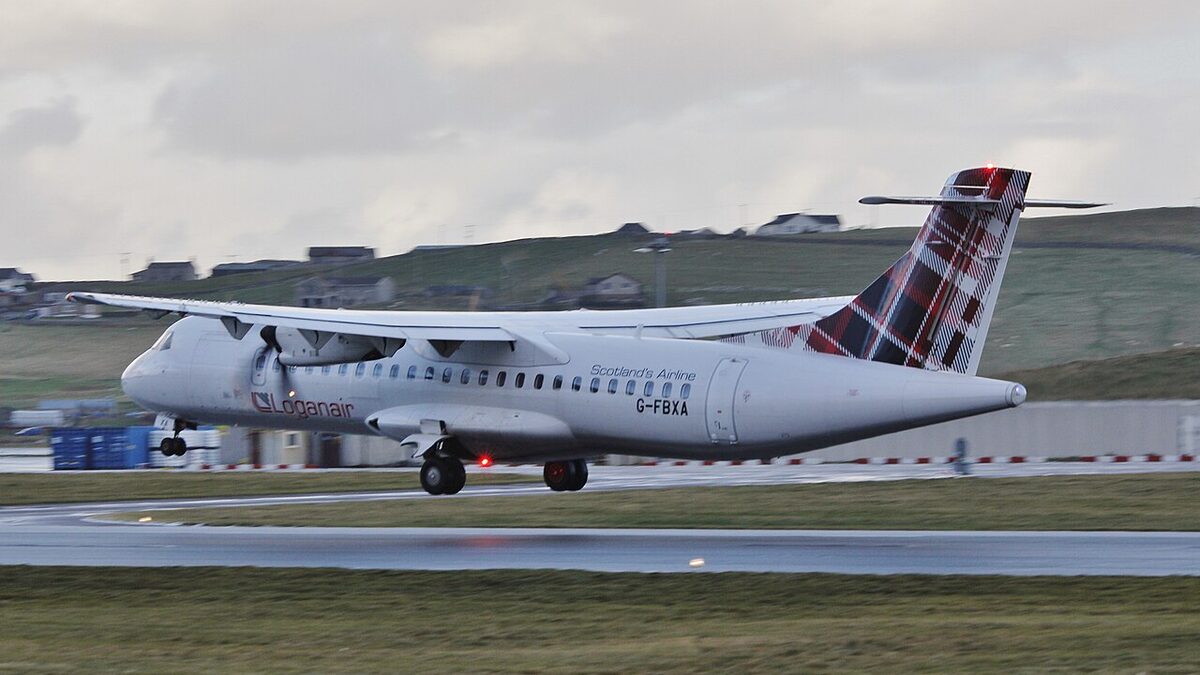
Cover image: an ATR 72 turboprop airliner landing — photo by Ronnie Robertson, CC BY-SA 2.0, via Wikimedia Commons.
ATR is openly studying a final assembly line in India after Fly91's record order for 40 ATR 72-600 turboprops worth about $1 billion. The Franco-Italian manufacturer has said a local plant is not assured imminently: with worldwide output running at 30 to 60 aircraft a year, India would need a combined order book of 200 to 300 aircraft to justify the investment. The Fly91 deal gives that ambition its first commercial base, but ATR will need sustained large orders from other Indian carriers before metal is cut.
What the Fly91 order actually contains
Goa-based Fly91, which started flying in March 2024, has made a firm commitment for 40 ATR 72-600s, with deliveries scheduled from the second half of 2027 through 2032. ATR describes it as its largest confirmed order in nearly a decade and the biggest ever placed by a regional operator. The deal lifts ATR's firm intake for 2026 to 54 aircraft, already above the 50 net orders logged across all of 2025.
Fly91 currently operates 6 ATR 72-600s on more than 280 weekly flights to 13 destinations, including Bengaluru, Goa, Hyderabad, Kochi, Pune, Tirupati, Vijayawada, Rajahmundry and Agatti. About 35 percent of those flights run with support under the UDAN regional-connectivity scheme, and the government is preparing a UDAN 2.0 round. Before the factory-fresh batch arrives, the airline plans to add 6 to 8 leased ATRs from the open market to reach 12 to 14 aircraft by late next year, working toward roughly 60 aircraft over five years. Funding for the order is not yet finalised: upfront payments come from internal cash while the carrier talks to lessors and financiers, and Reuters has reported it raised $26.3 million and is seeking a further $26.3 million. Management expects cash break-even by the end of this fiscal year.
Read our earlier coverage of the Fly91 order for 40 ATR aircraft for the full background.
Why India needs 200 to 300 orders for a plant
An assembly line is a volume game. ATR delivered just 32 aircraft last year against a backlog above 160, held back by supply-chain shortages it says are now down to about a third of early-2025 levels, and it is targeting 20 percent delivery growth this year. Committing bricks, tooling and trained labour in India only pays if the local pipeline stays full for years, hence the 200 to 300 unit threshold against today's output of 30 to 60 aircraft a year.
The arithmetic in India's favour is traffic structure. The country has more than 160 operating airports, yet larger narrowbodies routinely serve only about 70 of them. ATR's analysis puts only 3 percent of India's 4.6 billion yearly inter-city trips in the air, with over 90 percent of trips under 400 nautical miles, and counts 420 potential new routes suited to turboprops. Its forecast sees 210 new turboprops needed in India by 2044. With 70 ATRs already flying in the country, the Fly91 order alone lifts the national fleet by more than half.
What an India line would change
A local final assembly facility would shorten delivery lines for Indian carriers, deepen the domestic supplier base and align with New Delhi's push for aerospace manufacturing. Civil Aviation Minister Kinjarapu Ram Mohan Naidu has called regional connectivity "a fundamental pillar of India's aviation growth story." Fly91 founder Manoj Chacko said the order cements the airline's long-term strategy after starting out dependent on leased aircraft from the secondary market.
The broader context is a stretched supply chain: manufacturers cannot deliver narrowbodies fast enough, which is why regional lift matters now. See our reporting on the aviation supply-chain crunch and how SpiceJet is wet-leasing 20 aircraft for winter to cover its own capacity gap.
| Fly91 order fact | Figure |
|---|---|
| Aircraft | 40 ATR 72-600 (firm) |
| Value | About $1 billion |
| Deliveries | H2 2027 to 2032 |
| Current fleet | 6 ATR 72-600s, 280+ weekly flights |
| Fleet target | 12-14 by late 2027, ~60 in five years |
| UDAN share | ~35% of weekly flights |
| India assembly threshold | 200-300 combined orders needed |
Frequently asked questions
Will ATR build an assembly line in India?
It is studying the idea but has made no commitment. ATR says a plant needs a combined Indian order book of 200 to 300 aircraft against current global output of 30 to 60 a year, so the 40-aircraft Fly91 order is a start, not a trigger.
When will Fly91 receive the new ATRs?
Deliveries run from the second half of 2027 through 2032. Before that, Fly91 plans to add 6 to 8 leased ATR 72s from the open market to reach 12 to 14 aircraft by late next year.
Why are turboprops important for Indian regional routes?
Only about 70 of India's 160-plus operating airports see regular narrowbody service, and over 90 percent of inter-city trips are under 400 nautical miles. Turboprops serve thin regional sectors economically, many with UDAN scheme support.
How big is ATR's presence in India today?
About 70 ATR aircraft fly in India. The Fly91 order for 40 more would expand that fleet by over half, and ATR forecasts India will need 210 new turboprops by 2044.