YouGov BrandIndex data ranks India's hotel brands by generation: Taj first in every cohort, ITC second, global chains skew Millennial, legacy names skew Gen X. All the scores.
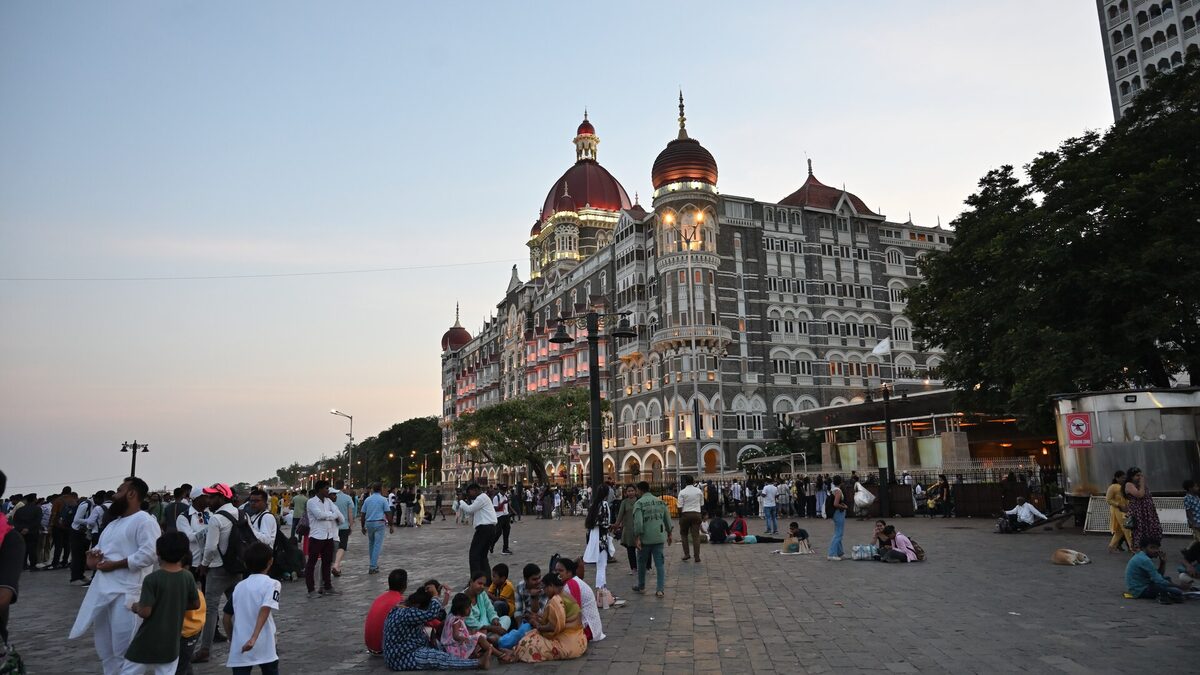
Cover image: the Taj Mahal Palace hotel in Mumbai glowing at dusk with crowds on the plaza — photo by Wander-earth, CC BY-SA 4.0, via Wikimedia Commons.
Taj is the one hotel brand every Indian generation agrees on. New YouGov BrandIndex data released in August 2026 ranks India's hotel brands by generation, and Taj Hotels and Palaces finishes first among Gen Z, Millennials, Gen X and Baby Boomers alike, with an overall Consideration score of 23.9%. Beneath that consensus sits a sharp split: Millennials favour global chains such as Marriott, Hyatt and Hilton, while Gen X leans into legacy Indian names such as ITC, Oberoi and Leela. Gen Z, meanwhile, is the toughest audience for almost every brand measured.
The metric is Consideration: the share of adults likely to book a hotel in the coming year who say they would consider each brand. The research covers urban Indian adults surveyed between July 1, 2025 and June 30, 2026, with more than 9,090 respondents. For travellers, the numbers double as a booking signal: the brands your generation trusts, and where the deals may sit with the cohorts hotels struggle to win.
How far ahead is Taj, really?
Taj's overall 23.9% puts nearly four points between it and second-placed ITC Hotels at 20.0%. Its generational spread is remarkably flat: 19.0% with Gen Z, 25.1% with Millennials, a peak of 27.8% with Gen X and 23.4% with Baby Boomers and older. No rival leads any single cohort, which makes Taj the default shortlist brand for multi-generational Indian family trips, the segment that fills resorts from Udaipur to Coorg.
ITC Hotels runs second overall and its appeal climbs steeply with age, from 14.9% among Gen Z to 20.4% with Millennials, 24.8% with Gen X and 21.5% with older travellers. It leads Taj nowhere but loses to it everywhere by small margins, the profile of a brand one generation away from the top. For context on how these names stack up globally, see our ranking of the world's most valuable hotel brands, where Hilton holds the global crown.
Why do Millennials love the global chains?
The international brands live or die on Millennial approval. Marriott scores 17.9% overall but jumps to 22.5% with Millennials against 13.0% with Gen Z. Hyatt follows the same curve: 16.3% overall, 20.0% with Millennials, 11.3% with Gen Z. Hilton shows the widest gap of all, 18.1% with Millennials versus just 8.3% with Gen Z, with Gen X at 13.6% and older travellers at 11.7%.
The pattern suggests loyalty programmes and business-travel exposure kick in during the thirties, exactly when Millennials enter peak earning and peak travelling years. Hilton's response on the value side is visible in moves such as its trimmed best-rate guarantee, a reminder that brand love and rate strategy do not always move together. For Millennial bookers, the takeaway is leverage: you are the cohort chains compete hardest for, so status matches and targeted promotions skew your way.
Which brands skew older?
Gen X is the stronghold of established hospitality names. Oberoi scores 14.7% with Gen X against 12.7% with Millennials and 7.7% with Gen Z. The Leela posts 13.6% with Gen X and 12.8% with Millennials but only 6.5% with Gen Z. Le Meridien, Four Seasons and Vivanta all roughly double their Gen Z scores among Gen X buyers: Four Seasons reaches 10.3% with Gen X versus 5.1% with Gen Z, and Vivanta 10.2% versus 5.1%.
Domestic expansion keeps feeding this funnel from the top: established names keep planting flags in tier-2 cities, as with IHG's Garner hotel in Ahmedabad's Motera district. Older travellers who grew up with these brands encounter them in more places, while Gen Z meets them mostly as premium-priced options competing with hostels, homestays and design-led independents.
| Brand | Overall | Gen Z | Millennials | Gen X |
|---|---|---|---|---|
| Taj Hotels and Palaces | 23.9% | 19.0% | 25.1% | 27.8% |
| ITC Hotels | 20.0% | 14.9% | 20.4% | 24.8% |
| Marriott | 17.9% | 13.0% | 22.5% | 17.5% |
| Hyatt | 16.3% | 11.3% | 20.0% | 16.9% |
| Hilton | ~ | 8.3% | 18.1% | 13.6% |
| Oberoi | ~ | 7.7% | 12.7% | 14.7% |
What should Gen Z bookers take from this?
Gen Z posts the lowest consideration for nearly every leading brand, which reads less as dislike than as price sensitivity plus a wider consideration set. If legacy brands want young Indians, the data says the path runs through entry-level pricing, social-first distribution and properties that do not feel like their parents' hotels. Until then, Gen Z's scepticism is a negotiating position the whole market can see.
One methodology note: the sample of Baby Boomers and older travellers is just 350 respondents against 3,300 Millennials, so treat the oldest cohort's decimals as directional rather than precise.
Frequently asked questions
Which hotel brand do Indians prefer overall?
Taj Hotels and Palaces, with a 23.9% Consideration score across urban Indian adults likely to book a hotel. It ranks first in every generation from Gen Z to Baby Boomers and older, peaking at 27.8% with Gen X.
Do young Indians prefer international hotel chains?
Millennials do: Marriott, Hyatt and Hilton all score far higher with Millennials than with Gen Z. Gen Z is actually the toughest audience for nearly every leading brand, domestic or international.
What is a YouGov Consideration score?
It is the percentage of category buyers, here adults likely to book a hotel within a year, who say they would consider purchasing from or using a particular brand. It measures purchase intent, not satisfaction or awareness.
How large was the survey?
More than 9,090 urban Indian adults likely to book hotels, surveyed from July 1, 2025 to June 30, 2026: over 2,790 Gen Z, 3,300 Millennials, 2,540 Gen X and 350 Baby Boomers and older.