Average cost of a river cruise in Europe: about $300-450 per person per day. Tier-by-tier fares, cheapest months, and the extras that inflate the final bill.
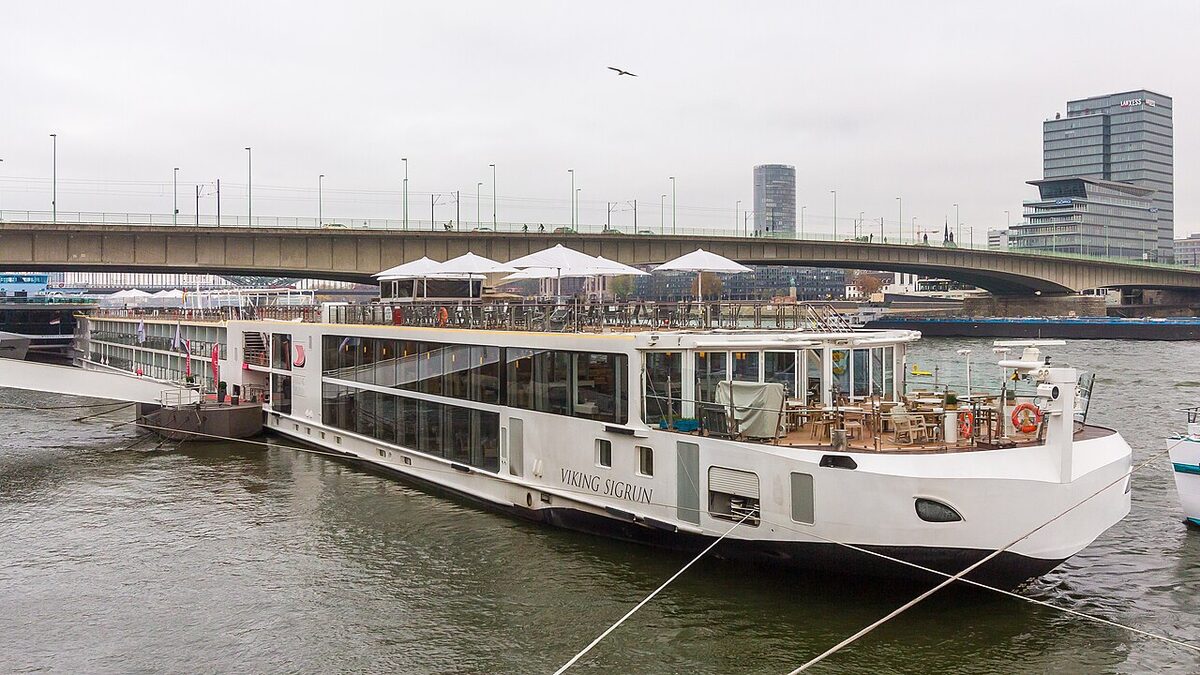
Cover image: the Viking Sigrun river cruise ship moored on the Rhine in Cologne — photo by Raimond Spekking, CC BY-SA 4.0, via Wikimedia Commons.
The average cost of a river cruise in Europe is about $300 to $450 per person per day, which puts a standard 8-day Rhine or Danube sailing at roughly $2,500 to $3,800 per person in a lead cabin. Value lines start near $1,300 for a week, mainstream lines cluster between $2,500 and $4,500, and luxury all-inclusive sailings pass $6,000. River cruising costs more per day than ocean cruising because ships carry 150 to 200 guests instead of thousands, and the fare bundles daily excursions, Wi-Fi and often wine and beer with meals. Prices swing hardest with month and cabin grade, not with itinerary.
How much does a European river cruise cost by cruise line tier?
Three tiers cover nearly the whole market. Value lines (CroisiEurope, Riviera Travel, Emerald Cruises) sell 8-day Rhine and Danube sailings from about $1,300 to $2,000 per person, with simpler ships, fewer inclusions and more optional extras. Mainstream lines (Viking, AmaWaterways, Avalon Waterways) price the same rivers at $2,500 to $4,500 per person, adding a daily included excursion in every port, regional wines with lunch and dinner, and larger staterooms. Luxury all-inclusive lines (Uniworld, Scenic, Tauck) start around $4,500 and pass $8,000 per person on suites, folding in gratuities, premium drinks, all excursions and butler service.
Promotions move these bands constantly. Viking's current end-of-season sale advertises up to 35 percent off with free airfare on select departures and a $25 deposit across river itineraries, a reminder never to pay brochure rate without checking the deals page first. Wave season (January to March) is the year's other big discount window. Our ocean cruise cost guide shows the per-day contrast: big-ship ocean sailings often halve the river per-diem, at the price of crowds and ports an hour from town.
| Tier and lines | 8-day fare per person | Usually included | Usually extra |
|---|---|---|---|
| Value: CroisiEurope, Riviera, Emerald | $1,300-2,000 | Full board, basic excursions | Drinks, most excursions, gratuities |
| Mainstream: Viking, AmaWaterways, Avalon | $2,500-4,500 | Daily excursion, wine and beer, Wi-Fi | Gratuities, premium drinks, spa |
| Luxury: Uniworld, Scenic, Tauck | $4,500-8,000+ | Almost everything, incl. gratuities | Spa, shop purchases, pre-hotels |
When is the cheapest month for a European river cruise?
March, April and November price lowest, often 25 to 40 percent under September. Early spring brings high water and blossom-season scenery with a real chance of chilly, grey days; November trades Christmas-market sparkle for the year's lowest fares. May and June are the value sweet spot: long days, stable water levels, prices below the autumn peak. September and October cost most on the Rhine and Danube, driven by wine-harvest sailings and Oktoberfest demand, while December's Christmas-market cruises command a 15 to 25 percent premium over November on identical ships.
Water levels are the other seasonal gamble. Hot, dry Augusts have repeatedly forced itinerary changes on the Rhine and Danube, with passengers bussed around shallow stretches, as covered in our Rhine and Danube low-water guide. Shoulder months dodge most of that risk. Travellers flying from India should also price the total: a Schengen visa, return flights to Amsterdam, Budapest or Basel, and a pre-cruise hotel night add roughly $700 to $1,200 per person, with visa mechanics in our Schengen visa guide.
What extras push the final bill up?
Four add-ons decide whether the fare is the price. Gratuities run about 15 to 20 euros per person per day on mainstream lines (nearly $250 per couple per week) unless the line includes them. Drinks packages outside included wine and beer cost $300 to $500 per person per week. Optional excursions (concerts, castle dinners, e-bike upgrades) add $50 to $150 each, and a couple taking three a week spends $500 plus. Single supplements of 50 to 100 percent punish solo travellers, though wave-season deals sometimes waive them on select departures.
Cabin grade matters less than on ocean ships: there are no inside cabins, and even lead staterooms have picture windows. Paying up buys French balconies, upper decks and square footage, not daylight. Port charges are generally folded into the advertised fare on the major lines, so the headline price is closer to the final one than in ocean cruising.
Frequently asked questions
Are European river cruises worth the money?
For travellers who value unpacking once, docking in town centres, and excursions included in the fare, yes: the per-day premium over ocean cruises buys time and convenience. Budget travellers who skip excursions and drink little get less of that value and should look hard at value-tier lines.
How much does a Viking river cruise in Europe cost?
Viking's 8-day Rhine and Danube sailings typically list from about $2,500 to $3,000 per person in lead cabins in shoulder months, rising past $4,000 in September and on upper-deck French-balcony grades. Promotions such as free airfare and 25 to 35 percent seasonal discounts cut deeply into those figures.
What is the cheapest European river to cruise?
The Danube and Rhine, by volume: the most ships and departures mean the most discounted cabins. The Douro, Seine and Rhone run fewer ships and price 10 to 20 percent higher for equivalent length.
Do river cruise prices include flights?
Usually not. Some promotions bundle free or discounted airfare on select departures, but the base fare is cruise-only. Budget flights, transfers, hotels and insurance separately.