Thailand's cabinet has approved scrapping its generous 60-day visa-exempt stay, returning most visitors to 30 days visa-free amid concerns over misuse of the longer window.
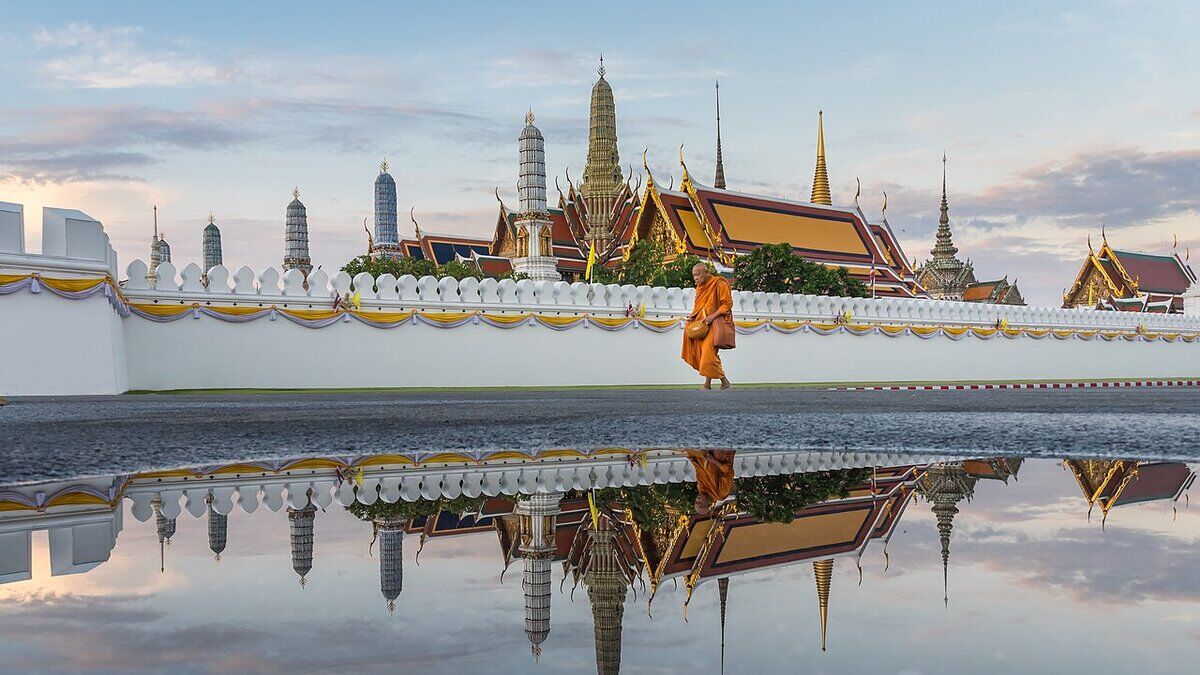
Cover image: the Grand Palace and Temple of the Emerald Buddha in Bangkok — photo by Nawit science, CC BY-SA 4.0, via Wikimedia Commons.
Thailand is reining in one of the most generous visa-free policies in Asia. The country's cabinet has approved a major change to its visa-exemption scheme, discontinuing the 60-day visa-exempt stay introduced in 2024 and returning most travellers to a 30-day visa-free entry.
The decision, approved on 19 May 2026, affects visitors from dozens of countries that had enjoyed the extended window — including the United States, United Kingdom, EU member states, Canada, Australia and Japan. For the typical tourist on a two- or three-week holiday, the practical impact is limited; for long-stay visitors, digital nomads and frequent border-hoppers, it is significant.
Why Thailand is tightening up
Thai authorities have been candid about the rationale. The generous 60-day window, officials said, was being misused — used by some visitors for unauthorised employment and other non-tourism activities that the visa-exempt scheme was never designed to permit. Pulling the stay back to 30 days is intended to close that gap while keeping Thailand open and accessible to genuine tourists.
It is a balancing act familiar to many popular destinations: maximise the economic benefit of easy access for short-stay leisure visitors, while limiting the unintended use of liberal entry rules for long-term residence or work.
What changes for travellers
The headline numbers tell the story:
- Before: up to 60 days visa-free for eligible nationalities.
- After: a return to 30 days visa-free for most travellers.
- Longer stays: those wanting more time will need to use appropriate visa channels or extensions rather than relying on the visa-exempt entry.
For most holidaymakers, 30 days is more than enough. The travellers most affected are those who had restructured longer stays — remote workers, retirees on extended visits and others — around the 60-day allowance.
Part of a wider regional trend
Thailand's move fits a broader 2026 pattern of destinations recalibrating entry rules. Around the world, governments are tightening or repricing access — from new visa fees to digital arrival systems — as they balance tourism revenue against concerns over overstays, unauthorised work and border control. The era of ever-loosening entry rules is giving way to more selective, conditional access.
The bottom line
Thailand remains one of the world's most welcoming destinations, and 30 days visa-free is still a generous allowance by global standards. But the rollback of the 60-day scheme is a clear signal: even tourism-dependent economies are drawing firmer lines around how their open-door policies can be used. Long-stay visitors should plan their 2026 trips accordingly.
Update: the 30-day rule took effect on 15 September 2026
The rollback is now law. Four Ministry of Interior announcements were published in the Royal Gazette on 31 August 2026, and the 30-day visa-free stay applies to anyone entering Thailand on or after 15 September 2026. The Cabinet approved the final framework on 14 July 2026. The 60-day window ran from 15 July 2024 to 14 September 2026, and Thai immigration applies the rule in force on your date of entry.
| Rule | Until 14 September | From 15 September |
|---|---|---|
| Visa-free stay | 60 days | 30 days |
| Eligible nationalities | 93 countries and territories | 60 countries and territories |
| Purpose covered | Tourism, short-term work, business contact | Tourism only |
| Land-border entries | No annual cap | 2 per calendar year |
- Who keeps the exemption: 60 countries and territories, including the United States, the United Kingdom, Canada, Australia and India. Two nationalities get a 15-day exemption and three remain on Visa on Arrival.
- Business visitors now need a visa: meetings, site visits and short-term work are no longer covered. Apply through Thailand's e-Visa system before travel.
- Land borders: visa-exempt travellers are limited to two land entries per calendar year (nationals of Malaysia, Brunei, Indonesia and Singapore are exempt from the cap). Air arrivals have no cap.
- Staying longer: apply for a 60-day Tourist Visa before travel, or apply inside Thailand for a discretionary 30-day extension (1,900 baht).
Indian passport holders
India was left out of the 54-country draft approved in May but was added to the final 60-country list in July after Indian arrivals fell sharply. From 15 September, Indians get 30 days visa-free per visit, for tourism only, and can apply for the same extension as other nationalities. Business travellers need a visa. Loops such as Thailand–Cambodia–Laos–Thailand are affected by the two-entry land cap, so plan to leave by air. Carry proof of onward travel within 30 days and a passport valid for at least six months.
Sources
- Insubuy — Thailand visa update 2026
- Thailand Insider Guide — visa & entry requirements 2026
- VisasNews — Thailand to officially cut visa-free stay to 30 days on September 15, 2026 (31 Aug 2026)
- Khaosod English — Thailand reduces visa-free stay from 60 to 30 days (29 Aug 2026)
- TTG Asia — Thailand cuts visa-free stay to 30 days for 60 countries