Power banks must travel in your carry-on, never checked luggage, and stay under 100Wh. But a wave of 2025-26 airline rules now bans actually using them in flight — here is the airline-by-airline picture.
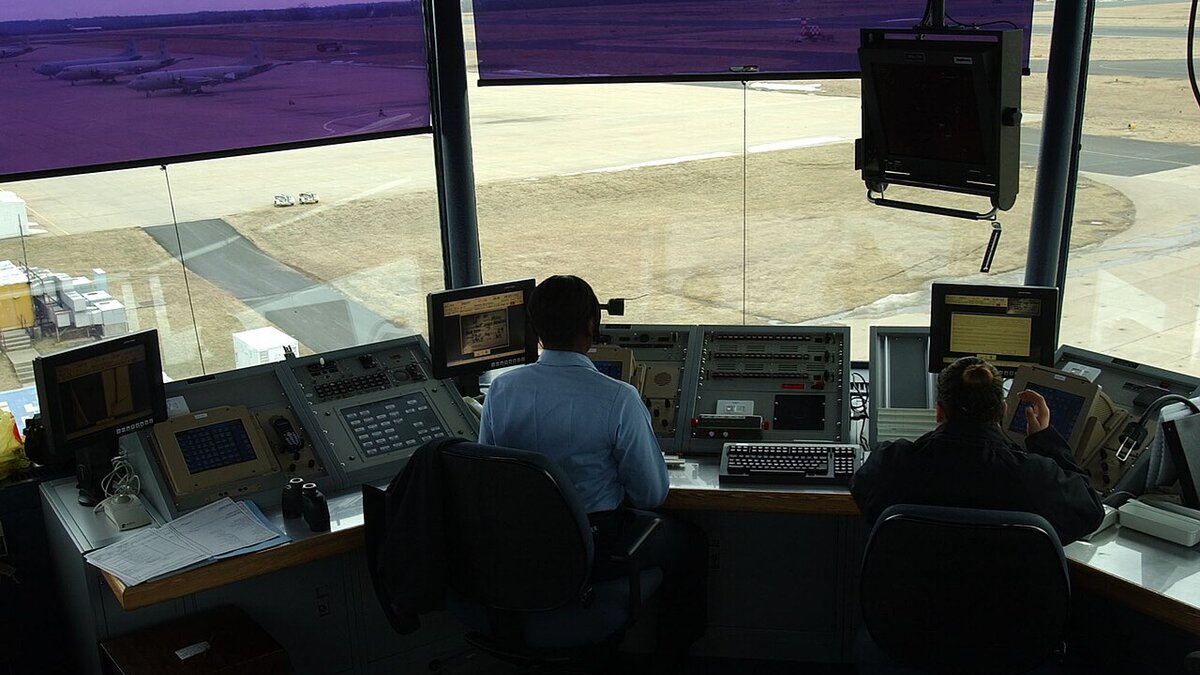
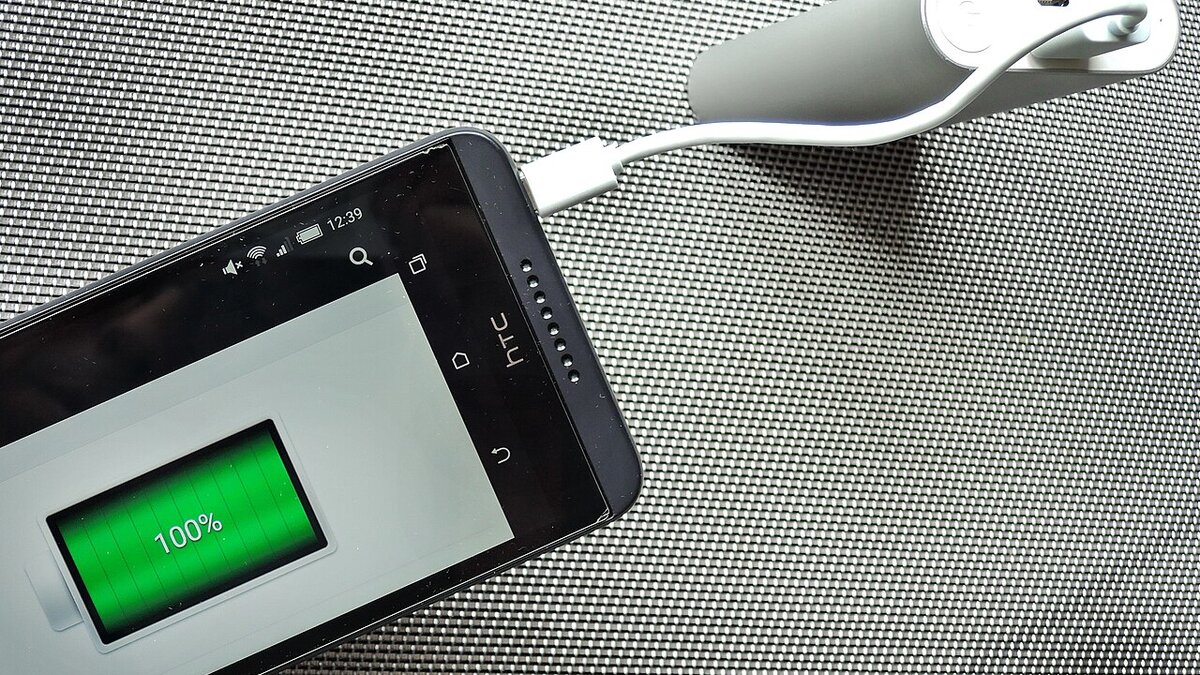
Cover image: A smartphone being charged from a portable power bank via a USB cable. — photo by Mk2010, CC BY-SA 4.0, via Wikimedia Commons.
Power bank rules on a plane start from the same baseline on virtually every airline in the world: power banks are carry-on only — they are banned from checked luggage — and anything up to 100 watt-hours (Wh), roughly a 27,000mAh unit, flies freely. Batteries of 100–160Wh need advance airline approval, and anything over 160Wh is forbidden on passenger aircraft. Those thresholds come from ICAO's dangerous-goods framework and are enforced by the FAA, TSA, EASA and IATA-member airlines alike.
What has changed is what you can do with a power bank once you're in the air. Since the Air Busan cabin fire of January 2025, a growing list of carriers — Singapore Airlines, Scoot, Cathay Pacific, Thai Airways, EVA Air, Emirates, Korean Air, Qantas and, since 15 January 2026, the entire Lufthansa Group — ban using or recharging power banks in flight, and most also ban stowing them in overhead bins. Here's the full rundown.
What is the 100Wh rule for power banks?
Aviation regulators grade spare lithium-ion batteries by energy capacity, measured in watt-hours:
- Up to 100Wh — allowed in cabin baggage without approval. Most airlines cap quantity somewhere between 2 and 20 spares; several Asian and Gulf carriers now allow only 1–2.
- 100–160Wh — allowed only with prior airline approval, usually limited to two per passenger. Request it when booking or via the airline's service desk, typically 24–48 hours before departure.
- Over 160Wh — prohibited on passenger flights entirely; these must move as declared cargo.
A power bank counts as a spare battery even when it's built into a suitcase — smart luggage must have the battery removed and carried in the cabin, a point covered in our airline baggage allowance guide.
How many mAh can a power bank be on a plane?
Most power banks are labelled in milliamp-hours (mAh), so convert: Wh = mAh × 3.7V ÷ 1,000. That makes the 100Wh ceiling roughly 27,000mAh. In practice:
- 10,000mAh ≈ 37Wh — fine everywhere.
- 20,000mAh ≈ 74Wh — fine everywhere.
- 26,800mAh ≈ 99Wh — the classic "maximum legal" travel bank.
- 30,000mAh+ ≈ 111Wh+ — needs airline approval; may be refused at the gate.
If the capacity label is worn off or missing, security officers can — and increasingly do — confiscate the unit, because unrated batteries cannot be verified.
Can you put a power bank in checked luggage?
No. Never. Spare lithium batteries and power banks are banned from checked baggage worldwide, because a battery entering thermal runaway in the hold cannot be reached by the crew. If a checked bag is flagged at screening, it will be pulled and searched, and your flight can leave without it. If you're caught at the security checkpoint with an over-limit bank, the standard outcome is simple: surrender it or don't board — airports do not store confiscated batteries for collection. The same carry-on-only logic applies to e-cigarettes and vapes; see our companion guide to what else you can and can't bring through security.
Which airlines ban using power banks in flight?
Rules verified as of August 2026. "No use" means the bank may not charge your devices onboard and may not itself be recharged from seat USB or sockets.
| Airline | Allowance | In-flight use rule | Since |
|---|---|---|---|
| Emirates | 1 bank, under 100Wh | No use or charging; no overhead bin — seat pocket or under seat | Oct 2025 |
| Singapore Airlines / Scoot | Carry-on, ≤100Wh (160Wh with approval) | No charging devices from banks; no charging banks via seat USB | Apr 2025 |
| Cathay Pacific / HK Express | Carry-on only | No use or recharging; no overhead bin | Apr 2025 |
| Korean Air / Asiana | Carry-on; keep on person or seat pocket | No overhead-bin stowage (Mar 2025); in-flight use banned (Jan 2026) | Mar 2025 / Jan 2026 |
| EVA Air | Carry-on only | Use prohibited during flight | Mar 2025 |
| Thai Airways | Carry-on only | No use or charging onboard | Mar 2025 |
| Southwest | Standard FAA limits | Use allowed, but bank must stay in plain sight — not in a bag or bin | May 2025 |
| Qantas | Max 2, up to 160Wh (approval over 100Wh) | No use or charging; seat pocket or under seat | Dec 2025 |
| Lufthansa Group (LH, Swiss, Austrian…) | Max 2, up to 100Wh | No use or charging; no overhead bin | Jan 2026 |
| China domestic (CAAC rule) | CCC-certified banks only; uncertified or recalled units banned | Checked at security on all Chinese domestic flights | Jun 2025 |
Most other European and North American carriers — including Ryanair, easyJet and the US majors apart from Southwest — still applied only the baseline carry-on rules at the time of writing, but Lufthansa's January 2026 move shows the restriction wave is reaching Europe. Check your airline's dangerous-goods page shortly before flying. With seat-USB charging off-limits on many Asian carriers, paid onboard connectivity and power planning matter more; see how Starlink-era inflight Wi-Fi is changing the cabin.
Why are airlines cracking down now?
Lithium-battery incidents on aircraft keep climbing. The FAA verified 93 incidents of batteries smoking, igniting or overheating in 2025, up from 89 in 2024 — itself a 16% rise on the previous year — and since 2006 roughly 39% of incidents have involved portable chargers. The tipping point was the Air Busan fire of 28 January 2025, in which a power bank in an overhead bin destroyed an Airbus A321 on the ground in South Korea; all 176 occupants evacuated. Keeping banks visible and reachable lets crews smother a thermal-runaway event before it spreads — the entire logic behind the seat-pocket rules.
How to pack a power bank for a flight
- Carry it in the cabin, ideally in an outer pocket so you can pull it out at screening.
- Protect the terminals — keep it in its retail case or a pouch, or tape exposed terminals; regulators require spare batteries to be protected from short circuit.
- Check the Wh label before buying; favour clearly marked units under 100Wh.
- Flying within China? The bank must carry a visible CCC mark or it will be confiscated at security.
- Charge devices before boarding, and consider an eSIM to cut roaming battery drain from network searching.
Frequently asked questions
Can I take a 20,000mAh power bank on a plane?
Yes. A 20,000mAh bank is about 74Wh — comfortably under the 100Wh threshold — so it is allowed in carry-on baggage on essentially all airlines without approval. It must never go in checked luggage, and on many Asian, Gulf and Lufthansa Group carriers you may not use it during the flight.
How many power banks can I bring on a flight?
It varies by airline. The regulatory baseline allows multiple spares under 100Wh for personal use (often up to 20), but Emirates now permits just one, and Lufthansa Group and Qantas cap it at two. Banks of 100–160Wh are limited to two everywhere and need airline approval.
What happens if I leave a power bank in checked luggage?
Baggage screening flags lithium batteries, and your bag will be pulled and searched — potentially missing the flight. If found at the aircraft, the bank is removed. Repeat or deliberate violations of dangerous-goods rules can attract civil penalties in some jurisdictions, so always move banks to your cabin bag.
Can I use a power bank on a plane in 2026?
On many airlines, no. Singapore Airlines, Scoot, Cathay Pacific, Thai Airways, EVA Air, Emirates, Korean Air, Asiana, Qantas and all Lufthansa Group carriers ban using or recharging power banks in flight. Southwest allows use only if the bank stays in plain sight. Carriage in the cabin remains legal — it's usage that's restricted.
Sources
- FAA PackSafe — Lithium batteries in baggage
- Lufthansa Group — Power banks on board: updated regulations from 15 January 2026
- Cathay Pacific — Power bank usage is now restricted on Cathay Pacific flights
- CNN — Southwest Airlines places new restrictions on portable chargers in carry-on
- AeroTime — South Korea bans power banks in overhead bins on flights
- Lion Technology — FAA: 93 lithium battery air incidents in 2025