Indonesia allocated Rp5.5 billion (~US$312,000) on 5 Sep 2026 for West Kalimantan fire mitigation as 802ha burned and 430ha cleared, with BMKG cloud seeding window 4-8 Sep and Japanese Chinooks over Lake Sentarum.
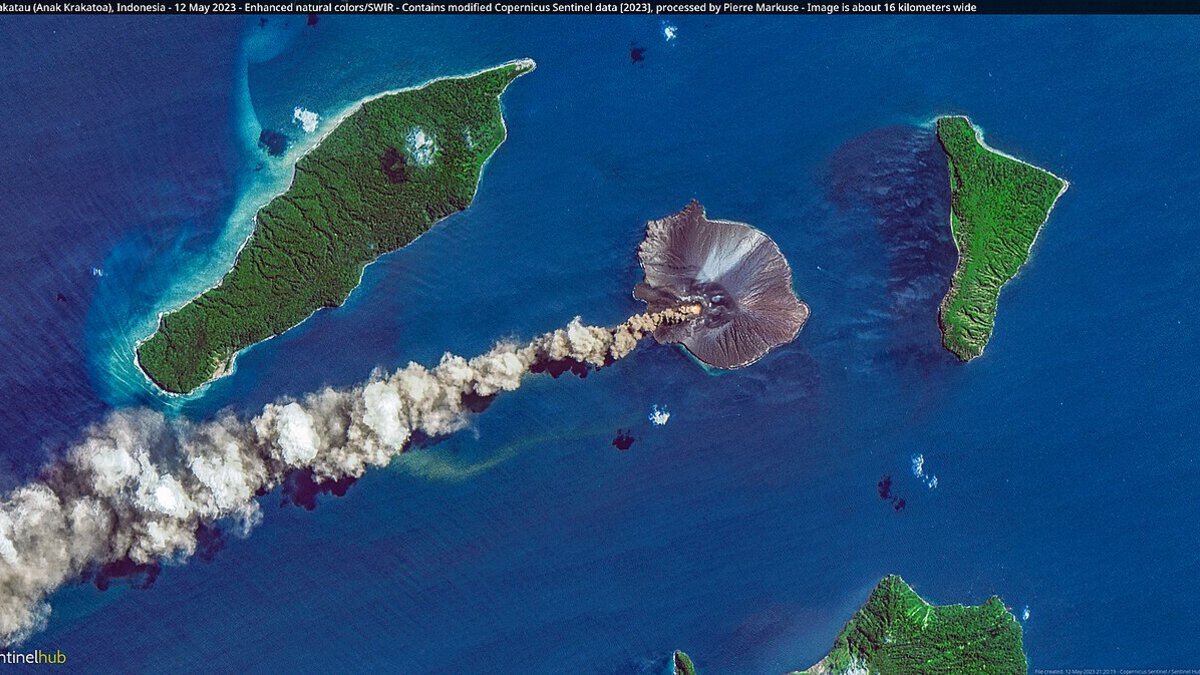
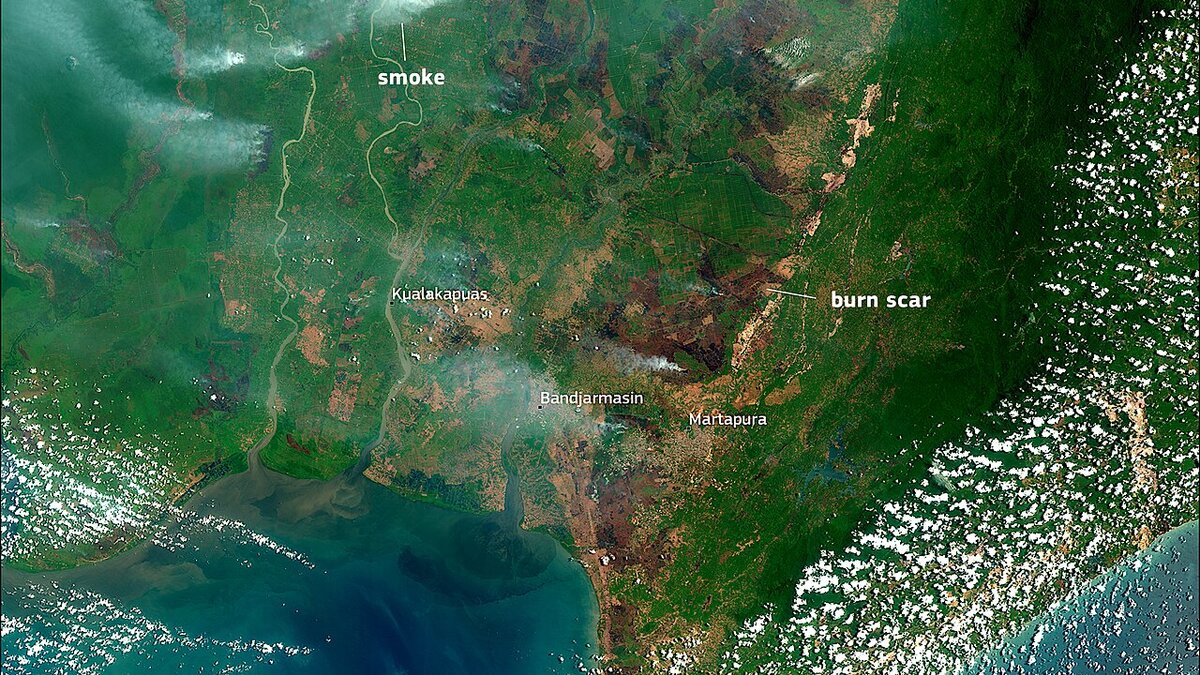
Cover image: Copernicus satellite view of multiple wildfire smoke plumes over Borneo peatlands in West Kalimantan — photo by European Union, Copernicus Sentinel-2 imagery, Attribution, via Wikimedia Commons.
Indonesia has allocated Rp5.5 billion, about US$312,000, to the regional Environment and Forestry Office in Pontianak for West Kalimantan fire mitigation, the Forestry Ministry announced on 5 September 2026, as joint teams battle peatland blazes that have burned 802.17 hectares and continue to push haze toward the Malaysian border at Lake Sentarum. Minister Raja Juli Antoni said the funding backs combined air and land operations plus peat rewetting and enforcement, while seeking more budget from BNPB and parliament for infrastructure.
The ground commitment is already measurable. The Ground Task Force has extinguished 429.90 hectares of the total, working district by district in Ketapang and Kubu Raya. Air support is expanding over places roads cannot reach, including Lake Sentarum at the Sarawak frontier, where three Japanese Self-Defense Force Chinook helicopters are helping with water drops to stop outward spread.
How will the Rp5.5 billion be used?
The ministry described four tracks that the regional office will fund:
- Combined response: coordinated water-bombing and ground attacks guided by daily hotspot maps from the Sipongi system
- Peat rewetting: injection of water to saturate deep layers and put out subsurface embers that reignite after rain
- Enforcement: strict action against individuals and companies linked to illegal burning
- Prevention: community education to end slash-and-burn clearing, paired with patrols down to sub-district level
The amount is an initial allocation from a special forestry fund. Officials said BNPB and the legislature will be asked for additional operational funds to upgrade water infrastructure and equipment. Spending is mapped by staffing needs by district so that hotspots get the right mix of military, police, Manggala Agni fire brigades, regional disaster units and volunteers.
Why ground crews are the core of this fight
Both the minister and BNPB Head Suharyanto stressed that ground personnel are the main line of defence while waiting for weather modification. Peat soils can smoulder metres below the surface, and aerial drops, while valuable over remote blocks, often evaporate before reaching deep heat.
West Kalimantan illustrates the constraint. West Kalimantan hotspots jumped from 273 to 859 and Central Kalimantan from 253 to 623 as of 1 September, according to Sipongi. With 802.17 hectares burned and less than half declared extinguished, the remaining fires sit in deep peat basins around Ketapang and Kubu Raya where injection and trench lines matter more than overhead passes.
The ministry will mobilise cloud seeding in the coming days, targeting any usable clouds even over unburned peat to lift the water table and groundwater moisture. BMKG forecasts usable rain clouds between 4 and 8 September for that work. Patrols and mapping will also guide where to pre-position hose lines and pumps before the next dry spell.
What travellers will notice: Lake Sentarum, Pontianak and Kuching
The headline air focus is Lake Sentarum, the vast inland lake system that straddles the Indonesia-Malaysia border opposite Sarawak. Officials said aerial operations will focus on this critical area to prevent cross-border smoke that has already triggered ASEAN Alert Level 3 on 26 August with daily trajectory maps and pushed haze into Sabah, Sarawak, Singapore, Brunei and Manila.
On the ground, visitors to Pontianak should expect hazy mornings and possible retimings for short flights to Ketapang or Putussibau. Long-haul gateways like Jakarta and Bali are farther from the central burn belt and remain operational with instrument approaches, but early-morning fog plus haze can spill delay into the mid-morning bank. Melalan Airport in East Kalimantan already halted flights this week when visibility fell below 1 kilometre, a reminder that smaller Borneo airports are more exposed.
Across the frontier, Kuching and Sarawak’s border districts are on watch because Lake Sentarum smoke drains north with the monsoon. Travellers there should check Malaysia MyCuaca and Singapore NEA hourly indices rather than single morning readings.
What to do if you are in Pontianak this week
Keep an N95 mask for apron, bus and market walks and prefer hotels with filtered air conditioning. Check your airline app for retimings, especially for early flights out of Supadio Airport, and allow extra road time if driving to Equator Monument or waterfront sites where haze thickens near rivers at dawn.
Do not burn or discard cigarettes in palm fringe areas. Joint patrols are enforcing no-burn rules, and tourists caught near active blocks may be questioned. Stick to marked roads and follow local notices on village access.
Ministry officials framed the new funds as a step to accelerate containment through financial support and stronger integrated operations before October rains. Whether containment holds will depend on how much of the 4-8 September cloud window can be turned into sustained peat moisture.
Frequently asked questions
Where is the Rp5.5 billion going in West Kalimantan?
The funds go to the regional Environment and Forestry Office in Pontianak for combined air and land operations, peat rewetting by injection, and enforcement and prevention. The Forestry Ministry said it will seek more from BNPB and parliament for infrastructure upgrades, with joint staffing mapped down to district and sub-district level.
How effective is water-bombing on peat fires?
Water-bombing helps on surface flames and remote sites only reachable by air, but peat holds heat deep underground. Minister Raja Juli Antoni and BNPB chief Suharyanto said ground crews are the main line of defence while waiting for weather modification. Teams use injection to saturate deep layers and kill subsurface embers that aerial drops cannot fully reach.
Will travel to Pontianak or Kuching be affected by haze?
Haze is most intense near Ketapang, Kubu Raya and the Lake Sentarum border strip with Malaysia’s Sarawak. Pontianak flights may see morning haze delays, and Kuching across the border is on watch. Allow buffer time for connections, carry an N95 for open-air terminals, and follow MyCuaca and BMKG hourly API updates before driving or taking short hops.
When will cloud seeding improve the situation?
BMKG sees usable rain clouds from 4 to 8 September to lift moisture and the water table. Even clouds over unburned peat will be seeded to re-wet ground and support groundwater. The first widespread monsoon rain in western Kalimantan is not expected until early October, so mitigation relies on aircraft and ground injection until then.
Sources
- ANTARA News — Govt allocates Rp5.5 bln for forest fire mitigation in West Kalimantan (5 Sep 2026, 15:49 GMT+700)
- ANTARA News — Govt focuses on ground operations fighting peatland fires (5 Sep 2026, 13:57 GMT+700)
- ANTARA News — Indonesia coordinates with ASEAN allies as regional haze spreads (5 Sep 2026)