Indonesia scored 78.85 percent in ICAO's safety audit, above the 70.6 percent world mean, as Jakarta updates rules for drones and bids for an ICAO Council seat.
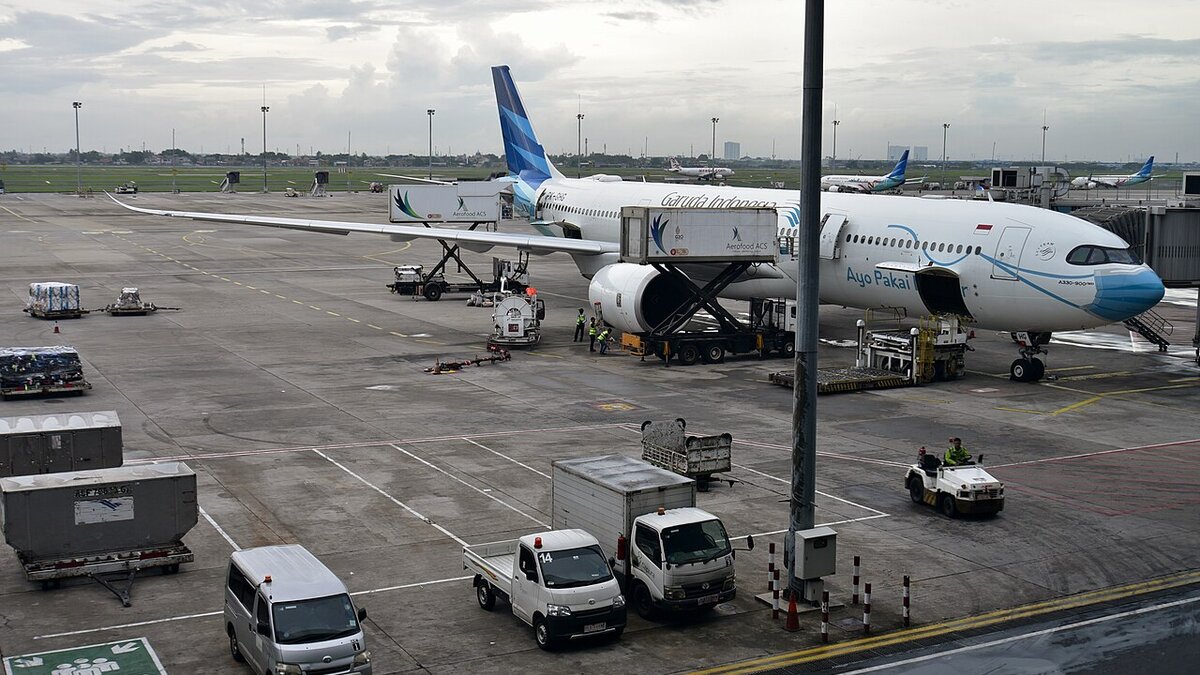
Cover image: Garuda Indonesia aircraft at Jakarta airport during ICAO audit period — photo by Bahnfrend, CC BY-SA 4.0, via Wikimedia Commons.
Indonesia scored 78.85 percent for aviation safety and security oversight in the International Civil Aviation Organization’s audit, above the 70.6 percent global mean, the Transportation Ministry said on 1 September 2026 in Jakarta. Director General of Civil Aviation Lukman F Laisa announced the result of the Universal Safety Oversight Audit Programme and said the ministry is revising national regulations to stay matched with ICAO Annex changes. Indonesia, which last held an ICAO Council seat in 2001, will seek election for four additional seats on 19-20 November 2026 in Montreal.
The result matters for travellers because it measures how effectively the state oversees airlines, airports and air navigation, not just aircraft age. A higher-than-average score signals stronger surveillance and quicker closure of audit findings, which underpins flight safety in one of the world’s fastest-growing markets. It comes as Indonesia steps up enforcement on firms linked to Kalimantan fires and haze is disrupting pioneer flights, while also planning new sea transport to the Seribu Islands — a reminder that safety oversight spans air and sea modes as tourism grows. The repair push at airports hit by other disruptions and the broader debate over fuel surcharge caps on domestic flights also form part of the operating backdrop.
What Indonesia’s 78.85 percent score means
The USOAP audits eight areas: primary aviation legislation, specific operating regulations, state organisation, personnel qualification and training, technical guidance and procedures, certification and approval, surveillance, and resolution of safety concerns. Indonesia’s 78.85 percent effective implementation indicates its oversight system is assessed as more robust than the world average of 70.6 percent reported alongside the result.
ICAO does not rank airlines; it grades the regulator. A higher score generally correlates with more consistent application of international standards at airlines and airports, from flight operations manuals to aerodrome certification and navigation service oversight. For passengers, that can translate into fewer audit-driven restrictions on Indonesian carriers abroad and smoother future fleet and route expansion, because partner states reference ICAO results when validating foreign operator permits.
The ministry noted that international regulations are developing dynamically and that we have to adjust quickly. That line, from Lukman at the Jakarta press meeting, explains why the score is a snapshot that requires continuous work. ICAO Annexes evolve on navigation, aerodromes, environmental protection and, increasingly, remotely piloted aircraft. Keeping domestic rules in lockstep avoids gaps that later surface as audit findings.
How Indonesia is updating its rules
Lukman said the Directorate General of Civil Aviation holds weekly meetings to draft new rules that align with ICAO Annex amendments. The example given was unmanned aircraft evolving beyond recreation toward cargo and passenger use, which demands new provisions for pilot licensing, facility requirements, navigation and operational control. Indonesia is already preparing regulations for cargo and passenger drones in that context.
Other workstreams include airworthiness, flight operations and personnel licensing updates to mirror recent ICAO changes, plus airport standards for increasingly automated systems. The weekly cadence is designed to get drafts to public consultation sooner and to prepare for future USOAP checks, which are rolling rather than one-off. Indonesia’s safety focus also feeds its wider aviation ambitions: neighbouring India is planning 100 new airports in 10 years, and the region’s growth requires regulators to scale surveillance capacity in line with traffic.
Operationally, the score does not mean risk disappears. Kalimantan haze closures, such as the 1-5 September halt at Melalan Airport where visibility fell below one kilometre, sit outside the audit but test how oversight copes with environmental stress. The ministry’s emphasis on dynamic alignment is in part about making sure procedures for smoke, drones and other emerging hazards are codified before they become audit findings.
Indonesia’s ICAO Council bid
Indonesia last served on the ICAO Council in 2001, a body that sets standards and steers the organisation between triennial assemblies. The ministry said Indonesia is renewing its bid for one of four additional seats to be elected on 19-20 November 2026 in Montreal, with a focus on skills and sustainable aviation. The platform links training, workforce development and decarbonisation — themes that resonate with small-island states and fast-growing markets that share similar capacity constraints.
Council membership would give Indonesia a direct hand in shaping Annex revisions and in prioritising technical assistance to states with lower effective implementation. For domestic carriers, it can help keep the national regulatory agenda closely coupled to where ICAO is heading, reducing late adaptation. For travellers, the practical effect is indirect but real: states that stay current on Annexes tend to see fewer compliance-driven disruptions to airline schedules and airspace procedures.
The bid also carries symbolism. Indonesia is the world’s largest archipelagic state by island count and a major tourism source and destination — with Bali hotel occupancy leading the country and foreign arrivals climbing in July — so aviation oversight has outsized economic weight. A seat would formalise that role at the standards table.
What travellers should take from the result
For flyers, the 78.85 percent score is a confidence signal rather than a guarantee. It suggests Indonesia’s regulator is judged as above the global mean in its ability to oversee safety, and that it is actively updating rules for new aircraft types and operating concepts. It does not replace airline-level due diligence on fleet and service, but it lifts the baseline for the entire system.
Expect to hear more on drones in the next year. Rules that let cargo drones serve remote islands and that eventually permit logged passenger drone trials would change logistics for eastern Indonesia and for resort transfers where helipads already exist. Those rules will need ICAO-consistent licensing and airspace integration before regular service, which is why the ministry’s weekly drafting matters now.
For planning, no route or fare impact follows directly from the audit. Airlines still set schedules on demand and aircraft availability — a separate debate seen in the fuel surcharge cap rise to 40 percent debated in Jakarta this month. The audit does, however, reduce the likelihood of abrupt overseas restrictions on Indonesian carriers that can follow poor USOAP outcomes, a risk that has affected other states in past cycles.
| Metric | At ICAO USOAP |
|---|---|
| Indonesia effective implementation | 78.85 percent |
| Global mean cited | 70.6 percent |
| Audit programme | Universal Safety Oversight Audit Programme |
| Announced | 1 September 2026, Jakarta by DG Lukman F Laisa |
| Council election | 19-20 November 2026, Montreal, four additional seats |
Frequently asked questions
What was Indonesia's aviation safety score?
78.85 percent in the ICAO Universal Safety Oversight Audit Programme. That is above the world mean of 70.6 percent cited by the Transportation Ministry on 1 September 2026 in Jakarta.
Who audits and what does USOAP measure?
The International Civil Aviation Organization audits how states oversee aviation safety and security, from legislation and staffing to certification, surveillance and resolution of deficiencies. The score reflects effective implementation across eight audit areas.
What rules is Indonesia changing now?
Director General Lukman F Laisa said the ministry is revising national rules to match evolving ICAO Annexes, with weekly drafting meetings. Work includes unmanned aircraft rules for cargo and passenger drones, covering pilots, facilities, navigation and operations.
Is Indonesia on the ICAO Council?
Not currently. Indonesia last held a Council seat in 2001 and is pursuing election for four additional seats on 19-20 November 2026 in Montreal, framing the bid around skills and sustainable aviation.