Forestry Minister Raja Juli Antoni said three companies are being probed over Jambi wildfires on 2 September, with Sultan Thaha coordination and possible permit revocations. September is the dry-season peak.
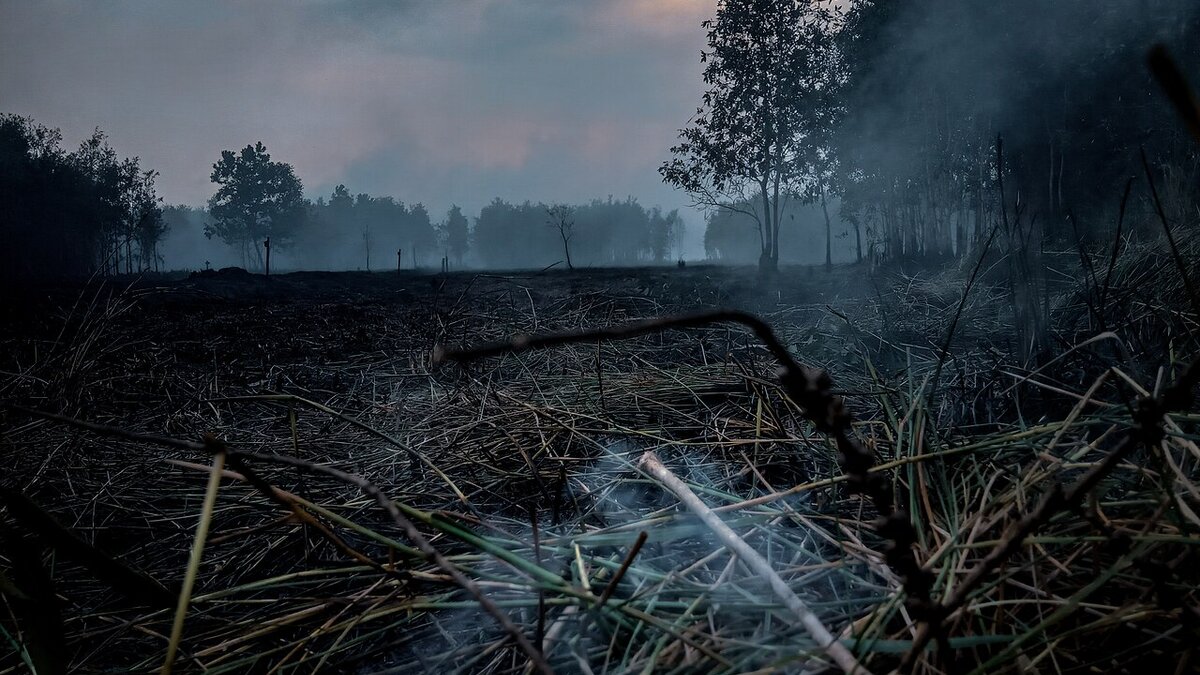
Cover image: smouldering peatland after forest fires in Borneo with lingering smoke over burnt ground — photo by Muhammad Pasya Ramadhan, CC BY-SA 4.0, via Wikimedia Commons. legal action against 21 firms over 11,404 hectares
Indonesia is investigating three companies over alleged violations linked to wildfires in Jambi Province. Forestry Minister Raja Juli Antoni announced the probes on 2 September 2026 after a coordination meeting at Sultan Thaha Airport, saying the government will not tolerate land clearing by burning and that accountable parties face criminal and administrative sanctions, including possible revocation of business permits.
The meeting brought together the National Disaster Mitigation Agency (BNPB) Head Suharyanto, the Jambi Wildfire Task Force and district leaders from Muaro Jambi, East Tanjung Jabung and Batang Hari, the districts most affected this season. September is the expected peak of the dry season, when peatland blazes can spread quickly and send transboundary haze across Sumatra. Officials said hotspot counts in Jambi have eased in recent days, but enforcement and patrols will continue.
What was announced on 2 September?
The ministry confirmed three corporations are under investigation for suspected breaches connected to woodland blazes. Antoni said law enforcers are reviewing evidence before any names are published, noting: “Let us hope that we will be able to announce the three corporations with alleged violations linked to wildfires in Jambi.” The statement signals a formal probe rather than a final determination.
Coordination focused on Sultan Thaha Airport as the logistics hub for Jambi. The task force reviewed fire-source checks, water-bombing readiness and community reporting lines. The minister said measures will limit impacts on public health, the economy and the environment if fires escalate.
Why Jambi matters for tourism and haze
Jambi sits on deep peat that can burn underground for weeks. When fires take hold, smoke drifts to Singapore and Malaysia, disrupts flights and forces park closures. This week’s probe comes as Indonesia steps up its broader response. On 2 September, authorities confirmed 35 foreign aircraft were approved to fight Kalimantan fires as haze disrupted operations, and Penang reported haze dampening heritage tourism with cancellations of walking tours.
Even limited smoke affects travel. Mount Rinjani limited tourism to curb fire risk from 1 September under a Forestry Ministry directive, with patrols and fire-source inspections. Jambi’s districts use the same playbook: patrols, hotspot monitoring and quick initial attack before peat fires deepen.
Which law is at stake and what are the penalties?
Indonesian law prohibits land clearing by burning, with liability under the Environmental Protection and Management Law and plantation regulations. If evidence shows deliberate burning or negligence, companies can face:
- Criminal sanctions: fines and imprisonment for responsible individuals if intent or serious negligence is proven.
- Administrative actions: written warnings, government-ordered remediation, suspension or revocation of business permits and plantation licences.
- Civil liability: mandatory restoration costs for burnt peat and compensation for state losses.
Past cases in Sumatra and Kalimantan have led to permit freezes and court-ordered restoration funds. The ministry said it will announce names once investigators are satisfied the proof meets the legal threshold.
Is the fire situation improving?
BNPB’s latest update said wildfire spots in Jambi continue to decrease, after a surge in late August. Field teams credit more frequent rain showers in parts of Sumatra, expanded patrols and community hotline reports. Nationally, the government has put September on high alert, with additional helicopters and fixed-wing aircraft on standby for water bombing. President Prabowo is closely monitoring the response, officials said, with daily briefings on hotspot maps.
Travellers should still prepare for changeable conditions. Haze can reduce visibility at Sultan Thaha Airport (DJB) and nearby Jambi airfields, leading to delays. If you have a tight connection through Jakarta, allow extra buffer or consider an overnight in the hub city. Check with your airline before heading to the airport on smoky days.
What travellers should do this month
For trips to Jambi, Kerinci or southern Sumatra in September, build flexibility into plans. Monitor the BNPB and Meteorology (BMKG) updates, carry a suitable mask if you are sensitive to smoke, and confirm park or lake access before driving long distances. Operators in Jambi now check fire maps each morning before confirming tours to Berbak or Bukit Duabelas forests.
Frequently asked questions
Which three companies are being investigated?
The ministry has not named them. Officials said three corporations are under probe for alleged violations linked to Jambi wildfires, with names to be announced once evidence is reviewed by law enforcers.
What punishment could they face?
If burning or negligence is proven, penalties range from fines and remediation orders to suspension or revocation of business permits, plus possible criminal charges for responsible individuals.
Will Jambi’s national parks close?
No province-wide closure has been ordered. Access is managed district by district. Patrols have increased and some forest sectors may close temporarily if hotspots rise, as seen at other sites during the dry season.
Is transboundary haze expected?
The government’s stated aim is to prevent it. With September at the peak, transboundary smoke remains a risk if peat fires deepen, which is why patrols and aircraft were pre-positioned across Sumatra and Kalimantan.