

Norse Atlantic Airways says multiple parties have signed confidentiality agreements in a JP Morgan-run sale process, as the low-cost long-haul carrier reports a $70.6 million second-quarter loss and prepares to take back six Boeing 787s from IndiGo.
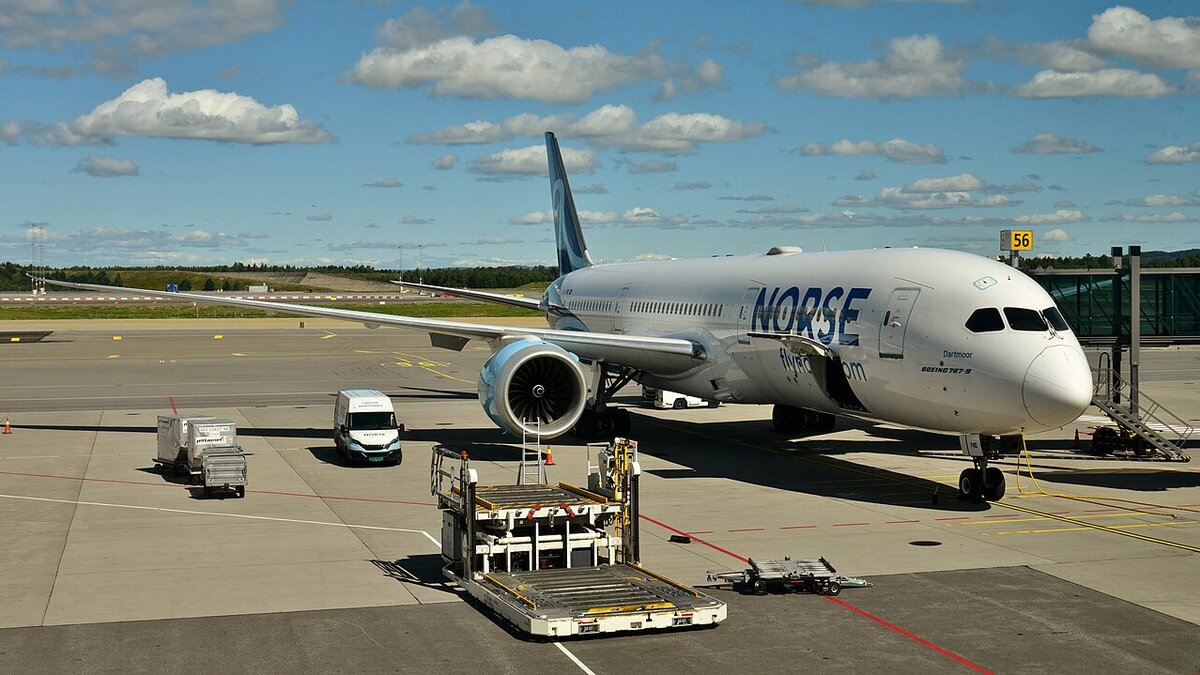
Cover image: a Norse Atlantic Airways Boeing 787-9 Dreamliner parked at the gate — photo by Bahnfrend, CC BY-SA 4.0, via Wikimedia Commons.
Norse Atlantic Airways is fielding "strong interest" from potential buyers and partners, the low-cost long-haul carrier confirmed as it presented second-quarter 2026 results on 20 August. The Oslo-listed airline reported revenue of $132.0 million and a net loss of $70.6 million for the quarter, and said a formal strategic review — run by investment bank J.P. Morgan and contemplating a sale, merger or commercial partnership — has already produced multiple interested parties under confidentiality agreements. The update lands weeks after Indian carrier IndiGo said it would terminate its wet-lease deal with Norse by 31 October, handing back six Boeing 787-9 Dreamliners that Norse must now find new homes for. The airline says it is in talks with several carriers and expects decisions on replacement lease and charter agreements within three to four weeks.
How bad were Norse Atlantic's Q2 2026 results?
The quarter was heavy going, even by the standards of a punishing year for long-haul airlines. Alongside the headline net loss of $70.6 million (a loss of $0.36 per share), Norse posted negative EBITDAR of $8.4 million. Roughly $32.9 million of the net loss was a non-cash accounting charge tied to the early conversion of convertible bonds rather than an operating cash drain.
There were genuine bright spots: unit revenues reached a company record in the quarter. But fuel wiped out the gains. Jet fuel spiked to nearly $250 per barrel in April 2026 as conflict in the Middle East disrupted supply and closed airspace, before prices moderated later in the quarter. Management described the period as one of the industry's financially worst quarters outside the pandemic — a squeeze visible across the sector, as we covered in our round-up of airline Q2 2026 earnings and in Lufthansa's cut to its 2026 profit outlook.
| Norse Atlantic Q2 2026 | Figure |
|---|---|
| Revenue | $132.0 million |
| EBITDAR | −$8.4 million |
| Net loss | −$70.6 million (−$0.36/share) |
| Of which non-cash bond charge | $32.9 million |
Why is Norse Atlantic up for sale?
Norse, founded in 2021, has never recorded a profitable year flying its budget transatlantic model with a fleet of 12 Boeing 787-9s. Its answer was a dual strategy: fly roughly half the fleet on its own network and lease the other half out to other airlines on ACMI (aircraft, crew, maintenance and insurance) terms — steadier income that hedges the brutal seasonality of low-cost long-haul flying, a structural problem we unpack in our guide to how low-cost airlines make money.
The linchpin of that strategy was IndiGo, which took six Norse 787-9s to launch its own long-haul flying. That prop has now been kicked away. IndiGo, citing elevated fuel costs, geopolitical tension and the airspace disruption that has snarled Europe–Asia routings — a theme familiar from our coverage of airspace disruption in the Gulf — will end its wide-body operation to London Heathrow on 25 October and terminate the lease by 31 October. Chief executive Eivind Roald, the former SAS commercial chief who replaced founder Bjørn Tore Larsen in the top job in late 2025, is now steering the strategic review; Larsen remains chairman.
What happens to the six returned 787s?
Norse says it is negotiating with "several airlines" over new lease and charter agreements for the returning Dreamliners and expects to make decisions within three to four weeks. Widebody capacity remains tight across the industry — new-build 787s and A350s are sold out years ahead — which works in Norse's favour: a young 787-9 with crews attached is a scarce asset even when its owner is losing money.
The sale process itself is running in parallel. Norse has confirmed that several potential partners have signed confidentiality agreements to examine its books, though it has not named any party, and there is no certainty the review ends in a transaction.
What does it mean for passengers?
For now, nothing changes on the schedule: Norse continues to sell and operate its own-brand transatlantic and leisure network while the review proceeds, and tickets remain valid. The longer-term question is whether the brand survives a sale or merger intact. Travellers holding bookings far in advance should pay with a credit card where possible for chargeback protection — standard advice for any financially stressed carrier.
Frequently asked questions
Is Norse Atlantic being taken over?
Not yet. The airline has launched a formal strategic review, advised by J.P. Morgan, exploring a possible sale, merger or partnership. It says interest is strong and multiple parties have signed confidentiality agreements, but no deal has been announced.
Is it safe to book flights with Norse Atlantic?
Norse is operating its schedule as normal and tickets remain valid. As with any loss-making airline, booking with a credit card adds a layer of financial protection if things change.
Why did IndiGo return Norse's Boeing 787s?
IndiGo ended the wet-lease deal — effective by 31 October 2026 — citing high fuel costs, geopolitical tensions and airspace closures that made its Europe long-haul flying uneconomic. Six 787-9s go back to Norse, which expects to place them with new operators within weeks.
Sources
- FlightGlobal — Norse Atlantic sees 'strong interest' in possible takeover after disappointing second quarter
- Investing.com — Norse Atlantic Q2 2026 slides: unit revenue hits record as fuel costs bite
- Travel Weekly — Norse Atlantic pushes ahead with formal sale process following IndiGo deal exit
- AeroTime — Norse seeks new home for six Boeing 787s as formal airline sale process begins
- Global Banking & Finance Review — Norse Atlantic considers possible sale or merger amid strong interest

Post a comment