Low-cost carriers earn billions by unbundling the ticket, flying one aircraft type at maximum density and turning jets around in 25 minutes. Here is how the model works, and why it thrives in Europe and Asia but keeps failing in the US.
Cover image: low-cost carrier jet boarding by stairs — photo by Hugo LUC, CC BY-SA 4.0, via Wikimedia Commons.
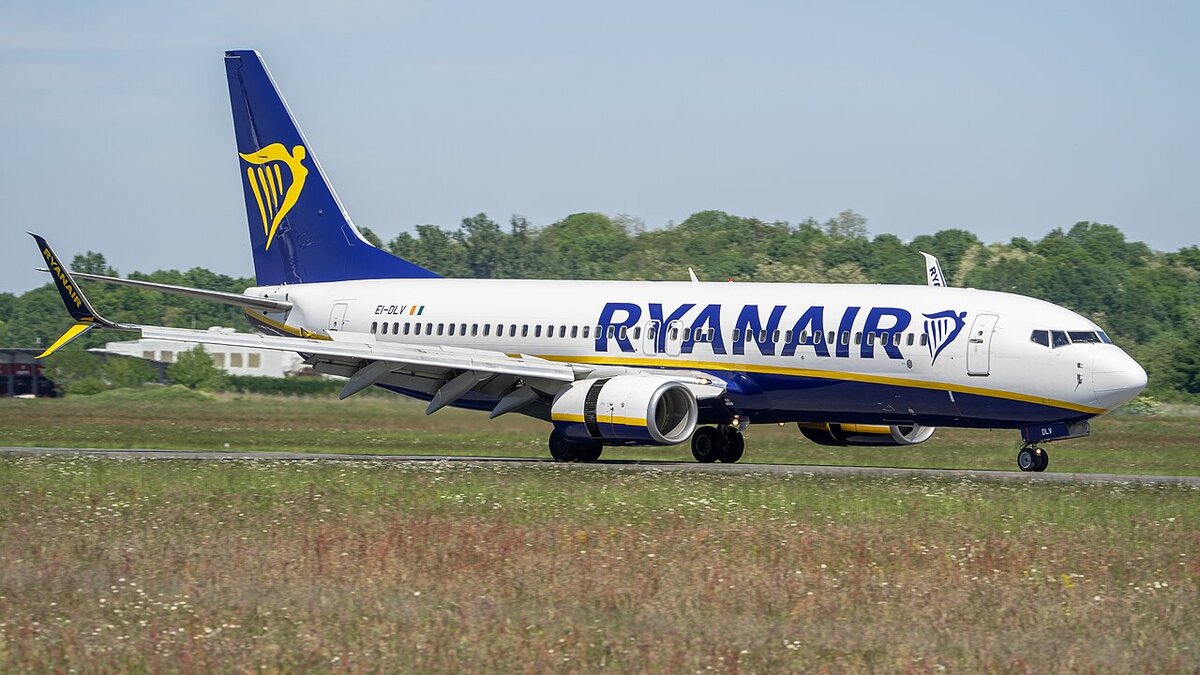
Low-cost airlines make money by selling the seat cheaply and charging for almost everything else, while running their operation at a unit cost legacy carriers cannot match. Ryanair, Europe's largest airline by passengers, illustrates the formula: in its financial year ended 31 March 2026 it carried 208.4 million passengers and posted a record €2.26 billion profit after tax, with €4.99 billion of ancillary revenue, about €24 per passenger and roughly a third of total income, according to its May 2026 full-year results. The engine underneath is cost discipline: a single aircraft family bought in bulk, seating configured to maximum density, turnarounds scheduled in as little as 25 minutes, cheaper secondary airports and direct-to-consumer distribution. Globally, the consultancy IdeaWorksCompany estimates airlines earned a record $157 billion in ancillary revenue in 2025, up from $67.4 billion in 2016. The model dominates short-haul flying in Europe and Asia, yet in the United States the ultra-low-cost version is in retreat, capped by Spirit Airlines' shutdown in May 2026.
What is the low-cost carrier business model?
The low-cost carrier (LCC) model, pioneered by Southwest Airlines in the 1970s and radicalised by Ryanair in the 1990s, rests on one idea: strip cost out of every part of the operation, then use rock-bottom fares to stimulate new demand.
The classic playbook has six interlocking parts, each reinforcing the others — which is why half-measures rarely work.
- Unbundling: the base fare covers a seat and little else; bags, seat selection, boarding priority, food and changes are sold separately.
- Single fleet type: one aircraft family slashes training, maintenance, spares and crew-scheduling costs.
- High seat density: more seats per aircraft spreads fixed costs across more passengers.
- Fast turnarounds and high utilisation: aircraft earn money only in the air, so LCCs fly them more hours per day.
- Secondary airports: lower landing fees, less congestion and quicker turnarounds.
- Direct distribution: selling through the airline's own website and app avoids agency commissions and global distribution system fees.
How much do airlines make from ancillary fees?
Ancillary revenue is the profit centre of the model. IdeaWorksCompany's $157 billion estimate for 2025 compares with $148.4 billion in 2024, and ancillaries now account for 15.7% of total airline revenue globally, up from 9.1% in 2016, ranging from about 3% at some full-service carriers to over 60% at the most aggressive budget operators.
Ryanair's €24 per passenger shows the maths: across 200 million travellers, small fees compound into billions, and the revenue is high-margin because a checked bag or an allocated seat costs the airline almost nothing to provide. Fees also shape behaviour. Charging for hold luggage pushes passengers towards cabin bags, which speeds up check-in and turnarounds. It also means baggage allowance rules now vary enormously by carrier, so the advertised fare is only the starting point of the real price.
Unbundling has also coincided with cheaper flying overall: IdeaWorksCompany notes inflation-adjusted fares have fallen sharply over two decades even as fee income soared, because ancillaries keep the headline price low.
Why do budget airlines use one aircraft type and secondary airports?
Fleet commonality is the least visible but most powerful cost lever. Ryanair flies only the Boeing 737; Wizz Air, Europe's third-largest low-cost carrier, operates more than 250 Airbus A320-family aircraft, roughly three-quarters of them new-generation neos. IndiGo built its Indian market dominance on the same A320-family logic. One type means one pilot pool, one maintenance programme, one spare-parts inventory and bulk-order leverage over the manufacturer.
Seat density does the rest. Ryanair's Boeing 737-8200 "Gamechanger" squeezes in 197 seats against 189 on its older 737-800s, cutting fuel burn and cost per seat in one move. Secondary airports complete the loop: Charleroi, Beauvais or Luton charge lower fees than Brussels, Paris CDG or Heathrow and are uncongested enough for 25-minute turnarounds, letting each aircraft fly an extra rotation or two a day. It is the opposite of the hub-and-spoke networks full-service airlines run, which prioritise connections over utilisation.
Low-cost vs ultra-low-cost vs full-service: what is the difference?
The lines blur, but the industry broadly recognises three tiers of short-haul business model.
| Feature | Full-service carrier | Low-cost carrier | Ultra-low-cost carrier |
|---|---|---|---|
| Base fare includes | Bags, seat, snacks, changes (varies) | Cabin bag, sometimes seat | A seat and a small personal item only |
| Cabins | Two or more classes | Single class, some extra-legroom rows | Single class, maximum density |
| Network | Hub-and-spoke, connections | Point-to-point, mixed airports | Point-to-point, secondary airports |
| Ancillary share of revenue | Low to moderate | Around 25–35% | Up to 50% or more |
| Examples | Lufthansa, Delta, Emirates | easyJet, Southwest, Jetstar | Ryanair, Wizz Air, Frontier |
Why do ultra-low-cost airlines struggle in the United States?
The American experience shows the model is not universally exportable. Spirit Airlines ceased flying on 2 May 2026 after its second Chapter 11 bankruptcy in under a year collapsed into a wind-down, the 2026 fuel-price spike the final blow on years of weak margins. Frontier Airlines, the other big US ultra-LCC, lost $70 million in the second quarter of 2025 and is retrofitting first-class seats and pushing its loyalty programme, a tacit admission that pure unbundling was not paying.
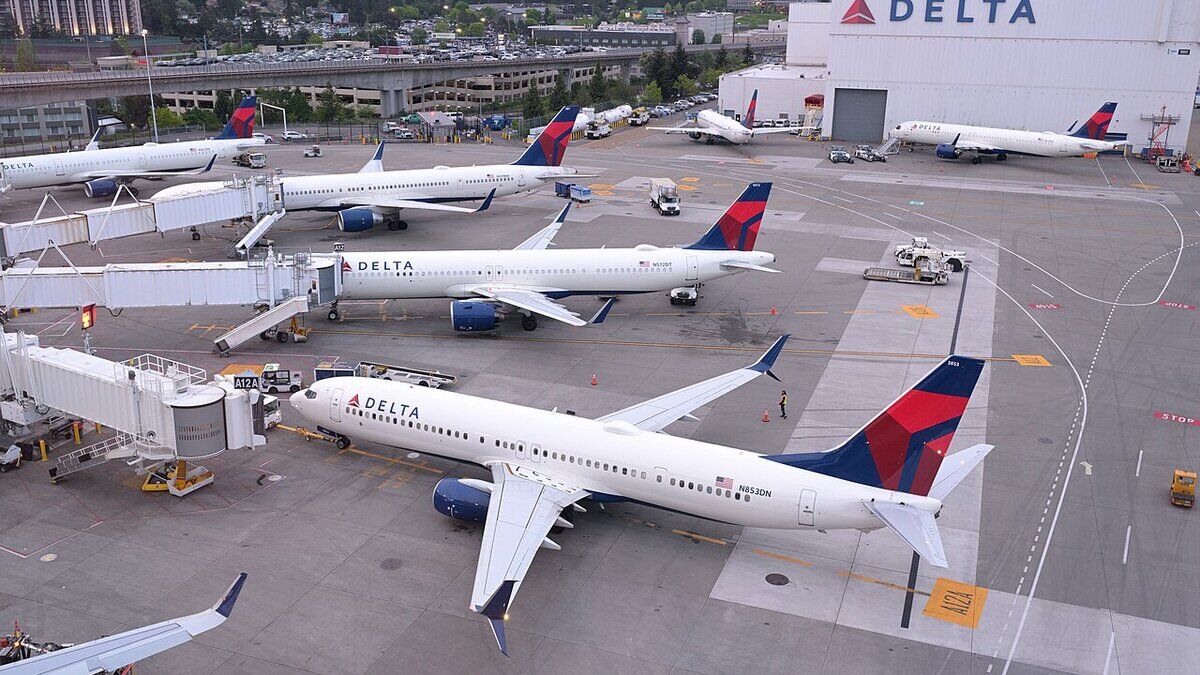
US network carriers copied the weapon: basic-economy fares let Delta, United and American match ULCC prices while keeping lucrative premium cabins and credit-card income the budget airlines lack. US ULCCs also concentrate in congested primary airports where fast turnarounds break down, and post-pandemic American demand shifted towards premium travel just as labour and fuel costs surged, a squeeze visible in 2026's fuel-driven airfare inflation. In Europe and Asia, by contrast, fragmented high-cost flag carriers left a vast price umbrella, secondary airports are plentiful, and rising middle classes keep stimulating new demand. Even so, the winners operate on the industry's characteristically thin margins, which is why scale and cost discipline decide who survives.
Frequently asked questions
Are low-cost airlines actually cheaper once you add the fees?
Usually yes for light travellers, often no for families with luggage. A traveller with a small bag and no seat selection typically pays far less than on a legacy carrier; add checked bags, seats together and boarding extras and the gap can close or reverse. Always compare the total basket price, not the headline fare.
Why are budget airline seats so cramped?
Because more seats per aircraft means lower cost per passenger. Ryanair fits 197 seats on its newest 737s, and most ULCCs use slimline non-reclining seats at 28–29 inches of pitch.
Are low-cost airlines less safe than full-service airlines?
No. Low-cost carriers meet the same regulatory safety standards as any other airline, and their young single-type fleets are often simpler to maintain consistently. The savings come from service and distribution, not maintenance or training.
Why did Spirit Airlines fail if the model works elsewhere?
Spirit was squeezed from both sides: US majors matched its fares with basic economy while capturing premium and credit-card revenue, and its own costs rose towards those of larger rivals. Two bankruptcies in under a year ended in its shutdown on 2 May 2026.