Airfare data from Google Flights and Expedia points to clear booking windows: roughly one to three months out for domestic trips and three to five months for international. The Tuesday booking myth, meanwhile, is worth about 1.9%.
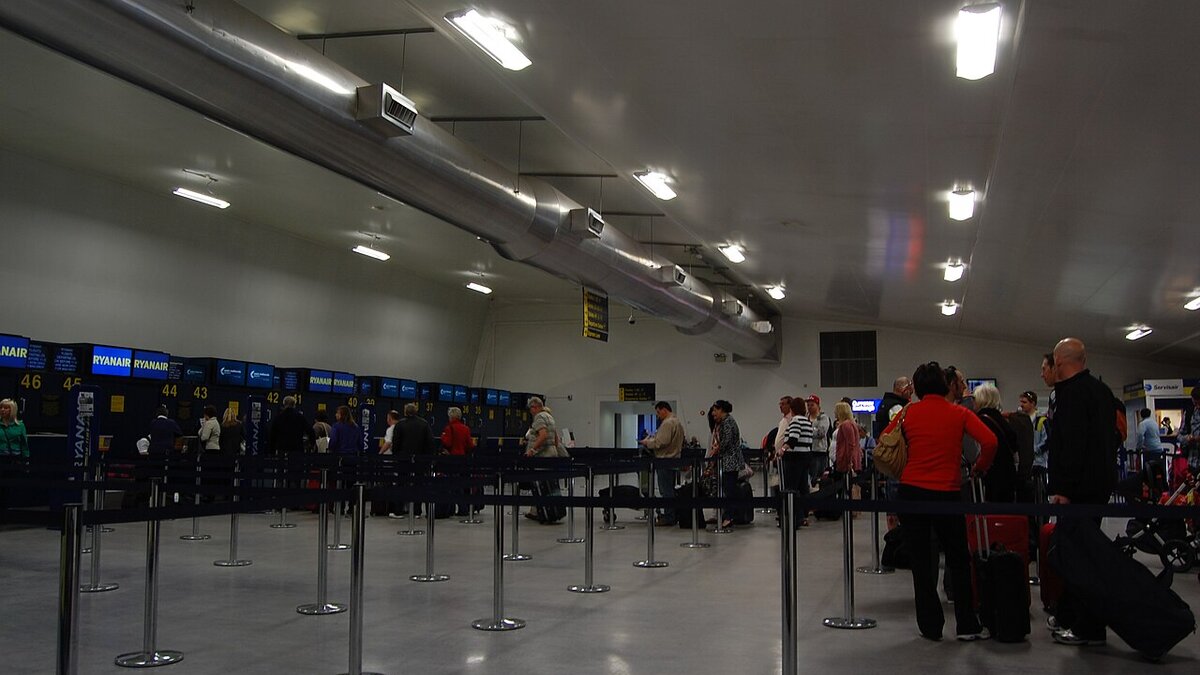
Cover image: passengers in an airport departure hall — photo by Andy Mabbett, CC BY-SA 3.0, via Wikimedia Commons.
The best time to book flights, according to the largest published datasets, is roughly one to three months before departure for domestic trips and three to five months for international ones. Google Flights' analysis of historical fares puts the average low point for United States domestic tickets at 43 days before departure, with a cheap zone stretching from 28 to 61 days out, according to The Points Guy's May 2026 review of the data. Expedia's 2026 Air Hacks report, built on fare data from the Airlines Reporting Corporation, finds domestic economy fares cheapest 15 to 30 days before departure, averaging $130 less than tickets bought more than six months ahead, while international travellers booking 31 to 45 days out save around $190. And the famous Tuesday-booking trick? Google's own analysis found midweek shopping saves just 1.9% on average. Timing matters, but the day you fly matters far more than the day you click "buy".
How far in advance should you book a domestic flight?
Google Flights' long-running analysis found US domestic prices usually lowest 21 to 60 days out; its latest figures, cited by The Points Guy, put the average low at 43 days within a 28-to-61-day range. Expedia's 2026 Air Hacks report is slightly more aggressive, identifying 15 to 30 days before departure as the cheapest window for domestic economy. The findings are compatible: fares drift gently downwards until airlines' revenue-management systems ratchet prices up in the final two to three weeks, when late-booking business travellers enter the market.
The extremes lose either way: booking more than six months out means paying before airlines release their cheapest fare classes, while booking inside 14 days means last-minute pricing — a squeeze sharpened in 2026 by aviation's supply-chain crunch and record jet backorders, which limit how many cheap seats carriers can add.
When should you book international flights?
International lead times run much longer. The Points Guy's 2026 guide, drawing on Google Flights data, recommends three to five months ahead for most international coach fares, extending to three to six months for Europe and five to seven for Asia and Oceania. Google's route-level analysis found US-to-Europe fares lowest around 129 days out, within a 50-to-179-day band, while flights to Mexico and the Caribbean bottomed out at 59 days before departure.
Expedia's data shows flexibility pays even on long-haul: international bookings made 31 to 45 days ahead saved $190 versus six-month-advance purchases, and travellers gambling on just 8 to 15 days out saved $225 on average. On peak routes and during event surges such as the FIFA World Cup 2026 travel wave, though, last-minute fares can spike instead.
Is Tuesday really the cheapest day to book flights?
Mostly a myth. Google Flights crunched years of fare data and concluded that shopping on Tuesdays, Wednesdays or Thursdays instead of weekends yielded prices only 1.9% cheaper on average. The legend dates from the era of manually filed early-week fare sales; continuous pricing has erased it.
Expedia's 2026 report still detects a small day-of-week signal, but it has moved: Friday is now the cheapest day to book, about 3% cheaper than Sunday, a shift Expedia attributes to reduced end-of-week business demand — still a rounding error next to the booking window or travel day.
Which day of the week is actually cheapest to fly?
Here the savings are real. Google Flights found that departing on a Monday, Tuesday or Wednesday has been about 12% cheaper than flying at the weekend, and Expedia's 2026 data agrees: Tuesday departures average 14% less than Sunday departures on US domestic routes. The Points Guy puts the midweek discount at around $56 per domestic ticket, rising to $100 or more around holidays.
| Trip type | Cheapest booking window | Typical saving / low point | Data source |
|---|---|---|---|
| US domestic | 28–61 days out | Average low 43 days before departure | Google Flights |
| US domestic economy | 15–30 days out | $130 less than booking 6+ months ahead | Expedia 2026 Air Hacks |
| International | 31–45 days out | $190 average saving vs 6 months out | Expedia 2026 Air Hacks |
| US–Europe | 50–179 days out | Best deals around 129 days before departure | Google Flights |
Do flight price alerts and tracking tools actually work?
Because the "right" window is a range rather than a date, price tracking beats guesswork: set an alert when a trip firms up, watch the fare move, and buy when it dips into the historical-low band the tools display.
- Google Flights price tracking emails travellers when a tracked fare changes and flags whether prices are low, typical or high against route history.
- Kayak and Hopper layer prediction on top of tracking, advising whether to buy now or wait.
- Deal-alert services such as Going push mistake fares and sales that no booking-window rule can anticipate.
One caveat: tracked prices are for standard economy. On carriers that unbundle aggressively, a headline fare dip can be offset by seat and bag fees, a core part of how low-cost airlines make money.
How does seasonality change the best time to book?
Windows stretch and compress with demand. Expedia names August the cheapest month to travel in 2026, with fares averaging 29% less than December. Google Flights' holiday analysis found Christmas-period domestic fares bottoming out around 22 days before departure and Thanksgiving fares about 52 days out; peak-season trips reward booking at the early end of any window.
The 2026 backdrop also argues against waiting for a late-fare miracle. Fuel remains a heavy cost line, as covered in this analysis of why jet fuel is pushing 2026 airfares higher, and airline margins are thin enough that carriers have little incentive to dump seats. Travelling in shoulder season, when fares and crowds both ease, remains the biggest lever after the booking window itself.
Frequently asked questions
How many days before a flight is it cheapest to book?
Data points to roughly 21 to 60 days before departure for domestic flights, with Google Flights putting the average low at 43 days and Expedia favouring 15 to 30 days. For international trips, aim for one to five months out depending on the region.
Do flight prices drop at the last minute?
Usually not. Airlines raise fares in the final two to three weeks to capture late-booking business travellers. Occasional last-minute dips exist on low-demand routes, but they are the exception, not a strategy.
Is it cheaper to book flights on a Tuesday?
Not meaningfully. Google Flights found midweek booking saves about 1.9% versus weekends, and Expedia's 2026 data points to Friday as the cheapest booking day, worth around 3%. The day of travel matters far more.
Are flight price alerts worth using?
Yes. Set alerts on Google Flights, Kayak or Hopper as soon as dates firm up, then buy when the fare dips inside the historical window for the route. Alerts catch sales and mistake fares that fixed booking rules miss.