The 2026 World Cup across the US, Canada and Mexico is reshaping summer travel — with 6.5 million attendees expected, cross-border flight bookings surging, and hotel rates spiking in host cities.
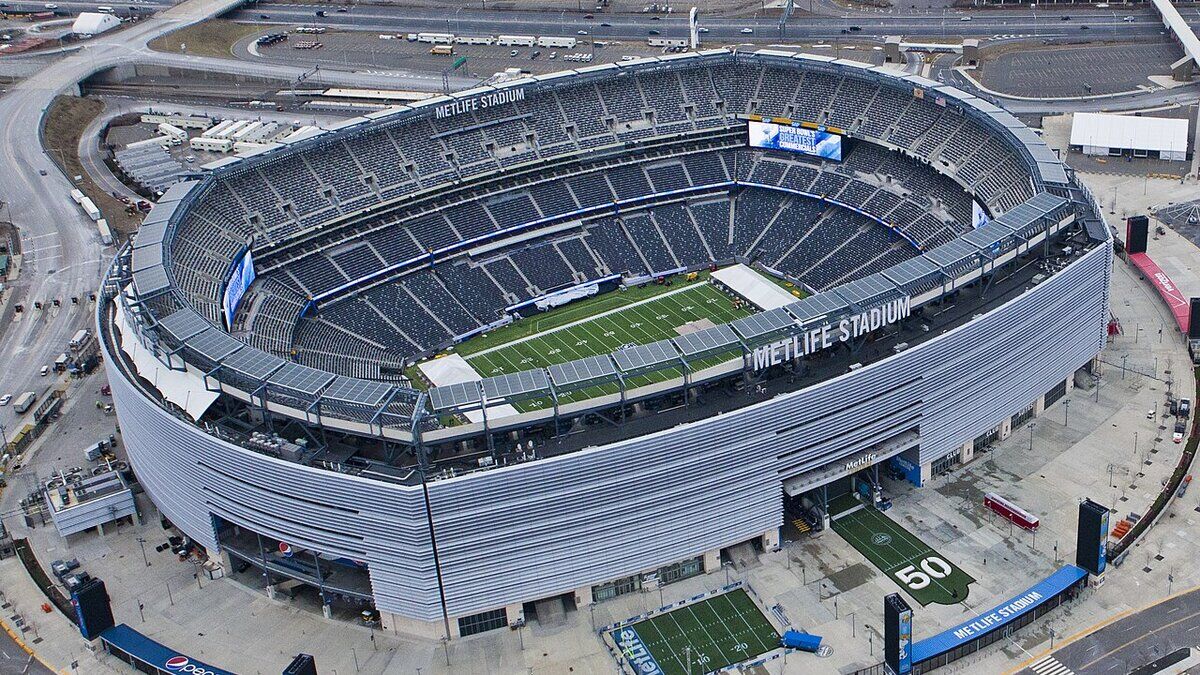
Cover image: an aerial view of MetLife Stadium, a 2026 World Cup host venue — photo by Anthony Quintano from Hillsborough, NJ, United States, CC BY 2.0, via Wikimedia Commons.
The biggest event in world sport has become one of the biggest events in world travel. The FIFA World Cup 2026, staged across the United States, Canada and Mexico, is mobilising an estimated 6.5 million attendees — including roughly 2.6 million international visitors — over a six-week window in June and July, and it is bending the entire shape of summer travel demand as it does so.
FIFA has projected the tournament could contribute up to $17.2 billion to US GDP, with billions more flowing across North America. But the more revealing story is in the granular travel data, where the World Cup is visibly redrawing where, when and how people are booking.
Flight demand spikes — and crosses borders
Air travel patterns have been jolted out of their usual summer rhythm. Flight bookings from the US directly into Canada have surged by an astonishing 44% as fans chase matches across the border. Among US host cities, the demand is sharply concentrated:
- Houston — leading the surge with a 10.4% spike in flight demand.
- New York — up a robust 8.8%.
- Dallas — close behind at 8.7%.
Not every host city is booming, however. Seattle and the three Mexican host cities are trailing last year's pace, a reminder that the tournament concentrates demand on specific match schedules rather than lifting all boats equally.
The hotel market tells a stranger story
Accommodation data reveals a curious disconnect. Even as international flight bookings soar, hotel searches within the United States have actually dropped 16% — a sign of delayed, late-decision booking behaviour as fans wait to see how their teams progress before committing to rooms.
Where demand has landed, prices have moved hard. Average daily hotel rates in Vancouver have jumped 17.1%, pushed up by strict minimum-stay requirements, and several US host cities have seen occupancy spikes on match days that, in places, surpass 1,400% above baseline. Airbnb, meanwhile, says it expects its best event ever — surpassing the 2024 Paris Olympics — as families and groups seek larger, lower-per-person accommodation.
Pressure points across the map
With 13.1 million visitors projected and 21.3 million hotel room nights expected, the tournament is concentrating demand on a handful of cities — New York, Los Angeles, Dallas, Miami, Houston, Atlanta, Mexico City, Toronto and Vancouver among them. These become temporary pressure points where flights, rooms and ground transport all strain at once, while non-host destinations can see demand soften as travellers reorganise their summers around the football calendar.
What it means for travellers
For fans, the lesson is to book early on the routes and dates that matter and to expect premium pricing in host cities on match days. For everyone else, the World Cup creates an opportunity: with demand and crowds pulled toward host cities, other destinations may offer better value and availability during the tournament window.
The bottom line
The 2026 World Cup is not just a sporting event layered on top of summer travel — it is actively reshaping it, pulling flight demand across borders, spiking host-city hotel rates and rewriting booking patterns. For six weeks, the world's travel map is being redrawn around a ball.
Update: how the tournament actually performed
The tournament ended with Spain's 1-0 extra-time win over Argentina at MetLife Stadium on 19 July 2026. FIFA put total attendance at 6,810,966 across 104 matches, an average of 99.7% of stadium capacity and the highest aggregate attendance in World Cup history.
For hotels, it turned out to be a rate event more than an occupancy event. CoStar data showed US revenue per available room (RevPAR) up 5.2% in the week ending 11 July and 6.3% in the week of the final, when national occupancy reached 72.4% and the average daily rate $174.49. New York was the clear winner: in the final week its average rate rose 41.5% to $425.03 and RevPAR 40.3%. Washington, D.C. posted the largest occupancy gain among the top 25 markets, at 78.3%. But room prices rose faster than rooms sold, and several host cities sold fewer rooms than the previous summer. Hilton was the first major hotel group to credit World Cup demand when it raised its 2026 guidance on 28 July.
Sources
- Travel And Tour World — World Cup 2026 tourism realignment
- CNBC — World Cup travel boost
- Skift — 2026 World Cup tourism impact guide
- Asian Hospitality — CoStar: New York and D.C. lead US hotel growth in final week
- Hotel Business — Hilton reports 3.9% RevPAR growth in Q2
- International Business Times — The World Cup was not a win for most cities