India's FLY91 has placed a firm order for 40 ATR 72-600 turboprops valued at about $1 billion on 3 September 2026, the largest ATR order in nearly a decade.
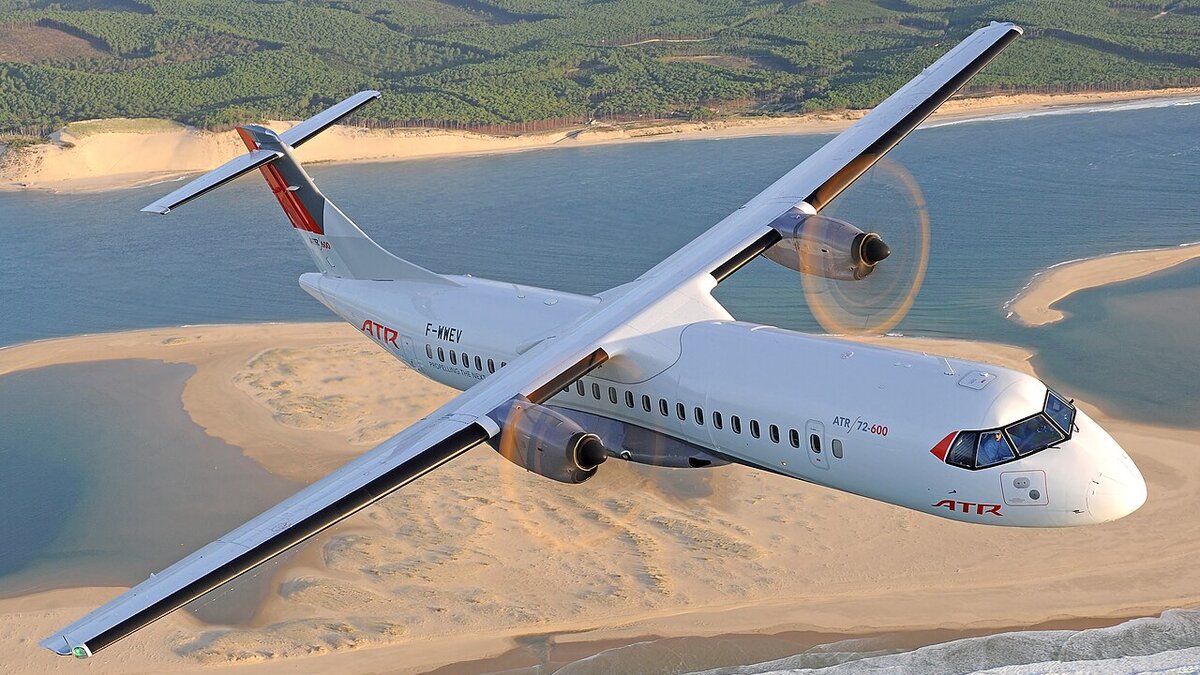
Cover image: an ATR 72-600 turboprop in flight — photo by ATR Aircraft, CC BY-SA 2.0, via Wikimedia Commons.
Indian regional carrier FLY91 has placed the biggest ATR order in nearly a decade. The airline announced a firm order for 40 ATR 72-600 turboprops valued at about $1 billion on 3 September 2026, a deal ATR calls the largest ever placed by a regional airline.
The aircraft, built by the Airbus-Leonardo joint venture in Toulouse, are due for delivery between 2027 and 2032 and will grow FLY91 from 6 aircraft today to 60 within five years. For ATR, the order lifts its 2026 intake to 54 aircraft, already above total net orders for all of 2025.
FLY91 is less than three years old and operates more than 280 weekly flights to 13 destinations. Its network stitches secondary markets in Maharashtra, Karnataka, Andhra Pradesh and Kerala to hubs and includes service to Lakshadweep. The new fleet is positioned as the backbone for India's next wave of regional connectivity under UDAN and the forthcoming UDAN 2.0.
What FLY91 ordered and why it matters
The 40-aircraft deal is for the ATR 72-600, the 72-seat high-wing turboprop that dominates short regional sectors. ATR says the type burns about 45% less fuel and emits 45% less CO2 than similar-size regional jets on routes under 500 nautical miles, where its economics are strongest.
AeroTime quotes ATR's order assessment as the largest ATR order in nearly a decade and the biggest ever by a regional airline. For India, where 57 airports have been upgraded with new terminals and Digi Yatra lanes, the question is not runway length but aircraft that can profitably serve thin routes. The ATR 72-600, with its hot-and-high performance, fits strips where jets are too heavy or too costly to fill.
Founder, MD and CEO Manoj Chacko said, This 40-aircraft order is the catalyst for our next phase of expansion and that the aircraft offers the ideal operating economics for our network. ATR CEO Nathalie Tarnaud Laude said the type combines unmatched economics, efficiency and reliability for regional operations.
Deliveries, fleet plan and what changes for passengers
FLY91 will take the 40 aircraft over six years from 2027, adding roughly six to seven aircraft a year on average. That cadence mirrors how it has built its base: start with a small fleet, prove load factors on secondary routes like Itanagar and Goa, then layer frequencies.
From six airframes to 60, the carrier can multiply its weekly departures, open new city pairs without waiting for jet slots, and rotate aircraft for maintenance without thinning the schedule. For passengers in Tier-2 and Tier-3 India, that should mean more daily options, earlier first flights and later last flights, and fewer one-stop milk runs.
ATR's Mobility Monitor estimates about 4.6 billion intercity trips a year in India with only about 3% by air. ATR calculates that expanding regional air service could support up to 35 million additional passengers a year. That is the demand pool FLY91 is targeting with a low trip-cost aircraft rather than chasing trunk routes already crowded by jets.
How the deal fits India's UDAN 2.0 push
The order lands as New Delhi refines its Regional Connectivity Scheme. UDAN has already put more than 100 airports into scheduled service in the past decade, and airlines are opening new gateways to match. Union Minister for Civil Aviation Kinjarapu Ram Mohan Naidu said regional connectivity is a fundamental pillar of India's aviation growth story, comments reported by AeroTime alongside the order.
For FLY91, UDAN economics depend on the right gauge. A 72-seat turboprop can be filled profitably where a 180-seat jet cannot, and its lower fuel burn keeps fares within reach of first-time flyers. The aircraft also suits new regional airports opening with modern lounges and facilities that need short-sector lift to build traffic before jets make sense.
Investor context matters. Harsha Raghavan, Chairman of FLY91 and Managing Partner of Convergent Finance, the airline's lead investor, backs the phased growth plan. ATR, as a joint venture of Airbus and Leonardo, brings maintenance and training infrastructure that regional start-ups need to scale without building everything in-house.
What to watch before the first delivery in 2027
The order is firm, but execution will be phased. The first aircraft are expected in 2027, so the current network runs on the existing six airframes plus the destinations added since launch. Watch for route announcements that lock in UDAN 2.0 sectors early, for crew training pipelines, and for financing structures that spread the $1 billion headline across deliveries rather than a single payment.
For travellers, the near-term signal is more about intent than immediate seats. A regional carrier betting $1 billion on turboprops is betting that smaller Indian airports can sustain daily nonstops if the economics are right. If FLY91's math holds, the next wave of Indian aviation growth will not be another metro to metro jet, but a 45-minute hop from a district capital to the nearest hub.
Frequently asked questions
How many aircraft did FLY91 order and for how much?
FLY91 signed a firm order for 40 ATR 72-600 turboprops on 3 September 2026 valued at about $1 billion at list prices. It is the biggest order ever placed by a regional airline and the largest ATR order in nearly a decade.
When will the new ATRs be delivered?
Deliveries are scheduled between 2027 and 2032. The carrier says the phased intake will lift its fleet from 6 aircraft today to 60 within five years.
Where will FLY91 fly the new ATR 72-600s?
FLY91 operates 280+ weekly flights to 13 destinations, mainly Tier-2 and Tier-3 markets in Maharashtra, Karnataka, Andhra Pradesh, Kerala and Lakshadweep. The new aircraft will deepen that network under UDAN and the upcoming UDAN 2.0.
Why the ATR 72-600 for regional India?
ATR says the 72-seat turboprop offers the lowest seat costs on short sectors and emits about 45% less CO2 than similar-size regional jets, ideal economics for short hops to smaller Indian airports.