Thailand's new deportation regulation in force from 28 August targets illegal stay, illegal work, forged documents and disruptive behaviour that threatens public safety, with visas revoked and permanent blacklisting for severe cases.
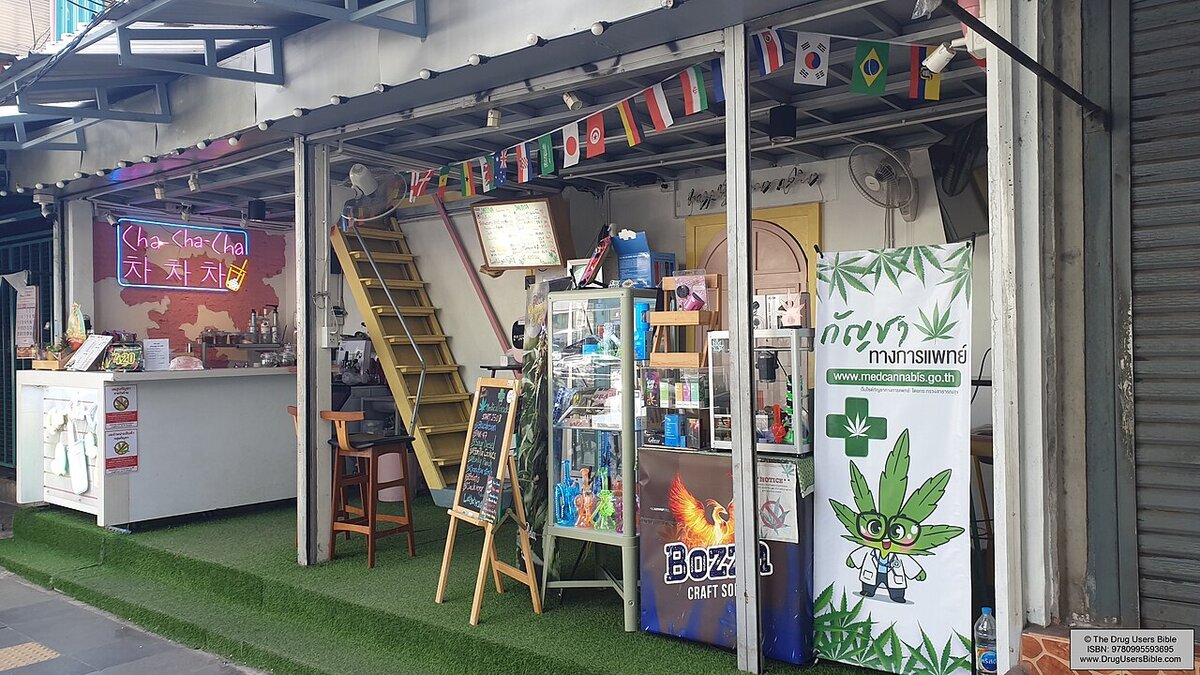
Cover image: a cannabis shop on a Bangkok street with international flags — photo by The Drug Users Bible, CC BY 2.0, via Wikimedia Commons.
Thailand has tightened its deportation rules for foreign tourists and workers from 28 August 2026, with a new Prime Minister's Office regulation that lists six formal grounds for removal and a separate zero-tolerance standard for unruly behaviour that threatens public safety.
The regulation, signed by Prime Minister Anutin Charnvirakul and reported on 1 September by travel outlet Travel Tomorrow, draws what Tourism and Sports Minister Surasak Phancharoenworakul called a clear line between foreigners who contribute positively to Thai society and those who break the law. The timing matters for visitors already in the country: the rules are in force, and the Tourist Police Bureau and Immigration Bureau say they are ready to enforce them decisively. The change sits alongside the new 300-baht tourist entry fee from February 2026 and the visa-free stay cut to 30 days from 15 September, and travellers heading to Thailand should read all three together before they fly.
What are the six grounds that can trigger deportation?
Travel Tomorrow cites the regulation as listing:
- Entering or remaining illegally, including overstaying a visa
- Working without proper authorisation
- Business operations that breach foreign-business rules
- Forging or using fraudulent official documents
- Committing an offence punishable by at least five years in prison
- Being principal, instigator or accomplice in any of the above
Overstaying is therefore explicitly named as a deportation ground, not merely a fine-and-leave matter. The regulation does not publish new fine amounts or detention periods in the excerpts reported, but it formalises removal as the expected outcome where those categories are met. Travellers who need to know their exact visa terms should re-check whether they need a visa for Thailand from India and the conditions attached to their entry stamp.
What counts as unruly tourist behaviour under the new standard?
Beyond the six formal categories, the government has set a behavioural standard aimed at tourists who "threaten public safety, cause disturbances or behave aggressively and arrogantly," in the Minister's wording. Surasak said "problematic foreign tourists or workers who break the law must leave," and that agencies had been instructed to revoke visas, remove offenders immediately and blacklist and permanently bar them where the disruption is severe.
Examples cited for context in coverage include a public sex act case that drew criminal charges and an incident of rude, confrontational behaviour on a Bangkok train that prompted police intervention. The regulation itself does not list a tariff of fines for rudeness; the mechanism is visa revocation and removal, with the Tourist Police and Immigration Bureau acting together. The government framing repeatedly stresses proportionality for ordinary visitors and firmness for deliberate disruption.
How will deportation and blacklisting work in practice?
The Prime Minister's Office regulation is the legal basis, but execution runs through existing enforcement bodies. Travel Tomorrow reports:
- Tourist Police Bureau and Immigration Bureau cooperation to identify and process cases and to "deport them immediately" where the standard is met
- Department of Corrections and Interior Ministry coordination for detention and administrative steps
- Visa revocation as the immediate lever, followed by removal and, for the most serious behavioural cases, permanent blacklisting from future entry
For the six formal grounds, blacklisting practice will depend on the underlying immigration and criminal provisions that already govern re-entry bans. For the unruly-behaviour standard, the government has explicitly said permanent barring is available. No standardised period such as one, five or ten years is set out in the reporting; each case will be assessed individually.
| Trigger | Typical outcome reported | Authority |
|---|---|---|
| Illegal entry or visa overstay | Deportation proceedings; removal | Immigration Bureau |
| Illegal work or foreign-business breach | Removal and business sanction | Interior Ministry / Labour authorities |
| Forged documents or 5-year offence | Criminal process plus deportation | Police / Courts / Immigration |
| Unruly behaviour threatening public safety | Visa revocation, immediate removal, permanent blacklist for severe cases | Tourist Police + Immigration Bureau |
What should visitors do to stay on the right side of the rules?
- Do not overstay. Even a short overstay now explicitly risks deportation proceedings, not just a fine at the airport. Extend or exit before the stamp expires.
- Match activity to visa. Tourist entries do not permit work, even short-term or informal guiding; a work permit is required for any employment.
- Keep documents genuine. Forged or altered documents trigger both criminal liability and removal.
- Moderate public behaviour. Aggressive, drunken or sexually explicit conduct in public, especially on transport, is now overtly flagged as deportation-relevant.
- Cooperate with police requests. Tourist Police stations are located at major attractions and transport hubs; compliance and respectful communication reduce escalation risk.
The broader visitor context remains welcoming. Thailand's tourism recovery has been built on visa facilitation and extended stays, and officials say the new regulation is intended to protect that by removing a small number of disruptive cases quickly. For practical entry checks, see whether Thailand is safe to visit and the vaccination guidance for the region.
Frequently asked questions
Does a one-day visa overstay now mean automatic deportation?
Overstaying is listed as a ground that can trigger deportation proceedings, but the regulation does not set automatic removal for a one-day overstay. Immigration officers retain discretion, and prior overstay tariffs of fines plus potential bans still apply. The change formalises removal as the expected outcome rather than a discretionary option.
Can I be blacklisted for rude behaviour even without a criminal conviction?
According to the Minister's statements, yes for severe cases that threaten public safety. Visas can be revoked and immediate removal ordered, with permanent blacklisting available for the most disruptive behaviour. The reporting does not tie this to a criminal conviction threshold.
Does the rule mention cannabis or alcohol specifically?
No. The six formal grounds do not name cannabis or alcohol. Behaviour linked to intoxication would be assessed under the unruly-behaviour standard or, where relevant, the five-year-offence category. Thailand's cannabis rules remain strict outside licensed settings, and violations can already carry serious penalties.
Who enforces the new deportation regulation?
The Tourist Police Bureau and Immigration Bureau are the front-line enforcers, with support from the Interior Ministry and Department of Corrections. The regulation was signed by the Prime Minister's Office and took effect on 28 August 2026.