Korean Air has finalised a $44.8bn agreement for 103 Boeing aircraft plus GE engines, the largest Asian widebody commitment in Boeing's history, underpinning its post-Asiana fleet renewal.
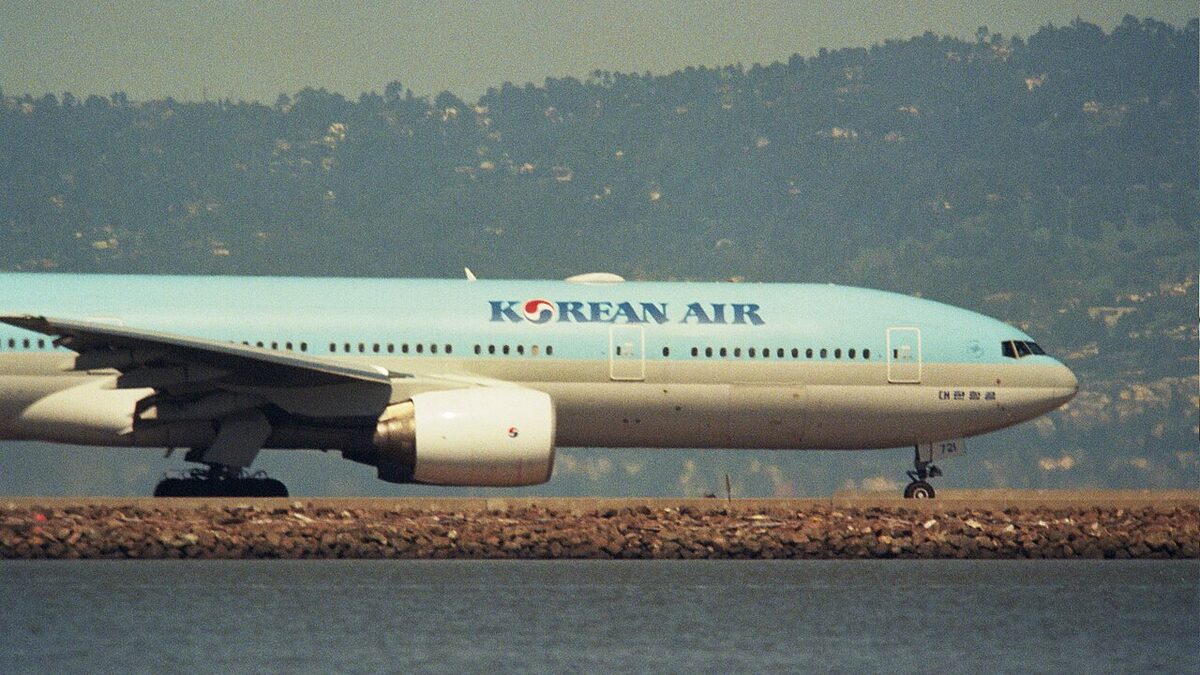
Cover image: a Korean Air Boeing 777 on the runway — photo by Bill Abbott, CC BY-SA 2.0, via Wikimedia Commons.
Korean Air has finalised the largest aircraft order in its history: 103 Boeing jets worth US$36.2 billion, plus a US$8.6 billion engine and servicing package with GE Aerospace and CFM International, taking the combined agreement to KRW 60 trillion (US$44.8 billion). The deal was signed on 15 September 2026 at the Conrad Seoul hotel and announced the following day, completing a plan first outlined in Washington D.C. in August 2025. Boeing described it as its largest-ever widebody commitment from an Asian airline.
The order underpins Korean Air's fleet transformation as it absorbs Asiana Airlines: the airline says the new jets will lift its widebody fleet by 46 percent and nearly double its narrowbody fleet, while replacing ageing 747s and A380s with fuel-efficient types. Chairman and CEO Walter Cho called it "much more than a business deal," framing it as a marker of the US-South Korea economic alliance struck alongside bilateral trade talks.
What exactly did Korean Air order from Boeing?
The 103 aircraft split into 95 passenger jets and 8 freighters, covering three Boeing families plus the new 777-8F cargo type. The engine side brings 21 spare engines and a 15-year maintenance contract covering 28 aircraft.
| Aircraft type | Quantity | Role in the fleet |
|---|---|---|
| Boeing 777-9 | 20 | Flagship long-haul replacement; takes Korean Air's 777-9 orderbook to 40 frames |
| Boeing 787-10 | 25 | Mid-size widebody for regional and long-haul growth |
| Boeing 737 MAX 10 | 50 | High-capacity narrowbody, nearly doubling the single-aisle fleet |
| Boeing 777-8F | 8 | Next-generation freighter; 11 tonnes more payload than the 777F over 5,000nm |
The mix is deliberate. Fifty MAX 10s give Korean Air density on short and medium-haul routes across North Asia, while the 45 widebodies (777-9s and 787-10s) renew the long-haul core. The eight 777-8Fs join a freighter type drawing growing interest from cargo operators, and will fly alongside seven Airbus A350F freighters Korean Air already has on order, keeping a dual-supplier cargo fleet.
Why is Korean Air buying 103 jets now?
Three forces converge. First, the Asiana integration: combining two widebody fleets and two cargo networks into one unified carrier demands scale, and management says predictable long-term deliveries are essential to that plan. Second, retirements are pressing. Korean Air still flies four 747-400s averaging 21 years old and eleven 747-8s averaging 11.7 years, with a target to exit the 747 entirely by 2031. Five A380s remain in service on high-demand premium routes such as Seoul-Los Angeles, with faster retirements now expected through the 2030s. Its twelve 777Fs average 11.4 years. The order replaces very large, four-engine aircraft with twins that burn substantially less fuel per seat.
Third, timing matters in a constrained market. With the Boeing-Airbus delivery race running hot and the industry-wide supply-chain crunch stretching waiting lists, locking in 103 delivery slots now secures growth capacity rivals may struggle to match. Cho said the investment "guarantees the reliability and efficiency our customers expect," adding: "While Boeing provides our wings, GE gives us the heartbeat of our fleet."
When will the new aircraft arrive?
No detailed delivery schedule has been published. Two types in the order are still awaiting certification: both the 777-9 and the 737 MAX 10 are currently slated for certification in early 2027, so first handovers of those variants cannot precede regulatory clearance. The 787-10 and 777-8F are certified types already in production, though actual slot timing will depend on Boeing's production ramp and the long queue of existing orders.
For passengers, the near-term visible changes are elsewhere: Korean Air is simultaneously reshaping its network, including seasonal Seoul-Melbourne services, while the merged carrier's full schedule and cabin retrofit programme will determine when travellers actually feel the new fleet.
What does the deal mean for Boeing and the industry?
For Boeing, a 103-aircraft commitment headlined by 45 widebodies is a landmark endorsement of the 777X programme, whose 777-9 variant is still working toward certification. Korean Air's total 777-9 commitment now stands at 40 aircraft, making it one of the type's anchor customers. The fifty MAX 10s likewise give Boeing's largest single-aisle variant a high-profile Asian backer ahead of its own certification milestone.
For the industry, the order confirms the post-merger Korean carrier's ambition to compete as a consolidated Northeast Asian hub airline rather than manage decline. "Acquiring these next-generation aircraft is the core of our fleet modernization strategy," Cho said, pointing to "significant gains in fuel efficiency and enhancing the passenger experience across our global network." With Airbus holding the A350F order on the cargo side, the deal also preserves competitive tension between the two manufacturers inside one of Asia's most important fleets.
Frequently asked questions
How many aircraft did Korean Air order from Boeing?
Korean Air finalised an order for 103 Boeing aircraft: 20 777-9s, 25 787-10s and 50 737 MAX 10s for passengers plus 8 777-8F freighters for cargo. The engine package adds 21 spare engines from GE Aerospace and CFM International and a 15-year maintenance contract covering 28 aircraft.
How much is the Korean Air Boeing deal worth?
The aircraft are valued at KRW 54.2 trillion (US$36.2 billion) and the engine and maintenance package at about KRW 12.9 trillion (US$8.6 billion), for a combined KRW 60 trillion (US$44.8 billion). The figures were confirmed at the 15 September signing at Conrad Seoul, completing a plan first outlined in Washington in August 2025.
When will Korean Air receive the new Boeing jets?
No delivery timetable has been disclosed. The 777-9 and 737 MAX 10 still await certification, currently expected in early 2027, so those variants cannot deliver before clearance. The 787-10 and 777-8F are certified types already in production, but handovers depend on Boeing's production ramp and earlier orders in the queue.
Is the order connected to the Asiana merger?
Yes. Korean Air says the aircraft support capacity growth and predictable fleet renewal as it integrates Asiana Airlines into a unified carrier, including a combined cargo operation. Management says locked-in long-term deliveries are essential to merging two widebody fleets and two cargo networks.