Is Laos safe for Indian tourists in 2026? Yes, with specific cautions: UXO off-path, night roads, ATM bag-snatchers, tubing safety, vaccines.
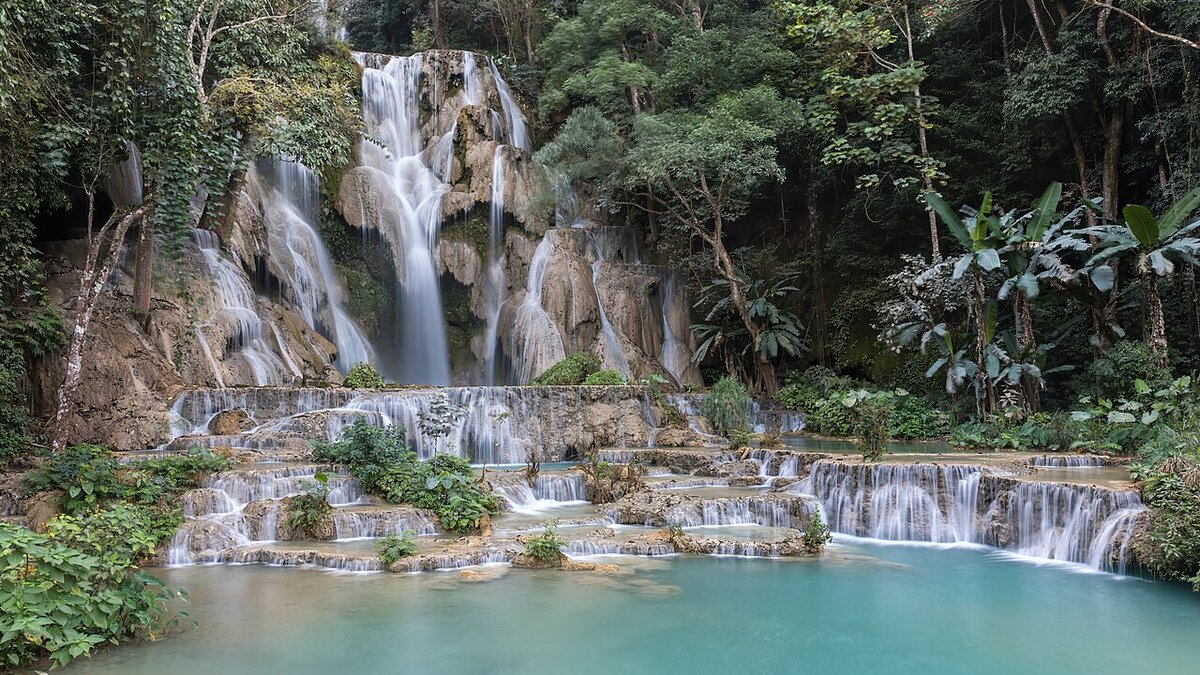
Cover image: Kuang Si turquoise waterfalls near Luang Prabang in Laos — photo by Basile Morin, CC BY-SA 4.0, via Wikimedia Commons.
Yes, Laos is broadly safe for Indian tourists in 2026, with low violent crime and welcoming locals, but it demands more caution than Thailand or Vietnam. The risks are specific rather than general. Unexploded wartime ordnance off marked paths, genuinely dangerous rural roads after dark, bag-snatchers near ATMs, and river currents that punish careless tubing. None of these should stop a trip to Luang Prabang, Vang Vieng or the 4,000 Islands. All of them reward travellers who read this guide first. What follows is the honest risk map: what is safe, what needs care, and the precautions that keep an Indian family or solo traveller out of trouble.
Sort the paperwork with do you need a visa for Laos from India which covers the 30-day e-Visa and visa on arrival, time it with best time to visit Laos from India for the dry-season window, compare with is Vietnam safe for Indian tourists next door, and stretch the budget with cheapest way to travel Southeast Asia from India.
Is there violent crime against tourists in Laos?
Violent crime against visitors is rare. Laos is a calm, Buddhist-majority country where confrontations with tourists are uncommon and the police, while limited in English, are generally helpful at tourist posts in Luang Prabang and Vientiane. Indian families, groups and women travelling together report the same easy atmosphere found across the region's gentler destinations.
Petty crime is the real urban risk. The UK Foreign Office warns that petty crime occurs in tourist areas and around ATMs, and that travellers regularly report bag snatches by people on motorcycles. Use the standard defences. Carry the day's cash only, keep cards and cash apart, wear backpacks front-facing in markets, avoid quiet lanes alone after dark, and stay alert if approached when isolated. Leave passports in the hotel safe and carry a photo plus a printed e-Visa instead.
What is the UXO risk for travellers in Laos?
Laos is the most heavily bombed country per person in history, and unexploded ordnance remains a hazard throughout the country, killing people every year. For tourists the rule is narrow and absolute. Keep to main routes in rural areas, never step off marked paths, and never touch metal objects in the countryside. The risk rises after monsoon floods and landslides shift ordnance, which is one more reason the October to April dry season is the sensible window.
This sounds alarming but constrains almost nothing on a normal itinerary. Luang Prabang town, the Kuang Si Falls road, Vang Vieng's viewpoints, Vientiane's monuments and the established Plain of Jars sites are all cleared and visited by hundreds of thousands yearly. The danger zone is unguided wandering in Xieng Khouang, Savannakhet, Salavan and other heavily bombed provinces. Take a licensed guide for any countryside trek, and treat a local's warning about an area as final.
How dangerous are roads and buses in Laos?
Roads are the biggest statistical danger to visitors. They are often in poor condition, vehicles may not meet the standards Indian travellers expect, livestock wanders onto highways, and travel after dark significantly raises accident risk because many vehicles run without proper lights. Night buses on mountain routes combine all of these at once.
Travel between cities by day on VIP buses from reputable companies, or fly the short hops (Luang Prabang to Vientiane takes under an hour by air versus a full gruelling day by road). If you rent a motorbike, the classic scam documented by the Foreign Office runs through your passport. Never leave it as a deposit. Hire companies have been known to claim pre-existing damage and demand large payouts, and without your passport you cannot walk away. Photograph the bike from every angle, pay a cash deposit instead, and note that one million kip is only about $45 (roughly INR 4,275), so any damage claim in the millions deserves a police station, not your wallet.
| Risk in Laos | Level for tourists | Precaution that works |
|---|---|---|
| Violent crime | Low | Normal city awareness; hotel safe for passports |
| Bag-snatching near ATMs, markets | Moderate | Day cash only, cards and cash apart, bags front-facing |
| UXO off marked paths | High off-path; negligible on-path | Stay on main routes; licensed guide for treks |
| Road accidents, night travel | High after dark | Day buses and flights only; no night mountain roads |
| River tubing and swimming | Moderate | Life jacket, no alcohol first, established operators |
| Mosquito disease (dengue, malaria) | Moderate | Repellent, covered evenings; prophylaxis for southern provinces |
Is Vang Vieng tubing safe now?
Vang Vieng cleaned up its act after the notorious early 2010s, when riverside bars and jumping platforms killed a string of young travellers and forced a government crackdown. Today's tubing run is shorter, bars are regulated and life jackets are standard issue. It is a managed adventure, not the free-for-all of old.
Managed does not mean risk-free. The Foreign Office groups tubing with rafting, kayaking and Mekong swimming as activities carrying significant risk from strong currents and hidden obstacles, with variable safety standards. Go with an established operator, wear the jacket, skip the pre-tube drinks, and stay out of the Nam Song and the Mekong in the rainy months when currents turn brutal.
What health precautions do Indians need for Laos?
Vaccination advice mirrors Vietnam and Cambodia. The CDC recommends hepatitis A for unvaccinated travellers, hepatitis B for those under 60, and typhoid for most travellers, noting no typhoid vaccine is fully effective. Rabies deserves respect since infected dogs are commonly found. Consider pre-exposure shots if you will cycle rural areas or travel with children, and know that post-bite treatment means reaching a major town fast.
Malaria needs a destination-specific call. There is no risk in Luang Prabang city or Vientiane, the northern provinces need bite precautions only, but the southern provinces (Attapeu, Champasak, Khammouane, Salavan, Savannakhet, Sekong) call for prescription prophylaxis. Dengue has no prophylaxis anywhere, so repellent and covered ankles at dusk are the defence nationwide. Drink sealed bottled water, eat freshly cooked food, and carry rehydration salts. Travel insurance with evacuation cover is essential, since serious cases route to Thailand.
Frequently asked questions
Is Laos safe for solo female travellers from India?
Broadly yes, with standard precautions. Violent crime is rare and harassment levels are low by regional standards. Avoid quiet areas alone at night, use hotel-arranged transport after dark, and dress modestly at temples. Vang Vieng party crowds merit the usual wariness anywhere young travellers drink.
Is it safe to travel Laos by night bus?
Avoid it. Poor road surfaces, unlit vehicles, livestock on highways and mountain curves make night travel the highest-risk choice in the country. Fly or take day buses between Luang Prabang, Vang Vieng and Vientiane instead.
Can you drink tap water in Laos?
No. Treat tap as non-potable nationwide, including in Vientiane and Luang Prabang hotels. Drink sealed bottled water, brush with it for the first days, and choose tube ice in established places over roadside crushed ice.