How much does a Sri Lanka trip cost from India in 2026? INR 30,000-42,000 for 5 days: flights by city, free ETA, hotels, food, trains, budget table.
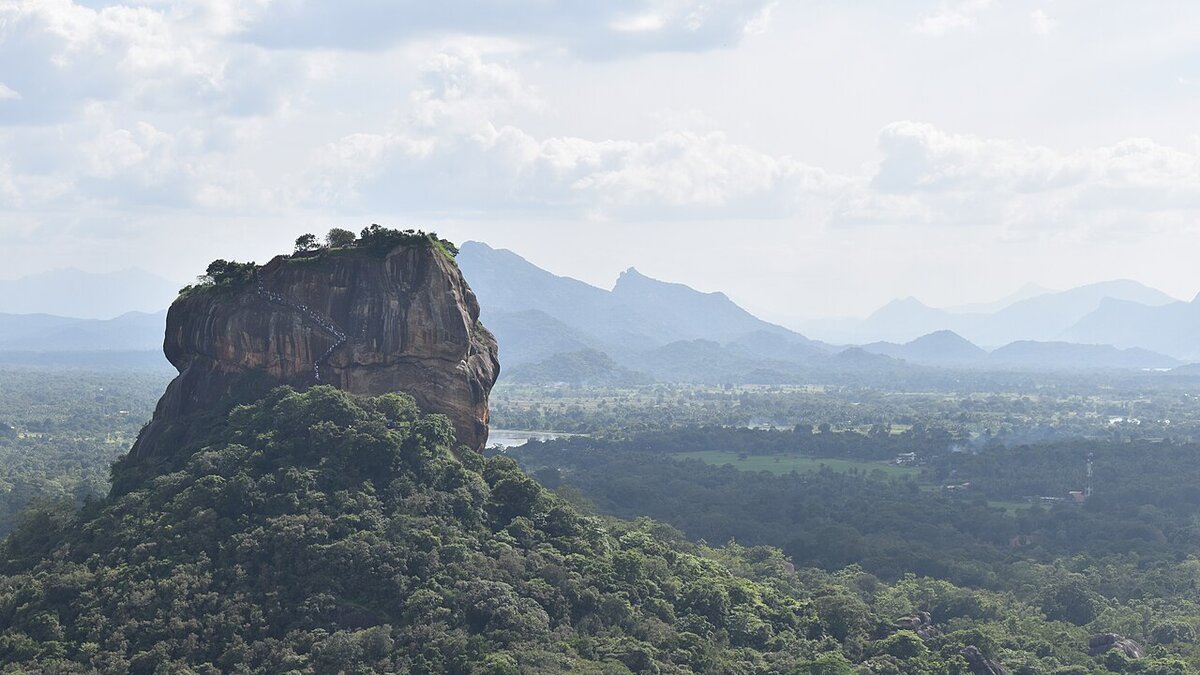
Cover image: Sigiriya rock fortress rising above forest in Sri Lanka — photo by Gayomiw, CC BY-SA 4.0, via Wikimedia Commons.
A 5-day Sri Lanka trip from India costs roughly INR 30,000 to INR 42,000 per person in 2026, with Chennai departures at the low end and Delhi departures at the high end. The island is one of the cheapest international trips an Indian passport can take. Return flights from Chennai routinely sell at INR 9,000 to INR 15,000 off-peak, the ETA is currently free for Indians, trains between Colombo, Kandy and Ella cost a few hundred rupees, and a comfortable mid-range day runs about INR 4,500 to INR 6,000 including hotel, food and transport. What follows is the full cost stack: flights city by city, the free-visa rule, hotels, food, trains and safaris, with a worked 5-day budget you can copy.
Pair this with cheapest way to travel to Sri Lanka from India for booking-window tricks, best time to visit Sri Lanka from India for season pricing, Sri Lanka ETA visa guide for entry paperwork, and is Sri Lanka safe for Indian tourists for on-ground safety.
How much are flights from India to Sri Lanka?
Chennai to Colombo is the cheapest international hop in South Asia. Non-stop returns booked 30 to 45 days ahead routinely sell at INR 9,000 to INR 15,000 off-peak on AirAsia, SriLankan Airlines and IndiGo, rising to INR 14,000 to INR 18,000 around Diwali and INR 17,000 to INR 22,000 at Christmas. The flight is 1 hour 35 minutes each way.
Other cities cost more in a predictable order. Tiruchirappalli runs INR 10,000 to INR 16,000 off-peak, Kochi and Bengaluru INR 11,000 to INR 18,000, Mumbai INR 12,000 to INR 20,000 off-peak (INR 19,000 to INR 27,000 peak), Delhi INR 13,000 to INR 22,000 off-peak (INR 22,000 to INR 35,000 at Diwali and Christmas), and Kolkata INR 14,000 to INR 21,000, mostly one-stop. Delhi and Mumbai travellers should price a split ticket through Chennai. A domestic sale fare plus a Chennai to Colombo return often undercuts the direct return by INR 4,000 to INR 6,000.
Do Indians need a visa fee for Sri Lanka?
No, not currently. Under a scheme effective 25 May 2026, Indian ordinary passport holders obtain the 30-day tourist ETA free of charge with double-entry facility, though getting the ETA online before arrival remains mandatory. Earlier guides quoting USD 20 to USD 50 describe the old paid regime, so ignore them. Travellers staying beyond 30 days apply for an extension on payment of the applicable fee.
Arrival cash still matters. Withdraw LKR 50,000 to LKR 100,000 at once from a bank ATM (Bank of Ceylon, Peoples Bank) rather than in small pulls, since each withdrawal carries an LKR 800 to LKR 1,200 fee. A Dialog or Mobitel tourist eSIM with 20 to 50 GB for 30 days costs LKR 2,500 to LKR 4,000, far cheaper than Indian roaming at about INR 500 per day. At September 2026 rates 1 rupee buys about LKR 3.47, so LKR 10,000 is roughly INR 2,880.
How much do hotels and food cost in Sri Lanka?
Hotels are the biggest controllable cost. Budget guesthouses in Colombo, Kandy and Mirissa go for INR 1,200 to INR 2,000 a night, clean 3-star hotels with breakfast run about INR 3,000 a night (INR 1,500 each twin-share), and 4-star beach resorts in Bentota or Galle start near INR 6,000. Ella and Nuwara Eliya guesthouses with valley views sit in the INR 2,000 to INR 3,500 band in season.
Food is genuinely cheap. Rice and curry at a local shop costs LKR 500 to LKR 1,000 (INR 145 to INR 290), a mid-range restaurant dinner for two with drinks runs LKR 3,000 to LKR 5,000 (INR 865 to INR 1,440), and even Colombo rooftop dining rarely crosses LKR 8,000 for two. Budget INR 900 a day for food if you mix local meals with one proper restaurant dinner, INR 1,800 a day for comfort dining throughout.
| 5-day Colombo, Kandy, Ella ex-Chennai | Budget (INR per person) | Comfort (INR per person) |
|---|---|---|
| Return flight, 20 kg bag bought online | 11,000 | 15,000 |
| 4 nights hotel (budget single / 3-star twin-share) | 8,000 | 6,000 |
| Food, 5 days | 4,500 | 9,000 |
| Trains: Colombo-Kandy-Ella plus buses, tuk-tuks | 1,800 | 3,500 |
| One big-ticket day (Sigiriya or Yala safari) | 2,500 | 4,500 |
| eSIM, tips, temple donations, buffer | 2,300 | 4,000 |
| Total per person, ex-ETA (currently free) | 30,100 | 42,000 |
How much do trains and safaris cost?
Trains are absurdly cheap and the Kandy to Ella ride is the single best value in Asian rail travel. Colombo to Kandy reserved seats cost LKR 900 in third class (about $3), LKR 1,200 in second (about $4) and LKR 2,000 for air-conditioned first (about $6.80). The hill-country run toward Ella costs LKR 1,500 third, LKR 2,000 second and LKR 3,000 (about $10) for the panoramic observation car. Book observation seats the moment they open. They sell out weeks ahead in December and April.
Paid sights add up, so budget one big-ticket day each for Sigiriya rock and a Yala half-day safari with a shared jeep. Both are the priciest single tickets in the country and their dollar fees are revised every couple of years, so confirm the current fee through your hotel before the day rather than trusting an old blog figure. Whale watching from Mirissa (November to April) typically costs less than either, and temple entries plus the Kandy cultural show are small change beside them.
Cheapest way to get to Sri Lanka from India: flights vs ferry
Fly. There was no direct scheduled passenger ferry between India and Sri Lanka through August 2026, so the Chennai to Colombo flight is both the cheapest and the only reliable option.
Why the ferry is not a saver
The old Boat Mail route, a train to Rameswaram and a ferry to Talaimannar, was severed when the Pamban–Dhanushkodi branch was abandoned after the 1964 cyclone. A Nagapattinam–Kankesanthurai high-speed craft has run only as short seasonal pilots, and a Tuticorin–Colombo service has not become a regular link. Even when a pilot sails, a night in Nagapattinam, jetty transfers and the journey to reach the port usually wipe out any saving over the flight.
Booking rules that cut the fare
- Book 30-45 days ahead for off-peak (May, June, September) and 45-60 days ahead for Diwali and Christmas.
- Fly out Tuesday or Wednesday and back Thursday or Saturday; Friday and Sunday departures cost INR 1,500-2,800 more on the same airline. Holiday weeks add 30-40 percent, so shift two days either side of the peak.
- For the split ticket via Chennai, a domestic sale fare of INR 3,500-6,000 each way plus a Chennai–Colombo return of INR 10,000-14,000 is the comparison against a Delhi–Colombo return of INR 19,000-22,000. It works best Tuesday to Thursday and outside Diwali week.
- Keep low-cost cabin bags under 7 kg: gate penalties at Chennai and Colombo are INR 2,000-3,000 per bag.
Frequently asked questions
What is the cheapest month to visit Sri Lanka from India?
May, June and September combine the lowest Chennai to Colombo fares (INR 9,000 to INR 12,000 returns) with thinner crowds. December to March has the best west-coast weather but peak fares and full hotels.
Is Sri Lanka cheaper than Bali or Thailand for Indians?
For flights and food, yes. Chennai to Colombo undercuts any India to Bali fare by half or more, and daily food budgets run 20 to 30% below Thailand's tourist zones. Hotels are comparable.
How much cash should Indians carry to Sri Lanka?
Withdraw LKR 50,000 to LKR 100,000 (about INR 14,400 to INR 28,800) at a bank ATM on arrival for tuk-tuks, small eateries and temple donations. Pay hotels and bigger restaurants by zero-forex card.
Is the Sri Lanka ETA really free for Indians?
Yes, under the scheme effective 25 May 2026 covering Indian ordinary passports: a 30-day double-entry tourist ETA at no charge, applied for online before travel. File direct and skip agents charging service fees.
Sources
- Department of Immigration and Emigration, Sri Lanka — ETA free-of-charge scheme for India from 25.05.2026
- Seat61 — Sri Lanka train fares (Colombo-Kandy-Ella-Galle, reserved and observation)
- ExchangeRate-API — live INR reference rates (LKR, USD, September 2026)
- Wikipedia — Boat Mail (historic India–Sri Lanka rail-ferry link)