The best time to visit Laos from India is November to February when it is cool and dry at 22-28°C — ideal for Luang Prabang, Vang Vieng and the Mekong, with hot March-May and wet June-October around it.
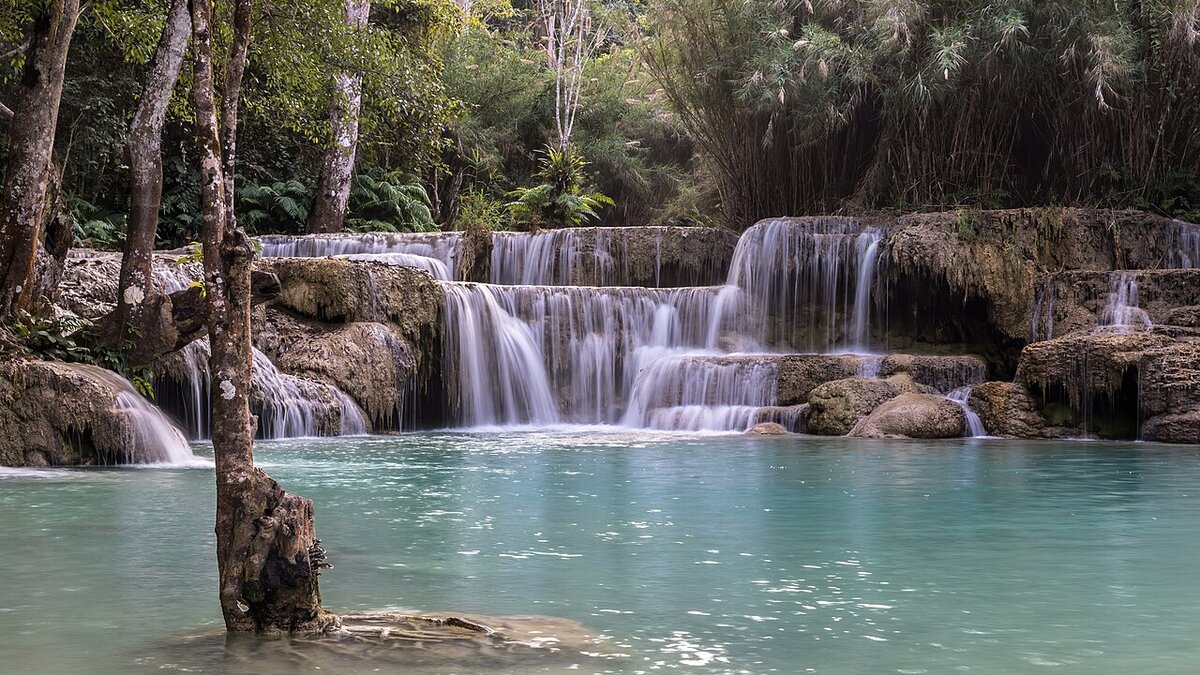
Cover image: the turquoise pools of Kuang Si Falls near Luang Prabang — photo by Basile Morin, CC BY-SA 4.0, via Wikimedia Commons.
The best time to visit Laos from India is November to February, when the cool dry season brings clear skies, comfortable days of 22 to 28°C and low humidity across Luang Prabang, Vang Vieng and Vientiane. It aligns with European winter holidays from India and with Laos’s most pleasant conditions for temples, river cruises and outdoor markets, before heat builds in March and the monsoon returns from May.
What is the best time to visit Laos from India?
November to February offers the most reliable travel window. Days are warm but not harsh, mornings can be cool enough for a light jacket in the north, and rainfall is at its annual low. Hotel availability tightens around mid-December to early January and for Pi Mai Lao in April, but overall this is when Laos looks its best.
Within that window, late November and February are often the sweet spot for Indian travellers: high-season weather with shoulder-season prices, and good flight connections via Bangkok or Hanoi without the peak-holiday surcharge that hits the last two weeks of December.
Laos seasons at a glance
Laos has a tropical monsoon climate with three broad periods:
- Cool dry — November to February: Average January means around 20.5°C in Luang Prabang and 20.3°C in Vientiane, with cool nights and the year’s lowest rainfall
- Hot dry — March to April: Warmest months; means around 28.1°C in Luang Prabang with extremes up to 44.8°C recorded and up to 42.5°C noted for Vientiane
- Wet — May through October: Monsoon showers, humid days, fuller waterfalls but muddier trails and occasional road delays
Geography matters. Lowland Vientiane averages about 1,700 mm of rain per year compared with roughly 1,360 mm in Luang Prabang, while the Bolaven Plateau in the south can exceed 3,700 mm annually. Northern and montane areas cool faster at night — elevation drops about 1.7°C per 1,000 feet.
Month-by-month for Indian travellers
| Month | Weather | For Indians |
|---|---|---|
| Nov – Feb | Cool dry, 22-28°C, low rain | Best overall — temples, Mekong cruises, markets at their best |
| Mar – Apr | Hot dry, hazy afternoons, 30-35°C+ | Good for Pi Mai Lao festival, but carry sun protection and hydrate |
| May – Jun | Early monsoon, greener landscapes | Cheaper stays, lush falls — expect short heavy showers |
| Jul – Oct | Peak wet, full rivers | Lowest prices, risk of transport delays; river travel at its most scenic |
For a first trip from India, aim for late November or February if you want balance. For waterfalls like Kuang Si at their fullest without constant rain, look at late May to early June or October when flows remain strong after the rains.
Festivals that shape the calendar
Two events pull crowds and room rates:
- Pi Mai Lao (Lao New Year) — mid-April nationwide, with water celebrations especially in Luang Prabang and Vientiane. Book well ahead and expect higher fares.
- That Luang Festival — usually November in Vientiane, coinciding with the cool season’s best weather.
If you prefer quieter temples and easier bookings from India, avoid arriving on the exact festival peaks and target the weeks just before or after.
How to plan flights and costs from India
There are no nonstop scheduled services between India and Laos. Most Indian travellers connect via Bangkok (BKK/DMK), Hanoi or Kuala Lumpur to Vientiane (Wattay) or Luang Prabang. Allow at least 3 hours between separate tickets to clear immigration and recheck bags, or book through-tickets where available. Airfares from Delhi and Mumbai via Bangkok are often INR 18,000 to 35,000 return per person when booked 4 to 8 weeks out, with peaks in late December and mid-April.
On the ground, November to February is high season — book hotels 3 to 6 weeks ahead for Luang Prabang’s old town. Hot-season and wet-season stays can be 30 to 50 percent cheaper, with guesthouses and mid-range hotels offering the sharpest drops. Internal transport is by minivan, bus or the Laos-China Railway between Vientiane and Luang Prabang — reserve rail seats early in the cool season.
Visa planning is straightforward: Indians need a visa as explained in our Laos visa guide for Indian citizens, with e-Visa or Visa on Arrival for 30 days. Pair Laos with Thailand’s cool season window for a two-country itinerary without a major weather compromise.
Tips for a cool-season itinerary
Five practical notes for Indian travellers:
- Evenings in Luang Prabang can dip cool in December and January — pack a light layer for night-market strolls
- Carry sun protection even in the cool season; midday UV remains strong
- Keep a refillable bottle and use filtered water — avoid tap water across Laos
- Book Kuang Si Falls for the morning to avoid tour-bus crowds
- Allow a buffer day in Vientiane if using the railway during the monsoon, when delays are more likely
Frequently asked questions
What is the best time to visit Laos from India?
November to February is the best time — cool dry air, 22 to 28°C days, thin chance of rain and ideal conditions for Luang Prabang and Vang Vieng. Late November and February balance weather with slightly softer prices.
Is March to April a bad time to visit Laos?
Not bad, but hot. April means average around 28.1°C in Luang Prabang with peaks up to 44.8°C and haze from field burning. It is festival season for Pi Mai Lao, so book early and plan indoor breaks midday.
When is the cheapest time to go to Laos from India?
June to October is cheapest, with hotels 30 to 50 percent lower than peak. You trade lower prices for afternoon downpours and fuller waterfalls — scenic but occasionally muddy.
How many days should Indians plan for Laos?
Allow 5 to 7 days for a Vientiane–Vang Vieng–Luang Prabang loop via the railway, or 4 days if you base in Luang Prabang alone. Add a day if you connect via Bangkok on separate tickets.