The Supreme Court hears on Sept 7 a plea for an airfare regulator and curbs on surge pricing and baggage fees. What is at stake and what flyers should watch.
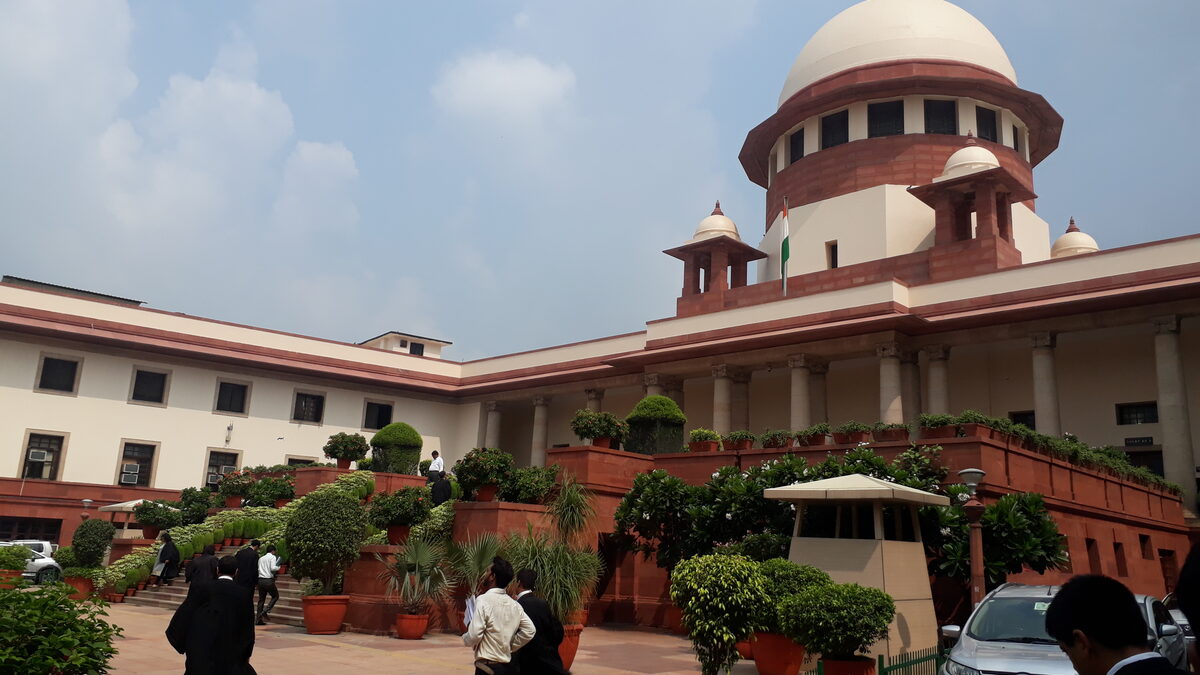
Cover image: a Supreme Court of India style court building column facade — photo by Pinakpani, CC BY-SA 4.0, via Wikimedia Commons.
The Supreme Court will hear on Monday, September 7, 2026, a public interest plea seeking an independent regulator and binding guidelines to curb unpredictable airfare fluctuations and extra charges by private airlines. A bench of Justices Vikram Nath and Sandeep Mehta is seized of the case, in which the Centre has promised to finalise new aviation rules within three weeks of its August 17 assurance. For Indian flyers, the hearing is the sharpest judicial scrutiny of surge pricing and baggage fees in years.
The petition, filed by social activist S Laxminarayanan, argues that no authority today can review or cap fares or ancillary fees, leaving passengers exposed to hidden charges. Senior advocate Ravindra Srivastava, appearing for the petitioner, has told the court that airlines charge exorbitant fares while the authorities show a lack of willingness to act. The outcome could shape how every domestic ticket in India is priced.
Why is the Supreme Court hearing the airfare case on September 7?
The case has built steadily for almost a year. On November 17 last year the court sought responses from the Centre and others. In January it flagged festival-season price hikes, describing them as exploitation. On May 15 it said fares need rationalisation and asked the Centre for relief, with Solicitor General Tushar Mehta responding that the 2024 law had come into force in January 2025 and rules were being prepared.
On July 13 the bench directed the Centre to place the rules framed under the Bharatiya Vayuyan Adhiniyam, 2024 before it in a sealed cover, even if they had not been placed before Parliament. Then on August 17, Additional Solicitor General Anil Kaushik told the court that drafting had been fast-tracked to modernise aviation and would be finalised within three weeks, placing a draft in a sealed cover. September 7 is when the court tests whether that promise held.
What fare and baggage charges does the plea challenge?
Three grievances sit at the core of the petition. First, volatile surge pricing, especially around festivals, when fares on some routes multiply within hours. Our explainer on how airlines use AI dynamic pricing breaks down the fare-bucket mechanics behind those jumps.
Second, the baggage cut. The plea states that all private carriers reduced the free checked-baggage allowance for economy passengers from 25 kg to 15 kg without justification, converting what was earlier part of the ticketed service into a new revenue stream. Third, the single-piece check-in rule, which offers no rebate to passengers who do not use the allowance and which the plea calls arbitrary.
The common thread is regulatory vacuum. The petition contends there is currently no body empowered to examine fare levels or ancillary charges, so each new fee lands directly on the passenger. Petitioner counsel pointed to a Civil Aviation Minister statement in Parliament that the government cannot cap fares, arguing that this hands-off posture is exactly why a regulator is needed.
What did the court say about grounding airlines?
At the August 18 hearing the bench issued its bluntest warning yet: if airlines are not complying, ground them. The judges noted that the draft rules proposed some regulatory mechanism but left it unclear whether an effective regulator was included, and granted more time with the next hearing fixed for September 7.
The remark matters because it signals the court is willing to back guidelines with operational consequences, not just advisories. Whether that translates into a fare-capping power or a transparency-and-redress regulator will turn on what the sealed-cover draft actually contains, and on how the Centre defends the limits of its role.
What should Indian flyers watch for next?
Three things. First, whether the Centre files finalised rules or seeks more time on September 7. A further extension would stretch the August 17 three-week commitment. Second, whether the court spells out the contours of the regulator it wants: tariff oversight, an ancillary-fee code, or a grievance body with teeth.
Third, the festival-season test. With Diwali and Chhath travel weeks approaching, any interim direction on surge pricing would bite immediately. Until then, travellers can protect themselves the old-fashioned way: book early on peak-date routes, compare the all-in fare including baggage rather than the headline price, and do not hold out for a sale that may never beat the algorithm.
Frequently asked questions
When is the Supreme Court hearing the airfare case?
On Monday, September 7, 2026, before Justices Vikram Nath and Sandeep Mehta. The court will review the Centre's progress on finalising aviation rules under the Bharatiya Vayuyan Adhiniyam, 2024, after a three-week commitment given on August 17.
Who filed the plea against unpredictable airfares?
Social activist S Laxminarayanan, represented by senior advocate Ravindra Srivastava. The petition seeks an independent regulator for transparency and passenger protection, plus guidelines against unpredictable fare fluctuations and extra airline charges.
What baggage change is challenged in the case?
The petition states private airlines cut free economy checked baggage from 25 kg to 15 kg without justification, turning a previously inclusive service into a paid extra, alongside a single-piece check-in rule with no rebate for passengers who use less.
Can the government cap flight ticket prices in India?
The Civil Aviation Minister has told Parliament the government cannot cap fares. The petitioner's case is that this vacuum is precisely why an independent regulator with powers over fares and ancillary fees is needed, a question the September 7 hearing may address.