Indonesia's August-September 2026 fire season has triggered haze across Borneo and Luzon and temporary closure of nine national parks, with firefighting prioritised in six provinces. What it means for park access, flights and air quality.
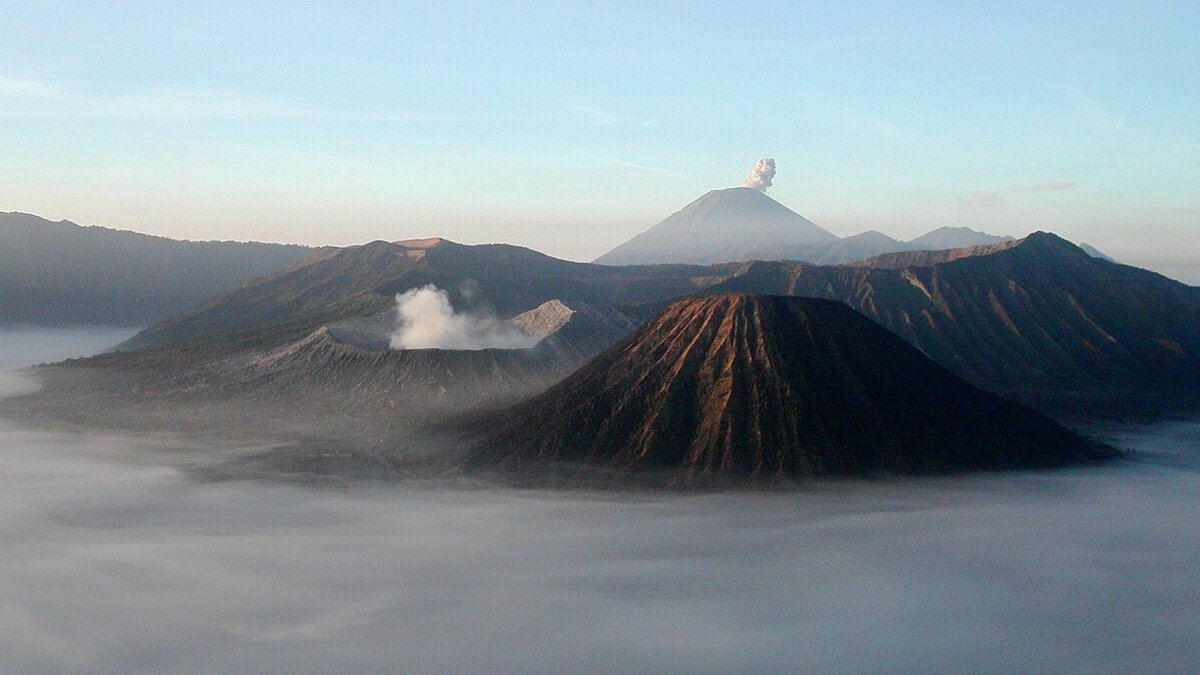
Cover image: Mount Bromo and Mount Semeru at sunrise above a sea of cloud — photo by Thomas Hirsch (= user Ravn), CC BY-SA 3.0, via Wikimedia Commons.
Indonesia forest fires in late August and September 2026 have pushed haze across Malaysian Borneo and parts of Luzon and led to the temporary closure of nine national parks, with authorities prioritising firefighting in six provinces. Outlets including CNA and Al Jazeera carried the closures and haze alerts on 1 September 2026, while Indonesia's disaster agencies and Antara News flagged an elevated fire alert as El Nino peaks in September. If you are heading to Kalimantan, Bali or Sumatra this week, expect park restrictions, possible flight delays around fire zones, and air-quality warnings.
The short answer for travellers: nine parks are closed until fire risk eases, six provinces are the operational focus for water-bombing and ground teams, and haze is a cross-border issue again. You do not need to cancel a Java-Bali itinerary, but you should check park status, flight advisories and PSI or AQI readings for Borneo and Palawan before you go.
Which parks are closed and why?
According to a CNA report carried on 1 September 2026 that was echoed across Google News, nine national parks were temporarily closed following forest fires, with firefighting prioritised in six provinces. The headline-level detail is consistent across aggregators, but the official park-by-park list had not been consolidated in a single English-language release at the time of writing. Indonesian authorities have used the same protocol in past seasons: close hiking trails and crater routes, suspend permits, and keep closures in place until hot-spot counts and visibility improve.
Antara News, the state news agency, was already signalling the shape of the season on 1 September with headlines such as "Indonesia on alert for forest fires as El Nino peaks in September" and regional notes on wildfire area trends. That context matters because September is typically the peak for southern Sumatra and Kalimantan. Even where a park is not closed, smoke, reduced visibility and ranger restrictions can limit sunrise hikes at Bromo, Kerinci and Rinjani. For current trekking status, see Is Bali Safe? 2026 Safety Guide and Best Time to Visit Bali in 2026, which explain seasonal fire and haze patterns.
Where is the haze and how bad is it?
The same news cycle flagged toxic haze choking Malaysian Borneo on 1 September, with follow-on notes that smoke had reached parts of Luzon in the Philippines. Bloomberg and Al Jazeera headlines framed the event as transboundary haze, the recurring dry-season phenomenon when peat and forest fires in Sumatra and Kalimantan push smoke across the region.
What this means on the ground:
- Borneo (Sabah, Sarawak, Kalimantan): hazy conditions and reduced air quality, with local authorities issuing mask and outdoor-activity advisories
- Philippines (Palawan, western Luzon): light haze and air-quality alerts noted by news aggregators, with schools and local health offices urging precautions during peak hours
- Java and Bali: generally clearer, but views to volcanoes may be muted and sunset colours stronger due to particulates
For travellers, the health guidance is consistent across seasons: limit strenuous outdoor activity when the PSI exceeds 100, carry N95 masks if you are sensitive, and keep hotel windows closed overnight. Airlines have not issued blanket cancellations, but regional turboprop and pioneer routes can see retimings when visibility drops at airstrips near fire zones.
What should travellers do this week?
| Situation | What to do | Check |
|---|---|---|
| Booked a national-park trek in Sumatra or Kalimantan | Contact the park office or your guide; expect postponement or rerouting | Park permit status and refund or date-change policy |
| Flying to Borneo or Palawan in next 7 days | Allow buffer for delays, keep baggage with essentials in cabin | Airline advisory and airport METAR visibility |
| Staying in Bali, Lombok or Java | No need to change plans; monitor AQI for sunrise hikes | Bromo or Rinjani ranger notice for crater access |
| Sensitive to smoke (asthma, elderly, children) | Limit outdoor time, carry medication, wear N95 outdoors | Local PSI or AQI, and hotel air-purifier availability |
Practical steps that work across fire seasons are worth keeping, especially if you are combining Indonesia with Malaysia or the Philippines. Carry a small supply of N95 masks, download offline maps for rerouting, and keep one flexible day in your itinerary for a missed hike or delayed flight. If you are travelling for diving in Bali or Palawan, water visibility is not affected by haze, but topside transfers may be.
Planning more broadly across the archipelago? Our guides to Do I Need a Visa for Bali? Entry Rules for Indians and Others in 2026 and Best Time to Visit Vietnam in 2026 help you compare entry and season trade-offs when you need to pivot dates or destinations on short notice.
Is it still a good time to visit Indonesia in September 2026?
Yes, with the right expectations. September is still high season for Bali and Java, with dry days and warm seas, while Kalimantan and Sumatra carry higher haze risk. The nine park closures are temporary and focused on fire-prone areas, not a nationwide shutdown. Most beach, city and cultural itineraries in Jakarta, Yogyakarta, Bali and Labuan Bajo continue as normal. The national disaster agency BNPB has in past seasons reported year-on-year improvements in burned area in key provinces such as South Sumatra, a sign that early detection and water-bombing are containing the worst, even as hot spots continue to flare in peat areas.
If your dates are fixed, bias your time toward Java, Bali and eastern Indonesia and keep Borneo and Sumatra as a flexible add-on you confirm 48 hours before travel when park notices and AQI readings are fresh. Tour operators in Bali were already advising that approach on 1 September.
Frequently asked questions
Are all Indonesia national parks closed?
No. Nine parks were reported as temporarily closed on 1 September 2026, with firefighting prioritised in six provinces. Other parks, including much of Java and Bali, remain open, though individual trails may have smoke or ranger restrictions.
Will my Bali flight be cancelled due to haze?
Mainline flights to Ngurah Rai (Bali) and Soekarno-Hatta (Jakarta) are operating normally. Short-hop flights to smaller airstrips near fire zones may be retimed if visibility drops. Check your airline's advisory on the day of travel.
Is the haze dangerous for healthy adults?
For most healthy adults, haze at moderate levels causes irritation rather than serious risk. Limit outdoor exercise when air quality is poor, wear an N95 mask during hazy periods, and seek cleaner indoor air if you have respiratory conditions.
How long will the closures last?
Closures are lifted by park rangers when hot-spot counts and visibility improve, often within days to weeks. Check the park office or your licensed guide for the latest permit status before you set out.
Sources
- CNA — Indonesia closes 9 national parks temporarily following forest fires; prioritises firefighting in 6 provinces (headline 1 Sept 2026)
- Al Jazeera — Toxic haze from Indonesian forest fires chokes Malaysian Borneo (1 Sept 2026)
- Antara News — Indonesia on alert for forest fires as El Nino peaks in September (1 Sept 2026)
- BNPB Indonesia — wildfire area and firefighting updates