Best time for Indians to visit Sri Lanka in 2026 is December to March for the west and south coasts plus hill country, and May to September for the east coast. This month-by-month guide maps monsoons, prices and which coast to pick when flying ex-Chennai, Delhi or Mumbai.
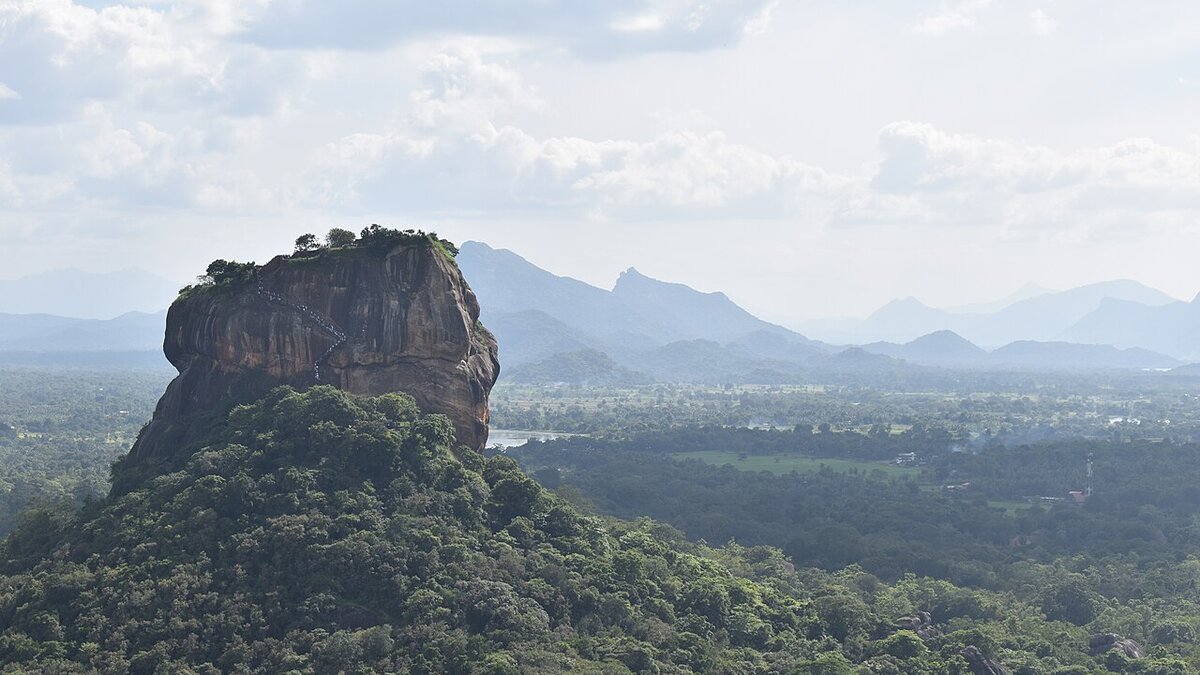
Cover image: Sigiriya rock fortress rising above the jungle in Sri Lanka — photo by Gayomiw, CC BY-SA 4.0, via Wikimedia Commons.
The best time to visit Sri Lanka from India in 2026 is December to March if you want the west and south coasts, Colombo, Galle and the hill country at their driest, and May to September if you want the east coast around Trincomalee, Passikudah and Arugam Bay at its calmest. Sri Lanka has two opposing monsoons, so one coast is dry while the other is wet. For most Indian travellers flying ex-Chennai, Bengaluru, Delhi or Mumbai for a 5 to 7 day beach-plus-culture trip, late December to early March gives the best odds of sun, calm sea and workable hill-country hikes, with February the driest month island-wide and Diwali (October to November) a strong shoulder alternative before prices spike in late December. The cheapest flying window from India is typically May, June and late September when fares dip and hotels discount the wet coast.
Sri Lanka sits 55 km from India at its narrowest point and non-stop flights from Chennai are 1 h 35 m, from Delhi about 3 h 45 m. That proximity means you can chase the dry coast without a long haul, which is why this guide splits the island by coast rather than giving one blanket answer. Pair it with Sri Lanka ETA visa guide for entry, is Sri Lanka safe for Indian tourists for safety and cheapest way to travel to Sri Lanka from India for fares.
Why Sri Lanka has two best seasons, not one
Sri Lanka is hit by two monsoons that affect opposite coasts. The southwest monsoon (Yala, late April to September) brings rain and choppy seas to the west and south coasts (Colombo, Negombo, Bentota, Mirissa, Galle, Yala) and to much of the hill country. The northeast monsoon (Maha, October to January, peaking December) drenches the east and north (Trincomalee, Batticaloa, Passikudah, Jaffna) while the west and south dry out. The north-central Cultural Triangle (Sigiriya, Dambulla, Polonnaruwa, Anuradhapura) gets rain from both but has a relatively drier window from May to September and again in January to March. This split is why a January visitor should base in the south and west, while a July visitor should base in the east.
Temperatures stay 27 to 32 deg C on the coasts year-round. Hill country (Kandy 500 m, Nuwara Eliya 1,868 m, Ella) runs 15 to 24 deg C and can feel cool at night. Sea condition matters more than temperature for Indian beach travellers: west and south seas are calmest November to April and roughest June to August, while east coast seas are flat May to September and ideal for snorkelling at Pigeon Island in that window.
Month-by-month at a glance for Indians flying from India
| Month | Best coast / region | Rain & sea | Crowds & INR prices from India |
|---|---|---|---|
| January | West & south, hill country, Cultural Triangle | Dry west/south, calm seas; wet northeast | Peak season after New Year. Return fares Chennai–Colombo INR 11k–18k, Delhi–Colombo INR 16k–26k. Hotels 20–30% over shoulder. |
| February | West & south, hill country (driest month island-wide) | Driest, calmest seas west/south; east still settling | Best weather, still peak. Ideal for Galle and Mirissa whale season (Dec–Apr). |
| March | West & south, Cultural Triangle, hill country | Hot (31–33 deg C), low rain west/south; good hill visibility | Shoulder begins mid-March, fares soften. Good value before Sinhala New Year (13–14 Apr). |
| April | Cultural Triangle, east coast opening, hill country | Inter-monsoon showers start southwest; east improves | Sinhala and Tamil New Year peak 13–14 Apr, then quiet. Hot but workable. |
| May | East coast (Trinco, Passikudah, Arugam Bay), north-central dry zone | Southwest monsoon on west/south, calms east; seas flatten east | Low season west/south, deals 25–35% off. Cheapest flying month from India. |
| June | East coast best, Cultural Triangle dry | Wet west/south, surf in Hikkaduwa; east dry and sunny | Lowest hotel rates west/south. Arugam Bay surf season peaks. |
| July & August | East coast, Kandy–Ella train and Cultural Triangle | West/South monsoon continues; east at its sunniest | Summer holidays in India lift east-coast demand; book 30 days ahead. Kandy Esala Perahera often late Jul–Aug. |
| September | East coast late season, Cultural Triangle | East still good early Sep, turning by late Sep; west monsoon easing | Cheapest late-Sep window. Arugam Bay surf wanes after mid-Sep. |
| October | Transition; Cultural Triangle, Colombo city | Inter-monsoon, afternoon thundershowers island-wide, unsettled seas both coasts | Diwali shoulder (Oct–Nov 2026). Good airfare deals if you accept showers. Deepavali is a public holiday. |
| November | West & south reopening, hill country improving | Northeast monsoon builds east, west drying; seas calmer west by late Nov | Diwali peak can lift fares Delhi–Colombo to INR 22k–30k. Book 45 days out. |
| December | West & south, hill country, Galle, Mirissa (peak whale season) | Driest west/south by mid-Dec; wet east/north | Peak. Christmas to New Year surcharge 30–40%. Mid-Dec flights sell out ex-Chennai first. |
Weather based on Sri Lanka Department of Meteorology monsoon climatology and 2025–2026 operator seasons. Fares are median return OTA ex-Chennai/Delhi in 2025–2026 observed, 4–6 weeks ahead, one-checked-bag included.
Which itinerary fits which month from India
Classic first trip (west/south + Cultural Triangle + hill country): go December to March. Base 2 nights Negombo or Colombo, 2 nights Cultural Triangle (Sigiriya/Dambulla), 2 nights Kandy–Ella by train, 2 nights Galle or Mirissa. Seas are calmest for whale watching Mirissa and snorkelling Hikkaduwa, and the Kandy–Ella train runs with the best mountain visibility in February and March. This is also the window with the most non-stop options from Chennai and the most frequency to Colombo (CMB) from Delhi via IndiGo and SriLankan Airlines.
East-coast beach trip: go May to September. Fly Chennai–Colombo then domestic to Trincomalee area or drive 6 to 7 hours east. Base in Uppuveli or Passikudah for calm, shallow water good for families, and in Arugam Bay for surf (best June to August, consistent point breaks). Sigiriya and Polonnaruwa pair well here as they sit in the dry zone even in July. Indians who find Goa and Bali surf crowded in August will find Arugam Bay line-ups more manageable, with board rental near INR 800–1,200 per day.
One monsoon-proof trick for any month: split coasts. A 7-day ring that touches both sides hedges the weather — for example late October: 2 nights Colombo, 2 nights Sigiriya, 2 nights Passikudah, last night Negombo by the airport. You get a dry day on one coast even when the other shows showers.
Festivals, crowds and Indian holiday timing
Sinhala and Tamil New Year on 13–14 April closes shops and fills domestic transport, but hotels discount after the holiday. Vesak in May (full-moon, date varies) is quiet and reflective, with lanterns city-wide. Kandy Esala Perahera, usually late July to early August, is the island's headline cultural parade and books Kandy solid for 10 days. For Indian travellers, Diwali in October–November 2026 is a strong value shoulder: pre-Diwali late September to mid-October sees softer hotel rates and return fares Chennai–Colombo near INR 10k–14k on sale, while Diwali week itself spikes. Christmas to 5 January is the island's absolute peak: book 60 days ahead and expect minimum-night rules in Galle and Mirissa.
Money and booking tips from India
Fares: Chennai–Colombo non-stop returns are routinely INR 9,000–15,000 when booked 30–45 days ahead outside late December, with Bengaluru similar. Delhi–Colombo returns sit INR 15,000–24,000 off-peak, rising to INR 28,000–35,000 over Diwali and Christmas. SriLankan Airlines and IndiGo dominate non-stops; one-stop via another hub is rarely cheaper than Chennai non-stop.
Hotels: 3-star private rooms with breakfast run INR 3,000–5,500 between May and September on the west/south (monsoon discount) and INR 5,000–8,500 December to February. East-coast pricing inverts: INR 3,500–5,500 May–August, rising October onward. Booking with free cancellation and re-pricing 14 days out often beats non-refundable monsoon rates if weather shifts.
When to book: for December to March, book flights 45–60 days ahead and hotels 30–45 days ahead. For May–September east-coast trips, 21–30 days suffices. If you travel hand luggage only on Low-cost carriers, factor the 7 kg cabin limit strictly — Sri Lankan domestic add-ons for excess bags add INR 1,200–2,000 quickly. See also best time to visit Malaysia from India and how much a Vietnam trip costs from India to compare SEA monsoon overlaps.
Frequently asked questions
What is the single best month to visit Sri Lanka from India?
February for the west and south coasts, Colombo, Galle, Mirissa and the hill country. It is the driest month, seas are calmest and visibility on the Kandy–Ella train is best. For the east coast, July is the single best month.
Can I visit Sri Lanka in June or July from India?
Yes, base on the east coast. June to August is monsoon on the west and south, so Trincomalee, Passikudah and Arugam Bay are the dry, sunny bases while Bentota and Mirissa see rough seas and daily rain.
Is Diwali a good time to go from India?
Yes, as a shoulder. Late September to mid-October before Diwali offers lower fares and hotel deals. Diwali week itself sees higher fares, so fly two days before or after the holiday core to save 20 to 30 percent.
Do I need different packing for the hill country?
Yes. Coasts need beach wear and sun cover, but Nuwara Eliya and Ella drop to 14–17 deg C at night. Pack a light fleece and rain shell even in the dry window — afternoon showers can hit the hills even in February.