Yes, Sri Lanka is safe for Indian tourists in 2026 for the main circuits — Colombo, Galle, Bentota, Cultural Triangle, Ella — with normal big-city caution. Petty scams, road risk and rough seas are the real hazards, not violent crime. Here is what is safe, what to avoid and Indian-specific tips.
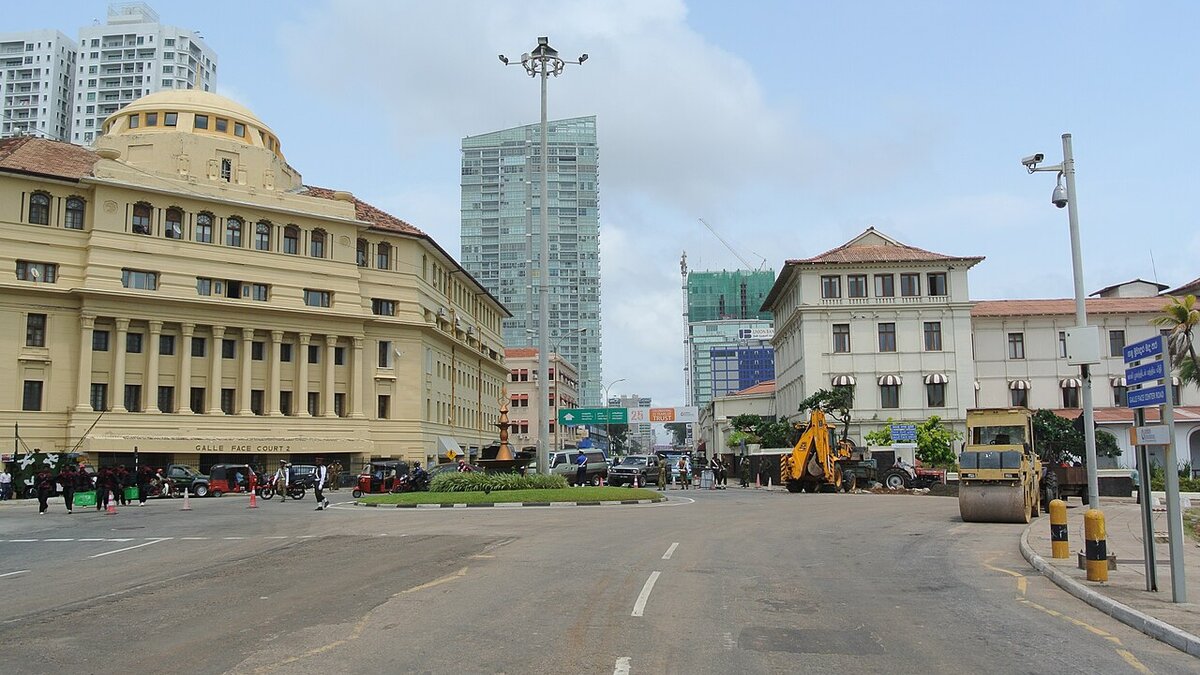
Cover image: tourists walking along Galle Face Green in Colombo, Sri Lanka — photo by Adbar, CC BY-SA 3.0, via Wikimedia Commons.
Yes, Sri Lanka is safe for Indian tourists in 2026 on the circuits most visitors use — Colombo, Negombo, the Cultural Triangle (Sigiriya, Dambulla, Polonnaruwa), Kandy, Ella and the south and west beach belts of Bentota, Hikkaduwa, Galle and Mirissa — provided you use normal big-city caution. The island has been stable for tourism since 2023, with more than 2 million annual arrivals in 2024–2025 and Indian nationals the single largest source market in 2025 (over 400,000 arrivals). Violent crime against tourists is rare and local attitudes to Indians are generally warm, with Tamil widely understood in Colombo and the north and Hindi film culture a common icebreaker. The hazards that actually affect Indians are petty scams around transport and gems, road traffic risk, and rough seas on the wrong coast for the month, not security incidents.
This guide gives a direct safety verdict, what has genuinely changed since the 2022 economic crisis, area-by-area guidance, Indian-specific scams and health notes, and a practical checklist you can run at the airport. Read it with best time to visit Sri Lanka from India, Sri Lanka ETA visa guide and cheapest way to travel to Sri Lanka from India.
Overall safety verdict for Indians in 2026
Sri Lanka sits at Level 2: Exercise Increased Caution on the US State Department map and has no Indian MEA advisory against non-essential travel in 2026. Colombo, Galle Fort, Negombo, Kandy and Ella are policed and tourist-heavy, with visible tourist police units (dial 110). Night walking on lit, busy streets around Fort, Pettah market edge, Galle Fort and Ella main strip is routine, while isolated beach stretches after 22:00, underlit roads between towns, and drinking streets where you do not know the pour are the three places to skip.
What has changed since 2022: fuel queues, power cuts and medicine shortages that disrupted travel in 2022 are resolved. Roads are fuelled, trains run, ATMs dispense and hospitals in Colombo (National Hospital, Asiri, Nawaloka private hospitals) and Kandy are fully operational. Protests still gather around Colombo Fort and Galle Face on political anniversaries — they are peaceful and easily avoided by checking a hotel front desk before heading that way.
Where it is safe and where to be more careful
| Area / route | 2026 safety read for Indians | What to actually watch |
|---|---|---|
| Colombo — Fort, Pettah market edge, Galle Face, Kollupitiya | Safe by day and early evening, busy and policed | Pettah pickpockets and phone snatches on crowded pavements; use a cross-body bag and no back pocket phone. |
| Galle Fort, Unawatuna, Mirissa, Bentota, Hikkaduwa | Safe, tourist-standard resort belts | Sea flags (red means no swim), tuk-tuk overcharge after 22:00, drink spiking in late-night bars — watch pours. |
| Cultural Triangle — Sigiriya, Dambulla, Polonnaruwa, Anuradhapura | Very safe, low crime, early mornings best | Heat and hydration (carry 1.5 L), monkey theft of food at Sigiriya, uneven steps on rock summit. |
| Kandy, Nuwara Eliya, Ella, hill country train | Safe, cool climate, strong tourist infrastructure | Road fog and night driving hill bends, train door hanging — stay inside. |
| East coast — Trincomalee, Passikudah, Arugam Bay (May–Sep best) | Safe in season, quiet off-season | Deserted beaches after dark, limited ATMs, surf rip in Arugam Bay — swim near flags only. |
| Jaffna and far north | Safe, conservative, welcoming to Tamil-speaking Indians | Dress modest at temples, limited nightlife, check demining signage only if venturing to remote lagoons (cleared tourist roads are fine). |
Scams aimed at Indians — what they look like and how to walk away
- Gem and spice shop detour: a friendly stranger near Galle Face or Kandy Lake offers to show you a government gem sale or spice garden and a tuk-tuk driver offers a free ride. The shops pay the finder a commission and prices are 3 to 5 times street value. Decline politely — shop at Cargills, Laksala state emporium or a fixed-price mall instead.
- Tuk-tuk without meter, then hard bargain: Colombo to Pettah can be quoted LKR 1,500 when the meter would read LKR 600. Use PickMe or Uber for autos and cars (both work in Colombo, Kandy, Galle) — the app fixes the price before you board. Agree a price before you sit if no app.
- Train ticket black market: Kandy–Ella Ella Odyssey and 2nd-class reserved seats sell out 14 to 30 days ahead. Touts at Colombo Fort station sell unreserved as reserved. Buy on seatreservation.railway.gov.lk or at the station counter with ID, not from a platform trader.
- Sim and money change trick: airport money changers advertise a headline rate with a small footnote buy-sell spread of 4 to 6 percent and count fast. Use a bank counter at Bandaranaike (BIA) arrivals (Bank of Ceylon, Peoples Bank) or withdraw LKR 50,000–100,000 at once from a bank ATM — fee near LKR 800–1,200 rather than small repeated pulls.
- Beach massage and bracelet: a bracelet tied on your wrist on Unawatuna beach is followed by a demand for dollars. Keep hands in pockets and say no before the tie.
Road, sea and health — the risks that actually hospitalise
Road: Sri Lanka drives on the left, like India, and traffic in Colombo mixes buses, lorries and scooters with limited lane discipline. Night buses between Colombo and Ella or Jaffna have higher crash exposure — day buses or the train are calmer. If you rent a scooter, you need an International Driving Permit with motorcycle endorsement and a helmet; police checkpoints around Galle and Negombo do fine for missing permits. Self-driving a car is not advised for first-timers — hire a car with driver at LKR 12,000–16,000 per day (INR 3,350–4,470) all inclusive.
Sea: drowning, not crime, is the tourist injury pattern. West and south coasts (Hikkaduwa, Bentota, Mirissa, Unawatuna) have rips May to September and should only be swum at flagged or lifeguarded patches then. East coast (Passikudah's shallow bay) is calm May to September and rough November to February — the seasonality flips. If a flag is red, do not enter even knee-deep.
Health: Tap water is not drinkable — use sealed bottled water and avoid tap-water ice at stalls. Colombo and Kandy private hospitals are strong; carry insurance with medical evacuation over INR 50 lakh for hill-country hikes. Dengue peaks after rains (October–January and April–June) — use DEET repellent at dusk, especially near paddy edges around Anuradhapura. No mandatory vaccinations are required for Indians arriving from India, but routine hepatitis A and typhoid cover is sensible — check vaccinations for Bali from India for the same principle, as the risk profile is similar.
Solo and women travellers from India
Solo women report Colombo, Galle Fort and Ella as relaxed in daylight, with Galle Fort and Unawatuna comfortable for evening walks on lit streets. The same three night rules as above apply everywhere: pre-book a PickMe rather than a street hail after 22:00, stay on sea-facing and hotel-cluster streets, and decline after-hours beach invitations from strangers. In working districts of Colombo away from the tourist strip, modest dress (covering shoulders and knees at temples) draws less attention. Hostels in Colombo and Ella run female-only dorms with lockers — use them.
Practical checklist for Indians at Bandaranaike Airport
- ETA or eVisa printed plus return ticket, hotel address and 6 months passport — immigration asks for all three more often since 2024.
- Change LKR 15,000 at the bank counter, not at the first counter after the belt. Buy a Dialog or Mobitel tourist eSIM at the arrivals hall (30 days, 20–50 GB for LKR 2,500–4,000; INR 700–1,120) rather than roaming at INR 500 per day.
- Book your first transfer on PickMe from the pick-up lane, not with the hall touts quoting flat LKR 6,000 to Colombo Fort when the app reads LKR 3,200–4,200.
- Save emergency numbers: Tourist Police 110 or 011-242-1052, general emergency 110, ambulance (Suwa Seriya) 1990.
Frequently asked questions
Is Sri Lanka safe for Indian families with kids in 2026?
Yes for the standard circuits — Colombo, Galle, Bentota, Cultural Triangle, Kandy and Ella. Stick to flagged beaches, use PickMe or a hired car with driver, carry bottled water and keep phones cross-body in Pettah.
Is Colombo safe at night for Indians?
Fort, Galle Face and Kollupitiya are safe on lit, busy streets until about 22:00. Avoid isolated beach stretches after 22:00, underlit lanes and drinking streets you don't know.
What is the biggest scam for Indians?
The gem and spice shop detour via a friendly stranger and free tuk-tuk. Walk away, use fixed-price shops and agree tuk-tuk fares on PickMe before you board.
Do I need to avoid any area entirely?
No tourist area is no-go. Jaffna is safe but conservative and remote. Beach swimming is the activity to avoid on the wrong monsoon coast when flags are red.