

Hub-and-spoke networks let airlines serve thousands of city pairs with a fraction of the routes, which is why layovers exist. Here is how banked and rolling hubs work, who the giants are, and what it all means for fares.
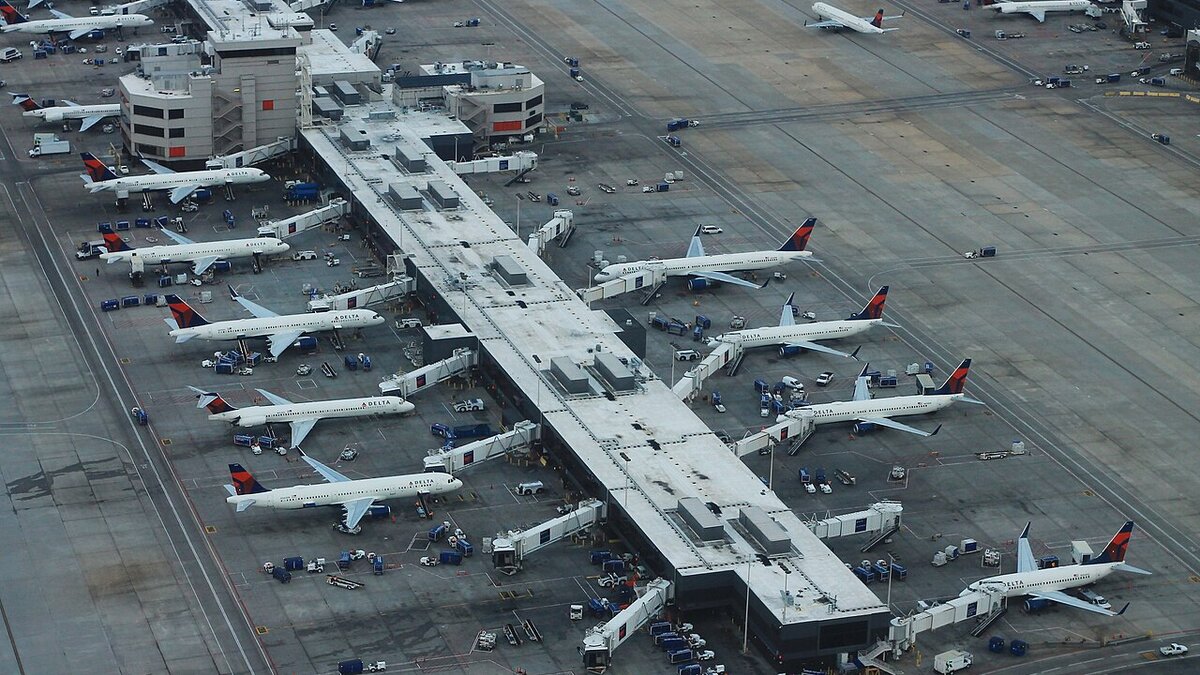
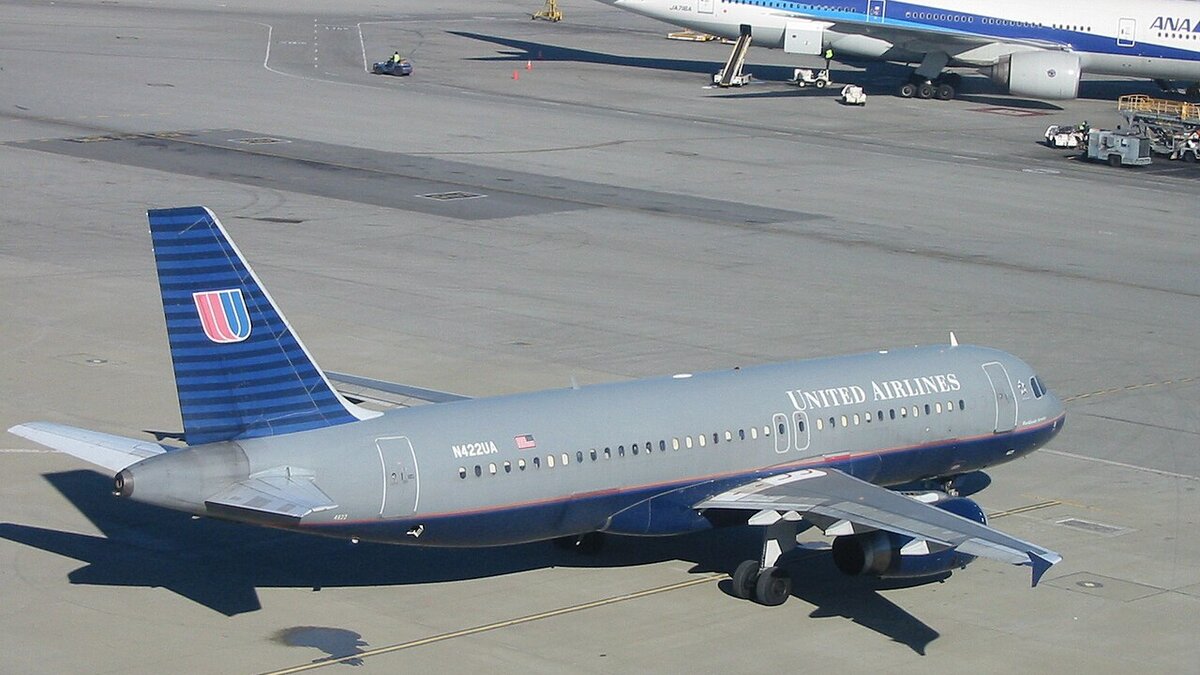
Cover image: major hub airport with parked aircraft at the gates — photo by formulanone, CC BY-SA 2.0, via Wikimedia Commons.
Airline hubs work on simple network mathematics: funnel passengers from many cities through one central airport, and a handful of routes can serve thousands of city pairs. Connect 10 cities through one hub and an airline flies just 10 routes yet sells tickets in 55 markets; serving every pair nonstop would take 55 separate routes. That maths is why layovers exist, and why the world's biggest airports are connection machines. Hartsfield-Jackson Atlanta International handled 106.3 million passengers in 2025, according to Airports Council International (ACI World), a crown it has held almost every year since 1998. Dubai International followed with 95.2 million, the busiest airport on earth for international traffic, while Istanbul Airport carried 84.4 million. The model took off after the US Airline Deregulation Act of 1978 freed carriers to rebuild their networks around central transfer points. Hubs deliver reach and frequency no point-to-point network can match, but they also concentrate market power, which is why fares from a dominated hub often carry a premium.
Why do layovers exist in the first place?
Most city pairs in the world cannot fill a daily nonstop aircraft. Demand between, say, Manchester and Nairobi, or Boise and Berlin, cannot justify a dedicated flight. The hub solves this by aggregating passengers: travellers from dozens of origins converge on one airport, swap aircraft and fan out to dozens of destinations.
Before 1978, the US Civil Aeronautics Board assigned routes and set fares, and networks were largely point-to-point. After deregulation, legacy carriers moved rapidly to hub-and-spoke systems because a hub multiplies the markets each aircraft serves. Econlib notes that real US fares fell roughly 45 per cent in the decades after deregulation as competition took hold.
What is the difference between a banked hub and a rolling hub?
A banked hub schedules flights in synchronised waves, or "banks". Dozens of aircraft arrive within a 60-to-90-minute window, passengers connect, and the same aircraft depart together in the following wave. The payoff is short connections and the maximum number of saleable itineraries; the cost is congestion — gates, crews and runways slammed at peak, idle in between.
A rolling hub smooths arrivals and departures across the whole day. American Airlines pioneered "depeaking" at Chicago O'Hare and Dallas/Fort Worth in the early 2000s to cut costs, but longer connection times bled connecting revenue and by 2015 it had rebanked both hubs. Today most large network carriers, including Delta Air Lines and United Airlines, run banked schedules wherever gates and runway slots allow.
- Banked hub: waves of arrivals and departures; fastest connections; highest peak costs and delay risk.
- Rolling hub: steady flow all day; better aircraft and crew utilisation; fewer connecting options per hour.
- Hybrid reality: slot-constrained megahubs such as London Heathrow are effectively rolling by necessity — there is no off-peak capacity to bank into.
Which are the world's biggest hub airports?
ACI World's April 2026 rankings show how thoroughly hubs dominate the traffic league. Atlanta is the archetype: Delta operates more than 1,000 daily departures there, and most of its passengers are connecting rather than starting or ending in Georgia. Dubai plays the same role for Emirates on the east-west "kangaroo" flows, a position Gulf rivals are rebuilding too, as detailed in how Gulf carriers restored their networks after 2025's airspace disruption.
| Airport | 2025 passengers | Principal hub carrier | Hub role |
|---|---|---|---|
| Atlanta (ATL) | 106.3 million | Delta Air Lines | World's largest single-carrier hub |
| Dubai (DXB) | 95.2 million | Emirates | Busiest international airport; east-west superconnector |
| Tokyo Haneda (HND) | 91.7 million | ANA / Japan Airlines | Dual-carrier domestic and international hub |
| Dallas/Fort Worth (DFW) | 85.7 million | American Airlines | American's largest banked hub |
| Istanbul (IST) | 84.4 million | Turkish Airlines | Serves more countries nonstop than any rival |
How do airlines make money from connections?
Connection economics rest on breadth. Each new spoke added to a hub does not create one new market; it creates a market with every other spoke already on the network. That is why hub carriers defend feeder routes that lose money in isolation: their passengers make dozens of long-haul flights viable. It is also the logic behind airline alliances, which bolt partner networks onto each hub.
The flip side is pricing power. Economists have long documented a "hub premium": fares for nonstop trips starting at an airport one carrier dominates run higher than comparable routes elsewhere. Research by Mara Lederman in the Journal of Economics & Management Strategy found frequent-flyer programmes a significant driver of that premium: loyal hub-city customers are less price-sensitive. Connecting passengers, by contrast, can usually choose between several competing hubs, so one-stop itineraries are often priced aggressively.
Hub-and-spoke vs point-to-point: which is winning?
Low-cost carriers such as Southwest, Ryanair and easyJet revived point-to-point flying on dense routes, skipping the cost of connection banks, transfer baggage and misconnection recovery. New long-range narrowbodies such as the Airbus A321XLR extend that challenge to intercontinental markets, letting carriers fly "long and thin" routes past the megahubs — a strategy Air Canada is using to open new transatlantic city pairs in 2026.
Neither model has won outright. Hubs remain unbeatable for small and mid-size cities that could never support nonstops, while point-to-point undercuts hubs wherever demand is thick enough. Most large airlines now blend the two, and new entrants such as Riyadh Air still build around a connecting hub from day one.
What does the hub system mean for the fares you pay?
The practical rules are consistent. A hub city buys unmatched nonstop choice, often at premium prices on routes the hub carrier dominates. A spoke city means connections — but also competition, since several hub systems usually bid for the same one-stop journey. And because hubs concentrate operations, a thunderstorm at one megahub can ripple across an entire airline's day — hence schedule padding and minimum connection times. Fuel, labour and airport charges still set the fare floor everywhere — see why jet fuel is pushing 2026 airfares higher.
Frequently asked questions
Why are connecting flights sometimes cheaper than nonstops?
Connecting itineraries compete with every rival hub that can route you between the same two cities, so airlines price them keenly. Nonstops from a dominated hub face less competition and often carry the documented "hub premium".
How short can a layover safely be?
Airlines will not sell an itinerary below an airport's published minimum connection time; at banked US hubs that can be under an hour for domestic transfers, while international connections involving passport control typically need 60 to 120 minutes. On a single ticket the airline must rebook you free of charge if a delay breaks a legal connection.
What is a fortress hub?
An airport where one carrier controls most gates and departures, such as Delta in Atlanta or American at Dallas/Fort Worth. Fortress hubs offer the deepest schedules but the least airline choice for local travellers.
Do low-cost airlines use hubs?
Most operate "bases" rather than true hubs: aircraft and crews are stationed there, but schedules are not built for connections. Some, including Ryanair, now offer limited connecting products, blurring the line.


Post a comment