

Baggage allowances have never varied more by airline and region. This guide covers carry-on and checked limits, low-cost carrier traps, the EU's free cabin-bag deal taking effect in 2027, rising US fees and tightening lithium battery rules.
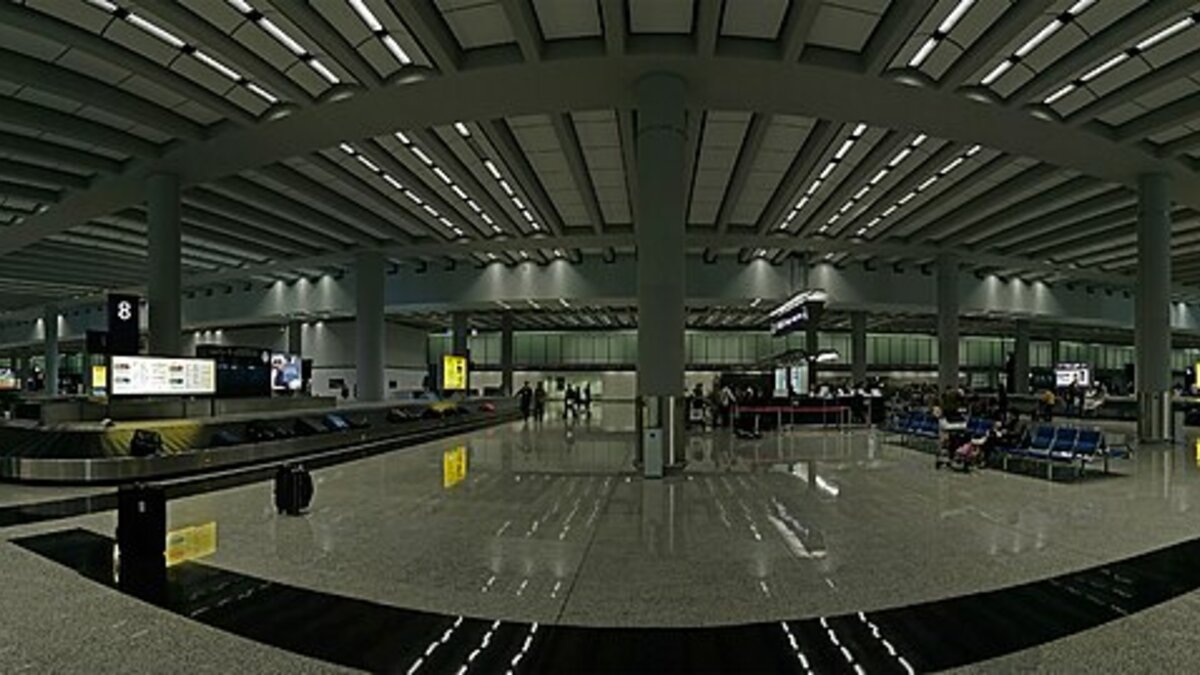
Cover image: luggage on an airport baggage carousel — photo by Base64, CC BY-SA 3.0, via Wikimedia Commons.
Airline baggage rules in 2026 vary widely by carrier and region, but the broad picture is this: most full-service carriers allow a cabin bag of roughly 55 x 40 x 23 cm (56 x 36 x 23 cm on US carriers) plus a personal item, with weight caps of 7-12 kg common in Asia and the Middle East and no weight limit on most US airlines. Checked allowances split into two systems: the piece concept (typically one or two bags of 23 kg / 50 lb each, dominant in North America and on transatlantic routes) and the weight concept (a total allowance of 20-35 kg, common in Asia, Africa and the Gulf). Low-cost carriers such as Ryanair and Wizz Air include only a small under-seat bag of 40 x 30 x 20 cm free of charge. The biggest regulatory shift: EU negotiators agreed on 15 June 2026 that a free cabin bag must be included in every European fare from 2027, while new lithium battery rules now bar power banks from overhead bins on a growing list of airlines.
What are the standard carry-on and checked baggage limits by region?
There is no single global standard: IATA publishes guidance rather than binding rules, and size charts compiled by Upgraded Points across 64 airlines show cabin-bag limits ranging from 50 cm to 60 cm on the longest side.
US carriers (American, Delta, United) allow a 56 x 36 x 23 cm cabin bag with no published weight limit, plus a personal item. European full-service airlines cluster around 55 x 40 x 23 cm, with British Airways among the most generous at 56 x 45 x 25 cm. Asian and Gulf carriers tend to police weight rather than size, with 7 kg the most common cabin cap. For checked bags, the near-universal single-bag limit is 23 kg (50 lb) in economy and 32 kg (70 lb) in premium cabins, with 158 cm (62 linear inches) the standard maximum dimension before oversize fees apply.
Which low-cost airlines have the strictest cabin bag rules?
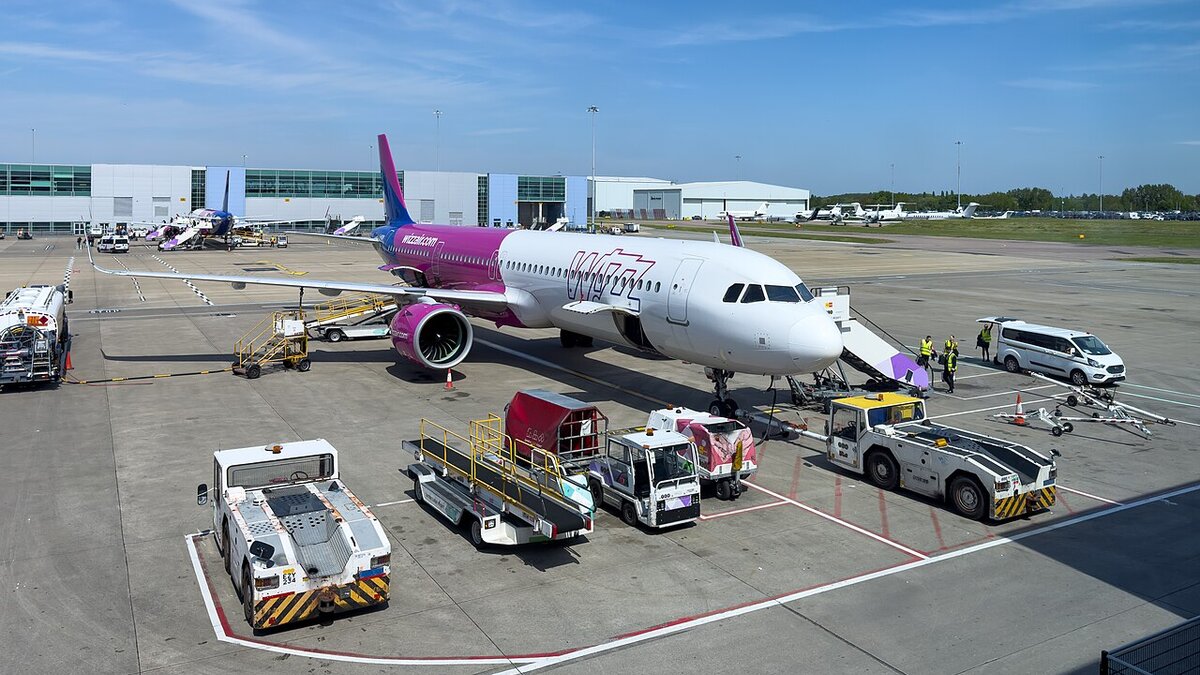
Europe's low-cost carriers are where travellers most often get caught: the free allowance is only a small under-seat bag, and the familiar wheeled cabin case costs extra. Enforcement has hardened, with new metal sizers at gates and consumer group Which? tracking wide gaps between carriers. A bag rejected at the gate can cost more than the original fare, a dynamic explained in our guide to how low-cost airlines make money from ancillary fees.
| Airline | Free bag (under seat) | Larger cabin bag (paid) | How to unlock it |
|---|---|---|---|
| Ryanair | 40 x 30 x 20 cm | 55 x 40 x 20 cm, 10 kg | Priority & 2 Cabin Bags add-on, roughly €12-36 online |
| Wizz Air | 40 x 30 x 20 cm | 55 x 40 x 23 cm | WIZZ Priority or bundled fare |
| easyJet | 45 x 36 x 20 cm | 56 x 45 x 25 cm | Large cabin bag add-on or higher fare tier |
Wheels and handles count towards the measured dimensions, airport and gate fees run far higher than online prices, and a bag that fits one airline's sizer can fail another's on the return leg of a mixed-carrier trip.
Will the EU force airlines to include a free cabin bag?
Yes, from 2027. After a decade of stalled negotiations, EU institutions reached agreement on 15 June 2026, as reported by Euronews. Every standard fare on flights covered by EU rules must include a free personal item of 40 x 30 x 15 cm plus a small wheeled cabin bag, and airlines must display carry-on-inclusive prices from the start of the booking process.
The deal also preserves the three-hour delay threshold for compensation, setting payouts at €300 for long delays and €600 for the longest delays and cancellations. The interaction with existing EU261 rights is covered in our explainer on flight delay compensation and passenger rights. Airlines may still sell discounted fares to passengers travelling without a cabin bag, so ultra-low headline prices will not disappear.
How much are checked bag and excess baggage fees in 2026?
According to fee trackers at The Points Guy, Delta and United now charge $45 for a first checked bag and $55 for a second on domestic tickets after increases in early April 2026; American charges up to $50 at the airport. Delta's third-bag fee rose from $150 to $200.
Excess charges are where costs escalate fastest:
- Overweight (23-32 kg): typically $100-200 per bag on US and transatlantic routes; per-kilo charges on weight-concept carriers.
- Oversize (over 158 cm / 62 in): around $200 on major US carriers, on top of the standard bag fee.
- Airport versus online: paying at the desk or gate can double the cost; pre-booking online is almost always cheaper.
The pressure behind these increases is structural. With airline margins still wafer-thin in 2026 and jet fuel costs pushing fares higher, baggage remains one of the industry's most reliable ancillary revenue lines.
What are the lithium battery and smart bag rules in 2026?
Battery rules tightened sharply after a series of in-cabin fires. Spare lithium batteries and power banks must always travel in the cabin, never in checked luggage; the capacity thresholds, per Aerospace Global News, are up to 100 Wh permitted, 100-160 Wh with airline approval, and over 160 Wh banned.
The newer restriction is where the battery sits inside the cabin. A growing list of carriers now bans power banks from overhead bins, requiring them under the seat so crews can spot a thermal event quickly. Emirates has allowed only one power bank under 100 Wh, with no in-flight use, since October 2025; Qantas restricted use from 15 December 2025; and Lufthansa Group banned onboard use and charging from 15 January 2026. Smart luggage follows the same logic: the battery must be removable, and a smart bag with a non-removable lithium battery above the de-minimis threshold will be refused at check-in.
Frequently asked questions
What size cabin bag fits almost every airline?
A bag of 40 x 30 x 20 cm fits the free under-seat allowance on Ryanair and Wizz Air and slips inside virtually every full-service limit. For a wheeled case, 55 x 40 x 20 cm clears most sizers; always check both carriers on a mixed-airline itinerary.
When does the EU free cabin bag rule start?
The agreement reached on 15 June 2026 takes effect in 2027. Until then, low-cost carriers on European routes can and do keep charging for anything larger than a small personal item.
Can I put a power bank in my checked bag?
No. Spare batteries and power banks are banned from checked luggage worldwide. On many airlines they must now stay under the seat rather than in the overhead bin, and several carriers prohibit using or charging them in flight.
Sources
- Euronews — Air passengers to enjoy free cabin bags as decade-long EU talks end
- Which? — Airline cabin bag allowance: a guide to Ryanair, easyJet, British Airways and Wizz Air in 2026
- The Points Guy — How much it costs to check a bag on major US airlines
- Aerospace Global News — Can you fly with a power bank? Airline rules explained for 2026


Post a comment