KResearch counts 148 Thai hotel and accommodation businesses registering closure in January to September 2026, up 42%, as room supply outpaces overnight demand and foreign arrivals to 24 October run 4.43% down.
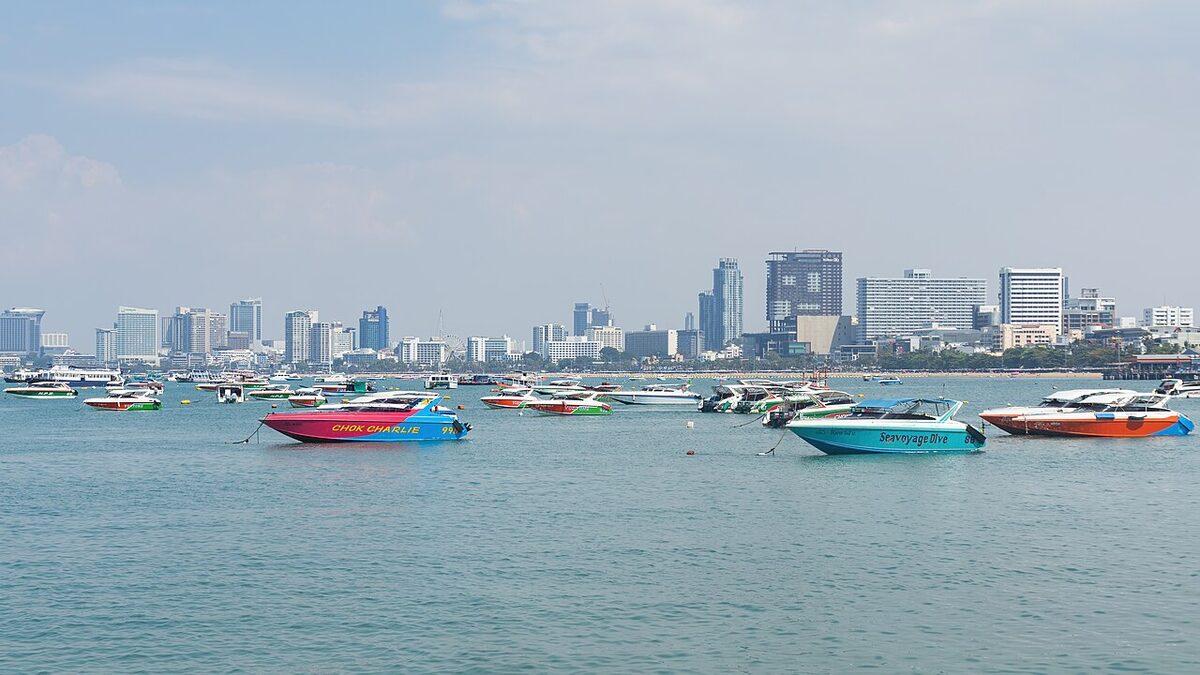
Cover image: Pattaya's hotel skyline seen from the pier (file photo) — photo by iMahesh, CC BY-SA 4.0, via Wikimedia Commons.
Thailand hotel closures in 2026 are running well ahead of last year's pace. 148 hotel and accommodation businesses registered their closure between January and September, up 42 per cent year on year, Kasikorn Research Center (KResearch) said in a report carried by The Nation on Monday 26 October. About 51 per cent of operators lost money in 2025, it said.
Room supply is growing faster than overnight demand, KResearch said. Foreign arrivals reached 24.93 million from 1 January to 24 October, down 4.43 per cent, according to the Ministry of Tourism and Sports, and KResearch's 2027 arrivals range runs from a 1 per cent fall to 5 per cent growth. For owners, lenders, hotel brands and the tour operators and online agencies selling Thailand, the report points to continued competition on price.
How serious are the Thailand hotel closures in 2026?
The 148 closures equal about 1 per cent of the roughly 15,000 operators KResearch counts. Over the same nine months 779 new businesses were established, down 31.2 per cent but still above the 2024 level.
That is more than five new registrations for every closure.
In our view, the loss figures are the bigger warning. Around 54 per cent of small operators lost money in 2025, and 38 per cent of all operators carried accumulated losses through 2023 to 2025. More than 98 per cent of operators are small or medium-sized.
| Indicator | Figure | Comparison |
|---|---|---|
| Closures registered, Jan–Sep 2026 | 148 | Up 42% year on year |
| New businesses registered, Jan–Sep 2026 | 779 | Down 31.2% year on year |
| Operators loss-making in 2025 | 51% | 54% of small operators |
| Rooms, first half of 2026 | About 876,000 | Up 11.7% on 2019 |
| Overnight visitors per room | 228 (2026) | 249 in 2019 |
| Occupancy, Jan–Sep 2026 | Up 0.18% year on year | Down in 19 provinces |
Source: KResearch, via The Nation, 26 October 2026.
Why are Thai hotels losing money?
Supply is outgrowing demand. Thailand had about 876,000 rooms in the first half of 2026, up 11.7 per cent on 2019, with new supply arriving particularly in Bangkok, Phuket, Surat Thani and Chiang Mai, KResearch said. Overnight visitors per room fell from 249 in 2019 to 228, a drop of about 8 per cent.
International chains are still opening. RIU launched the 504-room Riu Palace Phuket, its first Thai hotel, on 7 September.
Short-term rentals add pressure. AirDNA data cited in the report counted about 50,000 units in five major markets as of October, about 10 per cent of registered rooms there. KResearch expects the average daily rate to fall about 0.8 per cent in 2026, while costs from energy to online travel agency fees could rise.
What do Thailand's latest arrivals figures show?
Tourism and Sports Minister Surasak Phancharoenworakul put foreign visitor revenue to 24 October at THB1.21 trillion, down 2.68 per cent, Kaohoon International reported. Arrivals stood at 24,423,680 to 17 October when we reported on 19 October. The 1,000-baht departure tax covered in that story has since been deferred, with no new timetable.
China leads the year to date with 4.19 million arrivals, ahead of Malaysia and India. In the week of 18 to 24 October, Chinese arrivals fell 24.17 per cent from the previous week to 49,494, while India rose 18.09 per cent and long-haul markets 12.03 per cent. Those changes are week on week, not year on year.
KResearch forecasts 31.4 million foreign visitors this year, about 79 per cent of the 2019 level. By our arithmetic, that needs about 6.5 million arrivals from 25 October to 31 December, roughly 95,000 a day, against the 71,709 daily average in the week to 24 October.
South Korea's culture ministry put Korea's January to September arrivals up 21.5 per cent, against falls of 3.8 per cent for Thailand and 2.9 per cent for Japan, where Chinese visitors dropped sharply in September.
What does KResearch expect for Thai hotels in 2027?
KResearch called the outlook highly uncertain. It expects 31 million to 33 million foreign arrivals and nationwide occupancy of 69.58 to 71.69 per cent, assuming geopolitical tensions do not spread further and disrupt travel routes, a particular risk for long-haul markets in Europe and the Middle East.
For hotels with high fixed costs and limited liquidity, weaker occupancy and rising costs could mean more closures or business sales, it said.
A proposed Accommodation Act would also extend regulation to homestays, hostels, boutique hotels and sharing-economy properties. KResearch advises operators to diversify markets and revenue rather than rely on price cuts alone.
Frequently asked questions
How many hotels have closed in Thailand in 2026?
KResearch counted 148 hotel and accommodation businesses that registered their closure between January and September 2026, up 42 per cent year on year. That is about 1 per cent of the sector's roughly 15,000 operators, and 779 new businesses were established over the same nine months.
Why are hotels in Thailand struggling?
Room supply is growing faster than overnight demand. Thailand had about 876,000 rooms in the first half of 2026, 11.7 per cent more than in 2019, while overnight visitors per room fell from 249 to 228, KResearch estimates. About 51 per cent of operators lost money in 2025.
How many foreign tourists has Thailand had in 2026?
The Ministry of Tourism and Sports counted 24.93 million foreign arrivals from 1 January to 24 October 2026, down 4.43 per cent year on year. China was the largest market at 4.19 million. KResearch forecasts 31.4 million for the full year, about 79 per cent of the 2019 level.
Will Thailand's tourism recover in 2027?
KResearch calls the 2027 outlook highly uncertain. It forecasts 31 million to 33 million foreign arrivals, anything from a 1 per cent contraction to 5 per cent growth on 2026, assuming geopolitical tensions do not spread further and disrupt travel routes.