Everest, Annapurna and Kanchenjunga are operating normally after Nepal's 2026 floods. Langtang and Tamang Heritage are not. A route-by-route status check before you fly.
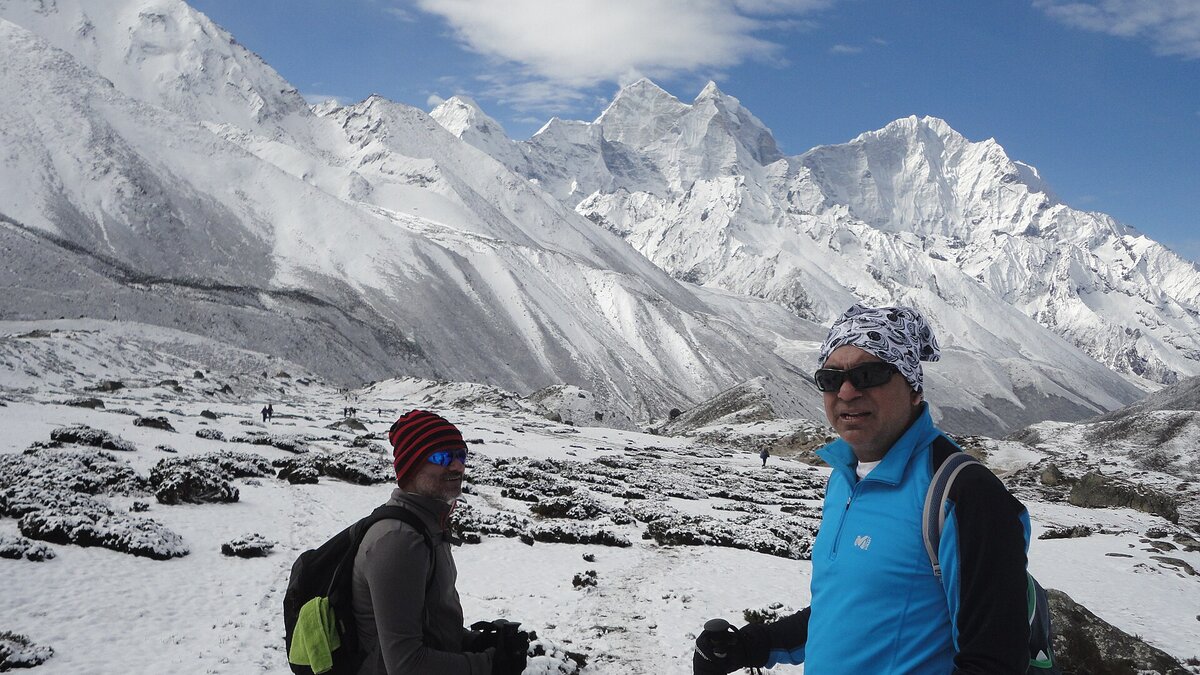
Cover image: Trekkers on the Everest Base Camp trail in Nepal, a route operating normally after the 2026 floods — photo by Adventureaonetrek, CC BY 4.0, via Wikimedia Commons.
Everest Base Camp, Annapurna and Kanchenjunga are operating normally. The Langtang Valley and Tamang Heritage treks are not. That is the short answer for anyone holding a September–November 2026 booking after the glacier collapse and floods that struck Nepal on 26 August. The damage is concentrated in five districts, and Nepal's tourism ministry has publicly asked travellers not to cancel trips to unaffected regions.
Which treks are affected
Two well-known routes run directly through the flood zone in Rasuwa district:
- Langtang Valley trek — passes through the corridor that took the full force of the debris flow.
- Tamang Heritage trail — shares the same access roads and valley system.
Syabrubesi, the road-head village where both treks conventionally begin, sustained significant damage. Until access, bridges and lodge capacity are restored, treat both routes as unavailable and do not attempt to reach them independently.
Which treks are operating normally
The major Himalayan routes that carry the bulk of Nepal's trekking traffic sit well away from the affected districts:
| Route | Region | Status |
|---|---|---|
| Everest Base Camp | Khumbu / Solukhumbu | Operating |
| Annapurna Circuit & Base Camp | Annapurna / Gandaki | Operating |
| Kanchenjunga | Eastern Nepal | Operating |
| Langtang Valley | Rasuwa | Affected — flood zone |
| Tamang Heritage | Rasuwa | Affected — flood zone |
At least one major international operator, Intrepid Travel, has continued running its Nepal programme — 26 tours — while assessing conditions on the ground.
Why Nepal is asking you not to cancel
Tourism is roughly 7 per cent of Nepal's GDP, and the September–November window is the year's commercial peak. The income does not accrue to abstract institutions: it reaches guides, porters, teahouse owners, jeep drivers and village suppliers, many of whom are in the same communities now absorbing the loss.
Cancellations are already being felt, with Kathmandu accommodation operators forecasting occupancy falling toward 60 per cent. That is the context for the ministry's appeal — the full toll and damage assessment is set out in our report on the Langtang glacier collapse and the 2026 flood toll.
How the affected districts sit relative to the main trails
The geography is the reassuring part of this story, and it is worth understanding rather than taking on trust. The debris flow followed the Trishuli river system out of Rasuwa, north of Kathmandu on the Tibetan border. The Khumbu region, where the Everest Base Camp trail runs, sits far to the east and drains a completely separate river system. The Annapurna massif lies west, above Pokhara, again on unconnected drainage. Kanchenjunga is further east still, close to the Sikkim border.
In other words, the routes carrying most of Nepal's trekking volume were never in the path of this event. That is why the tourism ministry has been willing to make an unusually direct appeal to international visitors rather than issuing the cautious blanket language governments normally prefer after a disaster of this scale.
If you were booked on Langtang
Speak to your operator about a substitution rather than a cancellation. The Helambu and Gosaikunda routes sit in the same broad region and may be reachable depending on road conditions, and operators are actively rerouting clients. If your trip was specifically built around Langtang village and Kyanjin Gompa, expect it to be deferred rather than replaced like for like — and be patient with operators who are dealing with losses among their own staff and guides. Our report on the relief airlift into Nepal gives a sense of the scale of the ongoing response.
Practical checks before you fly
- Confirm the route, not the country. A general "Nepal" advisory tells you nothing useful when damage is concentrated in five districts.
- Ask your operator when they last had staff on your specific trail — bridge and landslide conditions change week to week during and after monsoon.
- Build in buffer days. Overland transfers may be rerouted where road sections are still under repair.
- Check that your travel insurance covers trekking altitude and helicopter evacuation, which is standard practice for Nepal regardless of this event.
- Carry cash. Card and ATM coverage thins quickly outside Kathmandu and Pokhara.
What is still unresolved
Search and recovery continues, with thousands still missing. Reconstruction of roads, bridges and hydropower assets is estimated at around USD 5 billion, and the Gyirong border crossing to Tibet — which carried about 30 per cent of Nepal–China trade and served Mount Kailash pilgrimages — remains out of use. Travellers planning Kailash itineraries via Nepal for this season should assume that route is unavailable and speak to their operator about alternatives.
Frequently asked questions
Is Everest Base Camp trek open after the 2026 Nepal floods?
Yes. Everest Base Camp is in the Khumbu region, far from the five affected districts, and is operating normally for the September–November 2026 season.
Is the Annapurna Circuit affected by the Nepal floods?
No. The Annapurna region is operating normally. The damage is concentrated in Rasuwa, Nuwakot, Dhading, Gorkha and Chitwan.
Can I trek Langtang in 2026?
Not at present. The Langtang Valley and Tamang Heritage treks run through the flood zone and Syabrubesi, the usual starting point, is badly damaged. Check with a Nepal-based operator before planning either route.
Should I cancel my Nepal trip after the floods?
Nepal's tourism ministry has asked travellers not to cancel, as most destinations are unaffected and tourism income is critical to recovery. Confirm your specific route's status with your operator rather than cancelling on general news coverage.
Sources
- Nepal Ministry of Culture, Tourism and Civil Aviation appeal to international visitors, 3 September 2026
- Trekking Agencies' Association of Nepal route status reporting, early September 2026
- Operator statements on continued Nepal programmes, September 2026