Nepal confirms 1,287 dead and 5,083 missing after a glacier collapse on Langtang Lirung — not a glacial lake burst — with rebuilding put near $5 billion as trekking season opens.
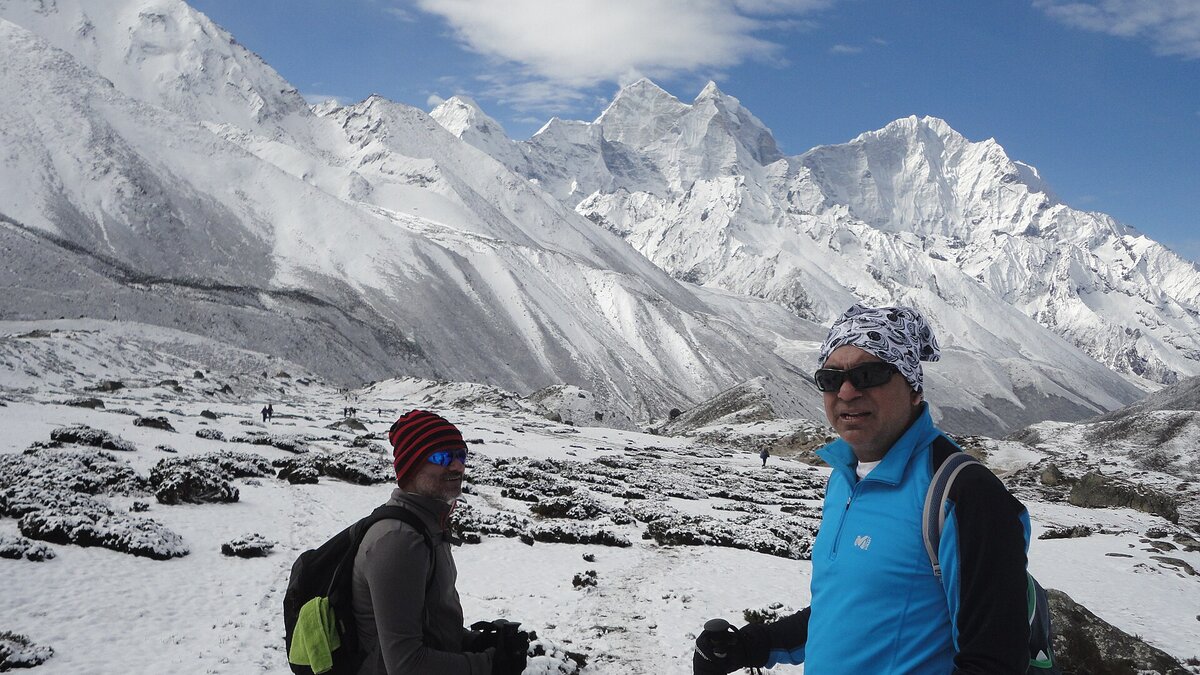
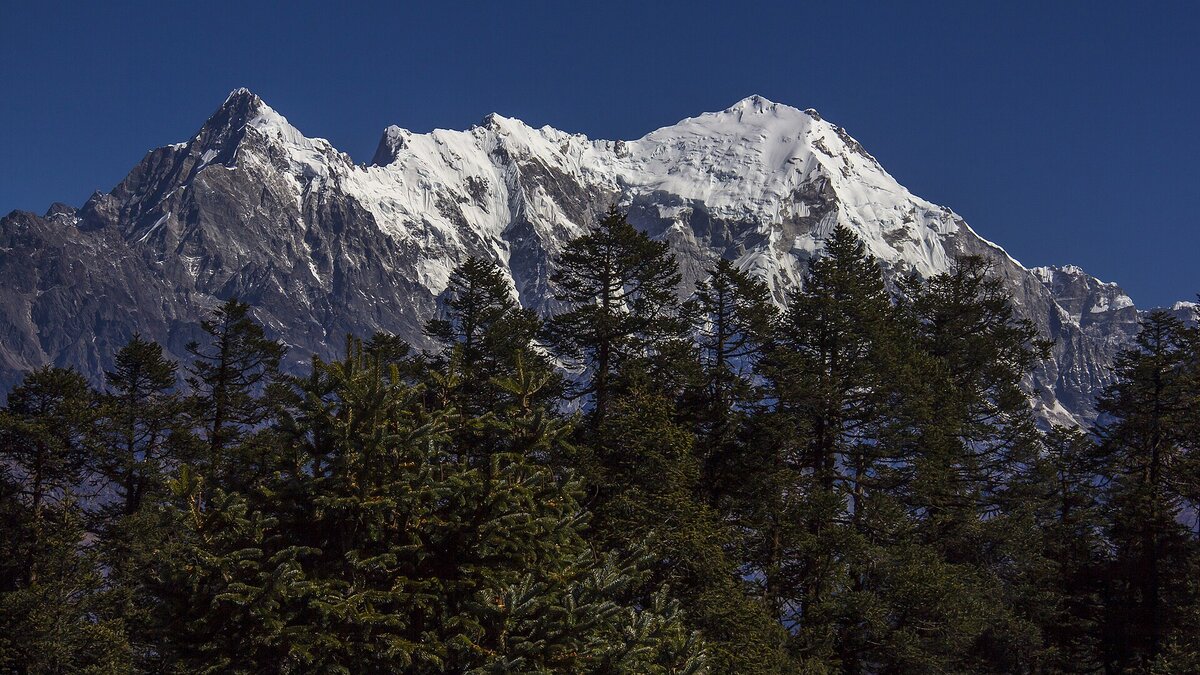
Cover image: Langtang Lirung and the Langtang range in Nepal, the mountain whose glacier collapsed on 26 August 2026 — photo by Saroj Pandey, CC BY-SA 4.0, via Wikimedia Commons.
Nepal has confirmed 1,287 deaths and 5,083 people still missing after a glacier collapse on Langtang Lirung sent a wall of ice, rock and mud down the Trishuli valley on 26 August 2026. The missing include 583 foreign nationals. Damage is assessed at about NPR 387.54 billion (roughly USD 2.57 billion), with rebuilding costs estimated near USD 5 billion — and the disaster has landed six weeks before Nepal's peak trekking season.
What actually happened on Langtang Lirung
The event began at approximately 08:37 Nepal time on 26 August 2026. Analysis of the collapse indicates a block of ice and rock roughly 0.2 square kilometres in area broke away at about 5,200 metres above sea level and fell close to 1.2 kilometres vertically into the valley below.
An important correction has emerged since the first reports. This was not a glacial lake outburst flood (GLOF), the mechanism initially assumed. It was a direct glacier and rock collapse. The seismic signal recorded at magnitude Ms 5.2 was generated by the impact of the collapse itself, not by a tectonic earthquake that triggered it. The distinction matters for how Nepal and its neighbours model future risk in glaciated valleys.
How far the debris travelled
The resulting flow ran an estimated 72 to 100 kilometres downstream. Bodies were recovered as far as 240 kilometres away, across the border in India — an indication of the volume of water and material released in a single event.
Five districts in Nepal absorbed the impact: Rasuwa, Nuwakot, Dhading, Gorkha and Chitwan. On the Tibetan side, Gyirong County recorded 31 deaths and 531 missing, including approximately 261 foreign nationals.
The trade route that disappeared
Among the infrastructure destroyed was the Gyirong Port crossing between Nepal's Rasuwa district and Gyirong County in Tibet. That single crossing carried an estimated 30 per cent of all Nepal–China trade and served as a principal route for Mount Kailash pilgrimages.
Its loss is a second-order economic shock layered on top of the humanitarian one, and it will shape freight costs and pilgrimage itineraries well beyond this season.
Why the timing is severe for tourism
Nepal's peak trekking window runs from September to November. Tourism accounted for approximately 7 per cent of Nepal's GDP before the pandemic and supports guides, porters, lodge owners, transport operators and whole highland communities.
Operators report cancellations. The government's response has been an explicit public appeal: the tourism ministry has asked international visitors not to cancel, on the basis that the large majority of Nepal's trekking destinations lie far from the affected districts and are operating normally. We have set out exactly which routes are open and which are not in our companion piece on which Nepal treks are open after the 2026 floods.
The human cost inside the industry is direct. One Kathmandu-based guide told reporters she had lost 19 friends in the disaster.
The relief operation
India has run a sustained airlift into Nepal, including a fifth relief aircraft dispatched in early September. Nepal's foreign minister has used the disaster to press for stronger global climate action, arguing that the country carries a disproportionate share of the consequences of warming it did little to cause.
That argument has weight in the Himalaya specifically. High-altitude ice is destabilising faster than the global average, and a collapse of this kind — rock and ice detaching from a steep face and falling more than a kilometre — is exactly the failure mode researchers have warned about in warming mountain systems.
What travellers should do now
- Do not assume the whole country is closed. The damage is concentrated in five districts, principally Rasuwa.
- Check your specific route, not the country. Langtang and Tamang Heritage are affected; Everest, Annapurna and Kanchenjunga are not.
- Book through operators with people on the ground who can confirm trail and bridge conditions rather than relying on general advisories.
- Expect longer overland journeys where bridges and road sections are still being restored.
Frequently asked questions
Is it safe to travel to Nepal in September 2026?
Most of Nepal is unaffected. The disaster hit five districts, with Rasuwa worst affected. Kathmandu, Pokhara, and the Everest, Annapurna and Kanchenjunga trekking regions are operating normally. Nepal's tourism ministry has asked travellers not to cancel.
Was the Nepal flood caused by a glacial lake bursting?
No. Early reports suggested a glacial lake outburst flood, but analysis shows it was a direct collapse of ice and rock from Langtang Lirung — roughly 0.2 square kilometres breaking away at 5,200 metres and falling about 1.2 kilometres.
How many people died in the 2026 Nepal floods?
As of 4 September 2026, 1,287 deaths were confirmed in Nepal and 31 in Tibet, with 5,083 missing in Nepal — including 583 foreign nationals — and 531 missing in Tibet.
Which Nepal treks are closed?
The Langtang Valley trek and the Tamang Heritage trail run through the flood zone, and Syabrubesi sustained significant damage. Everest Base Camp, Annapurna and Kanchenjunga are operating normally.
Sources
- Nepal National Disaster Risk Reduction and Management Authority casualty and damage assessments, 4 September 2026
- Nepal Ministry of Culture, Tourism and Civil Aviation public appeal to international visitors, 3 September 2026
- Seismological analysis of the Langtang Lirung collapse (Ms 5.2 impact signal)