Nepal's #NepalCalling campaign aims to save the autumn season that delivers 40% of annual arrivals, after Rasuwa floods triggered mass cancellations; most destinations stay open.
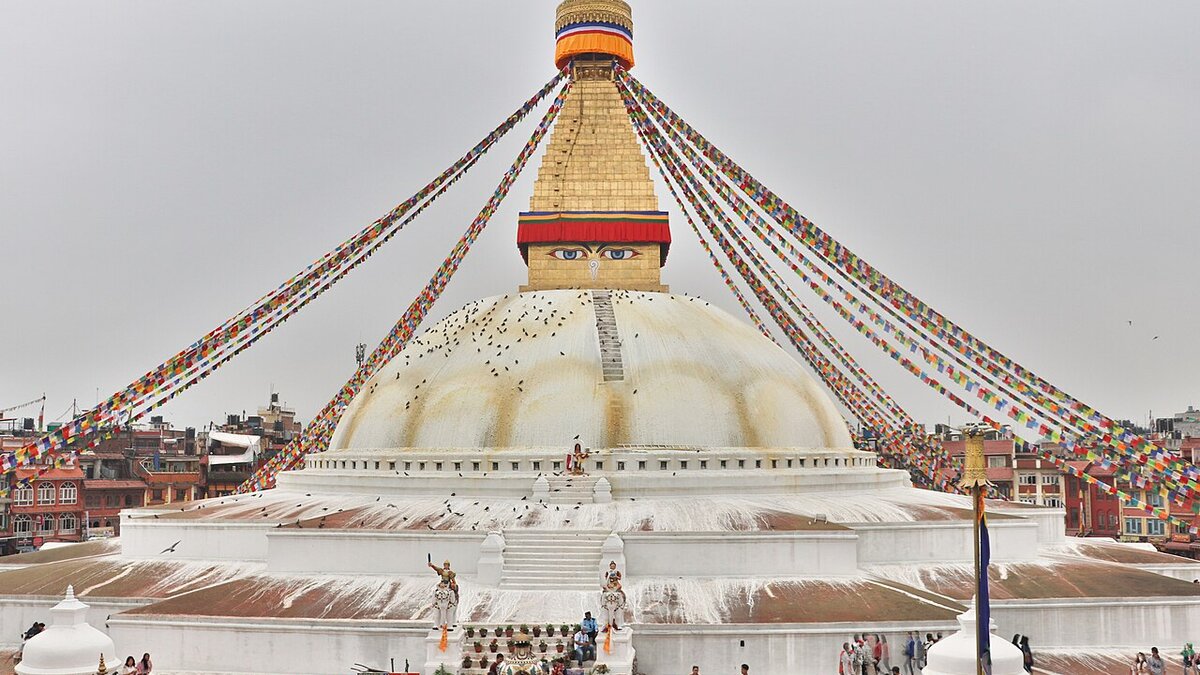
Cover image: Prayer flags strung over the Boudhanath Stupa in Kathmandu — photo by Nabin K. Sapkota, CC BY-SA 4.0, via Wikimedia Commons.
Nepal has launched a #NepalCalling reassurance campaign to save its autumn tourism season after the late-August floods in Rasuwa district triggered a wave of trip cancellations. Tourism Minister Khadak Raj Paudel issued a video appeal declaring the country open, while Foreign Minister Shisir Khanal briefed Kathmandu-based diplomats that airports are operating normally and most destinations are unaffected. The stakes are enormous: September to November normally delivers nearly 40% of annual visitor arrivals, and tourism supports more than a million Nepali jobs.
The backdrop is the disaster covered in our report on the Langtang flood toll and our trek-by-trek open/closed guide. Images of washed-out roads, collapsed bridges and bodies recovered from rivers travelled worldwide, creating an impression the whole country was hit when the damage was concentrated in the north.
What is the Nepal Calling campaign?
It is a government and industry drive, pushed on social media under the #NepalCalling hashtag, to tell the world that Nepal remains visitable. Minister Paudel's message to travellers: "Our mountain trails and trekking routes are still waiting for you," adding that "your coming to Nepal this time does not mean only a holiday." He called tourism "an industry linked to emotions and based on empathy" and said the government is working on an employee welfare fund for tourism workers.
The push is backed at every level. The Nepal Tourism Board, under acting chief Hikmat Singh Ayer, is amplifying the drive with the ministry. Hotel Association Nepal president Binayak Shah told a parliamentary committee that "the message that Nepal is safe should be effectively conveyed through Nepali embassies and missions abroad." Trekking and tour operator chiefs Sagar Pandey and Bharat Jung Pandey, plus tourism committee chair Sumnima Udas, have all echoed the call. Udas demanded believable, affirmative updates rather than spin.
How bad are Nepal's tourism cancellations?
August saw 85,444 foreign visitors, down 3.65% year on year, with operators reporting cancellations accelerating in the final week of the month. One Thamel hotelier, Mandip Giri of Dom Himalaya Hotel, told eKantipur he had held over 90% occupancy for the September to November high season, then lost about a fifth of it within a week of the disaster. "Cancellation is rising each passing day as search and rescue intensify in northern Nepal," he said, with online reservations hit hardest.
Tourism contributes about 6.7% of Nepal's GDP directly and indirectly. The sector was still recovering from the Covid collapse, Gen Z protests, West Asia tensions and the political unrest of September 2025, so an autumn-season wipeout would compound years of fragility. Travellers unsure about conditions should read our safety assessment for Indian visitors alongside official advisories.
Which parts of Nepal are open for tourists?
Kathmandu, Pokhara, Chitwan, Lumbini, Janakpur, the Annapurna and Everest regions and Bardiya all continue to welcome tourists, and airports nationwide are operating normally, the foreign minister told envoys. The trekking agencies' association puts it bluntly: except Rasuwa, the rest of Nepal is intact.
The closures that do exist matter for trekkers. The Langtang Valley trek, Gosainkunda, the Helambu Circuit and the Tamang Heritage Trail are currently closed or restricted. Anyone planning a trek should check conditions route by route rather than cancelling a whole Nepal trip, and Indian visitors can confirm entry rules in our Nepal visa guide for Indians.
What discounts is Nepal considering?
A parliamentary committee has asked for a rapid confidence-rebuilding plan. Proposals on the table include complimentary visas, hotel price cuts, reduced airfares where negotiable, simpler travel procedures and targeted support for tourists directly affected by flooding. Lawmaker Anushka Shrestha pushed for faster infographics and digital communication, warning that the tourism board's vacant permanent leadership hampers the response.
Longer term, the minister floated presenting Rasuwa as a "climate heritage" zone tied to Nepal's climate-justice advocacy. For now the message is simpler: the mountains are waiting, and visiting this autumn directly supports the million-plus Nepalis whose livelihoods depend on tourism.
Frequently asked questions
Is Nepal safe to visit after the floods?
Most of the country is operating normally, including Kathmandu, Pokhara, Chitwan and the Annapurna and Everest regions, with airports running as usual. Damage is concentrated in Rasuwa district in the north, where the Langtang Valley trek and nearby routes are closed or restricted. Check your specific destination rather than judging the whole country by flood footage.
Do Indians need a visa for Nepal?
No. Indian citizens do not need a visa for Nepal and can enter with a passport or a photo voter ID, with no fixed stay limit for genuine visits. That open-door policy is one reason Nepal is pitching hard to Indian travellers this autumn.
Will Nepal offer discounts to tourists this autumn?
Possibly. Free visas, hotel discounts and easier travel arrangements have been proposed in parliament and the tourism board says a recovery package may include lodging and flight deals. Nothing is confirmed yet, so book refundable options and watch for announcements before locking in non-changeable fares.