Indonesia dispersed 8 tons of salt over Jambi in 8 cloud-seeding sorties as peat fires smoulder — what the operation achieved and what's next.
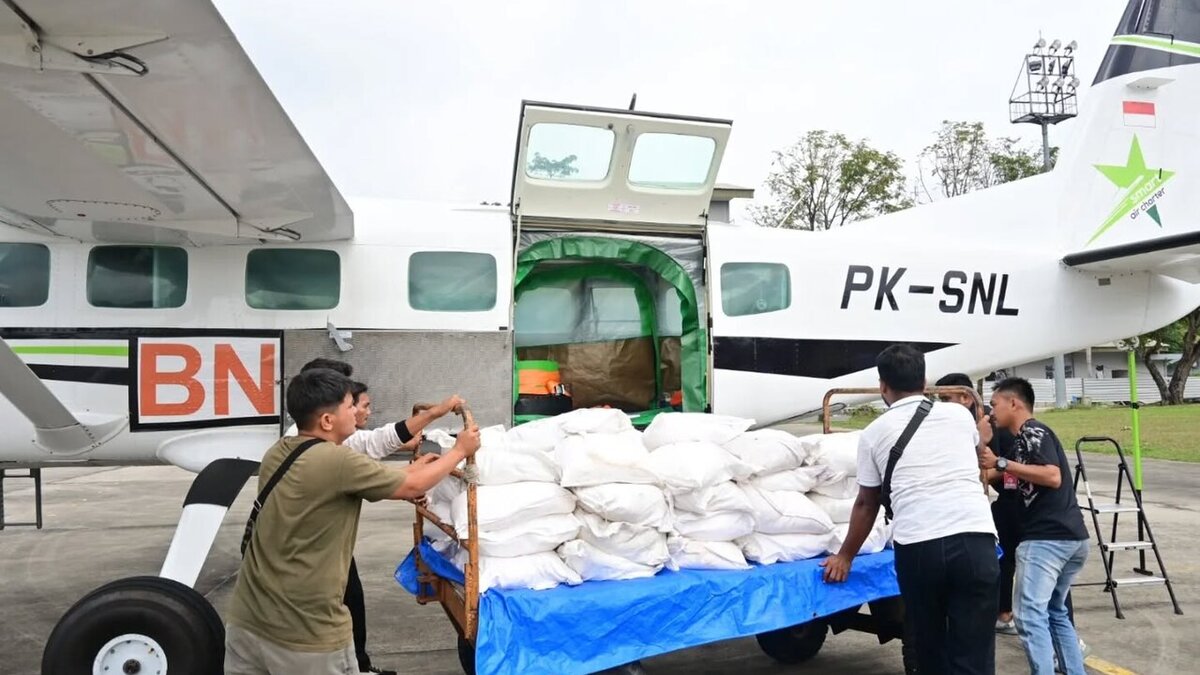
Cover image: Cloud-seeding aircraft over Jambi as Indonesia battles haze — photo by Roesmin Nurjadin Air Force Base Information Service, Public domain, via Wikimedia Commons.
Indonesia dispersed 8 tons of salt over Jambi province in a cloud-seeding push to trigger rain as peat fires smouldered across 1,879 hectares. The National Disaster Mitigation Agency (BNPB) said from Jakarta on 4 September 2026 that 8,000 kilograms of sodium chloride were dropped by helicopter in 8 sorties between 26 August and 2 September, totalling 15 hours and 32 minutes of flight time.
The operation, targeting Muaro Jambi and other fire-prone districts, is part of a nationwide haze response that also includes thermal drone patrols and an emergency request in Sarawak after API hit 519.
What did the Jambi cloud-seeding operation involve?
BNPB acting head of Disaster Data, Information and Communication Centre Berton Panjaitan said the weather modification was coordinated with the Meteorology, Climatology and Geophysics Agency (BMKG) and the Forestry Ministry under Minister Raja Juli Antoni. Each sortie disperses NaCl salt to encourage droplet formation in suitable clouds.
The salt was delivered by helicopter, a method suited to Sumatra's scattered convective clouds. Total salt reached 8 tons across the eight flights. A photo caption from 3 September showed smoke-shrouded peatland in Muaro Jambi, inventoried as part of the post-seeding assessment, credit ANTARA FOTO/Wahdi Septiawan.
The effort sits alongside broader containment that has seen Kalimantan hotspots surge past 1,400 combined and UB Forest fly thermal drones for early detection over 544 ha.
How big are the Jambi fires and hotspots now?
By Thursday 3 September, BNPB put burned area at more than 1,879 hectares, described as largely combustible peat in hard-to-access zones. Provincial counts stood at 182 hotspots and 20 fires province-wide.
On 3 September alone, crews recorded about 47.5 hectares of new fire while extinguishing roughly 37 hectares through ground teams and water-bombing. That net growth explains why agencies are widening both aerial and ground actions, including patrols and firebreak construction. For travellers, peat smoke is the same pollutant that has halted flights at Melalan Airport in East Kalimantan and triggered Sarawak's Serian emergency request with API 519.
Will cloud seeding clear the haze before your trip?
BNPB said results have been limited because cloud structure was unfavourable. BMKG projects poor cloud conditions continuing until 10 September, with natural rain not anticipated until early October. Panjaitan said, "Weather remains a hurdle in measures against forest and land fires," and that September is the decisive month for containment.
The government plans to maximize seeding throughout September while intensifying ground measures. Separately, 35 foreign aircraft are on standby nationally for water-bombing and patrol, a scale that helped after earlier Indonesia approved 35 foreign aircraft as haze disrupted flights. For visitors to Jambi, Palembang or Pekanbaru, expect ongoing haze advisories, reduced visibility on roads, and possible short-notice airport delays at Sultan Thaha Airport.
If you are heading to Sumatra or Borneo this month, keep N95 masks, check API readings for Jambi and neighbouring provinces, and reconfirm flights 12 hours before departure. Tour operators for Kerinci, Harau Valley or orangutan sites will shift timings to early morning when possible and move activities indoors when API exceeds 300.
Frequently asked questions
How much salt was used in Jambi cloud seeding?
8,000 kilograms of sodium chloride, or 8 tons, dispersed by helicopter in 8 sorties between 26 August and 2 September 2026. Total flight time was 15 hours and 32 minutes, according to BNPB acting head of data Berton Panjaitan.
How large are the Jambi peat fires?
More than 1,879 hectares had burned by 3 September, largely combustible peat in hard-to-access zones. The province recorded 182 hotspots and 20 fires. On 3 September alone, 47.5 hectares of new fire appeared while 37 hectares were extinguished by ground crews and water-bombing.
Will cloud seeding end the Jambi haze soon?
Not immediately. BNPB said results were limited because cloud structure was unfavourable. BMKG projects poor cloud conditions continuing until 10 September, with natural rain not expected until early October. The government plans to intensify ground water spraying, patrols and firebreaks while maximizing seeding in September.