Indonesia is issuing 30-day ITKT emergency stay permits with zero overstay fines to tourists stranded by Anak Krakatau ash. Who qualifies and airport status.
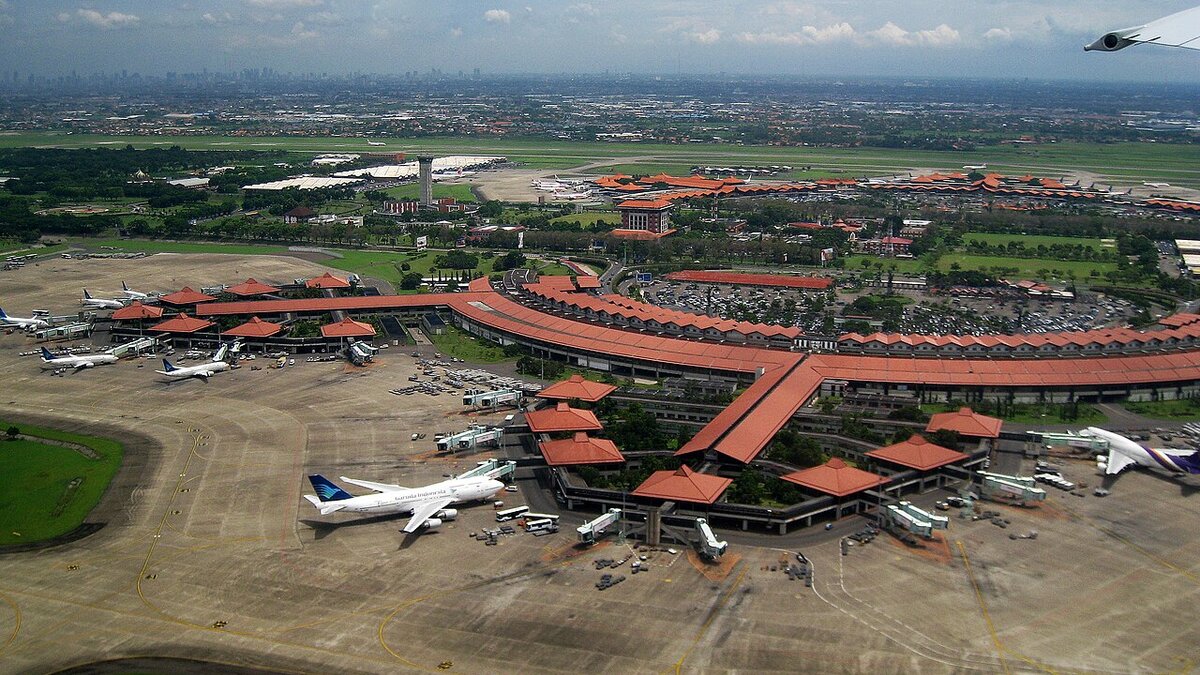
Cover image: an aerial view of Jakarta Soekarno-Hatta airport terminals and parked aircraft — photo by Gunawan Kartapranata, CC BY-SA 4.0, via Wikimedia Commons.
Foreign tourists stranded in Indonesia by the Anak Krakatau eruption can now apply for an emergency stay permit valid for up to 30 days, with overstay fines waived to zero rupiah for delays caused by the disaster. The Izin Tinggal Keadaan Terpaksa (ITKT), a force-majeure stay permit, covers visitors who cannot depart because of cancelled or diverted flights and whose permitted stay is ending or has already lapsed. Immigration added an extra counter at Jakarta's Soekarno-Hatta airport, which had processed 26 ITKT applications by September 7.
The measure answers the most urgent question for thousands of disrupted travellers: what happens to my visa when my flight no longer exists. It follows the gradual reopening of Jakarta-area airports, though the situation is changing day to day and stranded visitors should still check their flight status before heading to the airport.
Who qualifies for the emergency permit?
Eligibility centres on force majeure. Foreigners unable to leave Indonesia because of eruption-linked cancellations or diversions, specifically those whose authorised stay is expiring or has expired for that reason, can seek ITKT. The permit runs up to 30 days and can be extended where regulations allow. It is not automatic: applicants must meet the emergency criteria and approach immigration, especially at airport offices.
The fee relief is explicit. Where excess stay results directly from the eruption disruption, the overstay charge is set at 0 rupiah. Travellers whose overstay has other causes should expect normal rules to apply, so keeping boarding passes, cancellation notices and airline messages as proof matters.
Which airports are open right now?
Status is moving by the NOTAM. Jakarta's Soekarno-Hatta and Halim Perdanakusuma plus Bandung's Husein Sastranegara resumed from the start of September 8, with Curug's Budiarto and Pondok Cabe following hours later. Air navigation agency AirNav Indonesia said on September 8 that six affected airports had resumed while three stayed closed until 10:00 local time, with reopenings tied to ash-dispersal shifts and negative ash-paper tests from September 7 sampling.
Lampung's airports turned the corner the same morning: Radin Inten II reopened under a NOTAM valid 9:45 to 23:59 on September 8, alongside Muhammad Taufiq Kiemas, Budiarto, Pondok Cabe and Tanjung Lesung's Salakanagara field. AirNav executive Hermana Soegijantoro cautioned that reopened airports remain under monitoring because ash is still detected in some flight sectors, telling pilots to stay cautious on arrival and departure. Reopened airports also require aircraft inspections before operations normalise.
How big is the disruption?
Authorities counted 520 flights and 86,760 passengers affected between September 5 and 7. The cumulative tally has since grown far larger: as of September 8, reporting put the total at 2,961 disrupted domestic and international flights with about 341,000 passengers stranded. Anyone navigating entry paperwork should also review Indonesia's visa rules and, for regional comparison, Malaysia's new multiple-entry visa framework.
| Airport | Status (Sep 8) |
|---|---|
| Soekarno-Hatta, Jakarta | Resumed from start of Sep 8 |
| Halim Perdanakusuma, Jakarta | Resumed from start of Sep 8 |
| Husein Sastranegara, Bandung | Resumed from start of Sep 8 |
| Budiarto (Curug) and Pondok Cabe | Resumed early hours of Sep 8 |
| Radin Inten II, Lampung | Reopened Sep 8, 9:45 to 23:59 NOTAM |
| Three remaining fields | Closed until 10:00 local time, under review |
Frequently asked questions
I am stuck in Indonesia past my visa date because of cancelled flights. What should I do?
Go to immigration, preferably at the airport, and ask for the ITKT emergency stay permit, bringing your passport, cancelled flight proof and any airline notices. The permit covers up to 30 days and the overstay fee is zero rupiah when the delay is directly caused by the eruption disruption.
Is the emergency permit automatic?
No. You must apply in person and meet the force-majeure criteria, with officers assessing each case against immigration rules. Travellers who overstayed for reasons unrelated to the eruption do not qualify, so keep your passport, cancelled flight proof and airline messages ready to show the delay was caused by the disaster.
Are Jakarta and Bali flights operating normally?
Jakarta-area airports resumed on September 8 with inspections and ash monitoring continuing, but schedules are still recovering and NOTAMs change by the hour. Bali was not among the closed airports in these notices. Confirm with your airline before travelling to the airport.
How long will the disruption last?
That depends on ash dispersal and ongoing safety tests; AirNav updates aeronautical information continuously. The volcano erupted six times on Monday morning to midday with ash columns up to 250 metres, so travellers should build buffer days into plans through the week.