

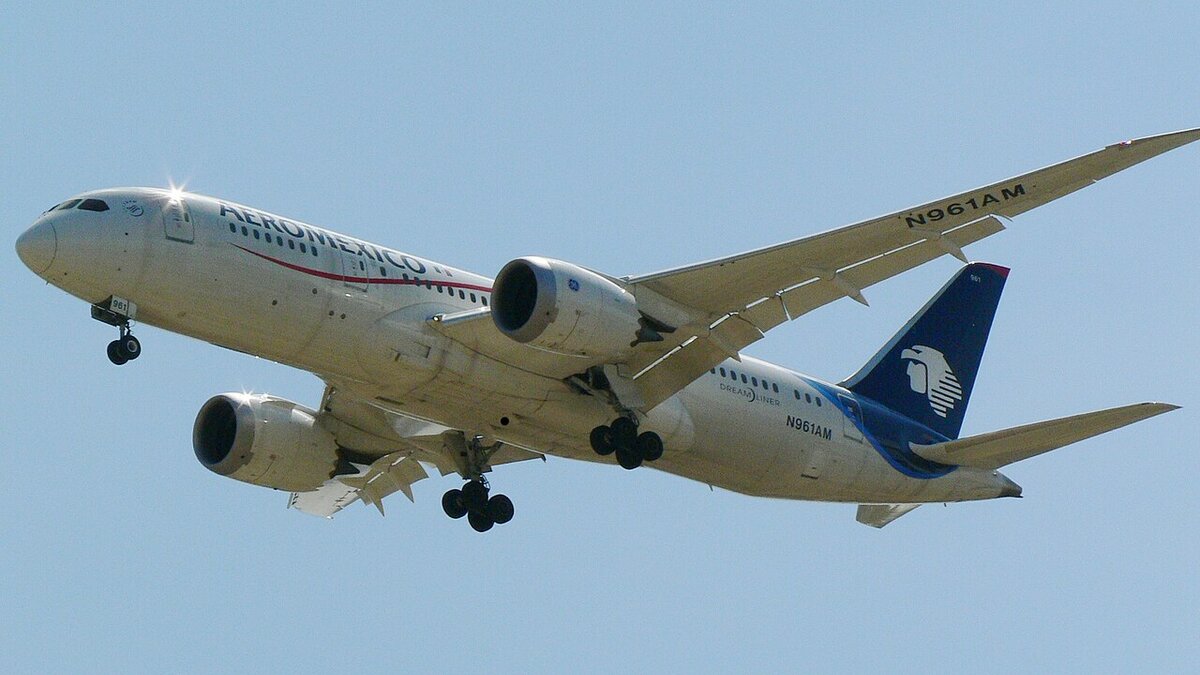
The US Court of Appeals for the Eleventh Circuit has vacated the DOT order that revoked antitrust immunity for the Delta-Aeromexico joint venture, calling the decision arbitrary and capricious. The alliance remains fully in effect.
Cover image: Aeromexico Boeing 787 Dreamliner in flight after Delta Aeromexico joint venture ruling — photo by U-95, CC BY-SA 4.0, via Wikimedia Commons.
The Delta Air Lines-Aeromexico joint venture has survived. On 20 August 2026, the US Court of Appeals for the Eleventh Circuit vacated the US Department of Transportation (DOT) order that had revoked the partnership's antitrust immunity and directed the two carriers to unwind their nearly decade-old alliance, ruling that the department's decision was "arbitrary and capricious" under administrative law.
The practical effect is immediate and clear: the joint venture and its antitrust immunity remain in effect, Aeromexico confirmed in a statement, allowing the two SkyTeam carriers to keep coordinating schedules, pricing and marketing across the US-Mexico market. Delta, which holds a 20% equity stake in Aeromexico, welcomed the ruling, saying the partnership has "provided greater choice, more seamless travel, and increased connectivity for consumers while supporting U.S. jobs and economic growth."
Why did the court overturn the DOT order?
The Eleventh Circuit did not decide whether the joint venture is good or bad for consumers. Its objection was procedural: DOT failed to justify why it treated this alliance differently from every comparable case before it. The court said the department "did not reasonably explain why it conducted a far more limited market analysis in this case than it has always done in the past", nor why it imposed an approval requirement "that it did not require of similar joint ventures it approved in Japan" — a reference to immunised US-Japan tie-ups such as United-ANA, which Delta had cited in its challenge.
In past reviews, DOT assessed competition across the entire country-pair market — here, all US-Mexico routes. In its 2025 order against Delta and Aeromexico, the department instead zeroed in on Mexico City International Airport (MEX) alone. According to Simple Flying, MEX accounts for around 21% of total cross-border traffic, even though it is the fourth-largest international gateway to the US. "We are not a rubber stamp," the panel wrote. "Courts retain a role, and an important one, in ensuring that agencies have engaged in reasoned decisionmaking."
What did the 2025 DOT order require?
The order at the heart of the case was issued in September 2025 by the Trump administration's DOT. It stripped the joint venture of the antitrust immunity that separates a true joint venture from a looser alliance — the legal shield that lets two airlines jointly set fares, align capacity and coordinate frequent-flyer programmes without breaching competition law.
The Justice and Transportation departments branded the arrangement "legalized collusion", pointing to the partners' control of "almost 60% of operations at the fourth-largest international gateway to and from the United States" — Mexico City. The order was rooted in a wider aeropolitical fight: Washington accused Mexico of violating the bilateral Open Skies agreement after the Mexican government cut slots at MEX and, under a 2023 moratorium, forced cargo freighters to relocate to the more distant Felipe Angeles International Airport (AIFA). Alongside the joint-venture action, DOT moved against Mexican carriers directly, revoking route approvals and targeting combined passenger-cargo flights from AIFA to the US.
| Date | Development |
|---|---|
| 2023 | Mexico cuts slots at Mexico City (MEX) and orders cargo freighters moved to AIFA |
| September 2025 | DOT revokes the joint venture's antitrust immunity, calling it "legalized collusion" |
| June 2026 | Delta and Aeromexico urge the Eleventh Circuit to undo the order |
| 20 August 2026 | Court vacates the DOT order as "arbitrary and capricious"; the joint venture stands |
What does the ruling mean for US-Mexico flights?
For travellers and the trade, the ruling preserves the status quo on the largest transborder air market in the world. With immunity intact, Delta and Aeromexico can continue to:
- Jointly plan schedules and capacity across US-Mexico routes, rather than merely selling seats on each other's flights via codeshares
- Coordinate pricing and share revenue on transborder services
- Align SkyMiles and Aeromexico Rewards earning, redemption and elite recognition
- Market a combined network that, through SkyTeam, reaches more than 145 countries
Had the order stood, the carriers would have been forced back to an arms-length relationship, with analysts widely expecting thinner coordination and less connectivity on secondary routes. The reprieve also removes a significant overhang for Delta, which flagged the dispute as a risk factor even as it posted solid second-quarter 2026 results.
What happens next?
The fight may not be finished. The Eleventh Circuit vacated the order on procedural grounds, meaning DOT could attempt a fresh analysis that addresses the court's objections — running a full market-wide review rather than an MEX-only one — and try again. The department said after the ruling that it will "consider all available legal options."
For now, though, the airlines hold the win. Aeromexico said it would "keep the market informed of any material developments", while the underlying US-Mexico aeropolitical dispute over MEX slots and AIFA — the original trigger for Washington's action — remains unresolved between the two governments.
Frequently asked questions
Which court ruled on the Delta-Aeromexico joint venture?
The US Court of Appeals for the Eleventh Circuit issued the ruling on 20 August 2026. It vacated the Department of Transportation order revoking the joint venture's antitrust immunity, finding the decision "arbitrary and capricious" because DOT never explained its unusually narrow, Mexico City-only market analysis.
Is the Delta-Aeromexico joint venture still operating?
Yes. Aeromexico confirmed that the joint venture and its antitrust immunity remain fully in effect. The carriers can keep coordinating schedules, pricing, revenue and loyalty programmes across US-Mexico routes, and passengers should see no change to existing booking, codeshare or frequent-flyer arrangements.
Why did the DOT try to break up the alliance?
In September 2025 the DOT revoked the venture's immunity, branding it "legalized collusion" that controlled almost 60% of operations at Mexico City airport. The move was tied to a wider dispute over Mexico's slot cuts at MEX and its forced relocation of cargo flights to Felipe Angeles International Airport.
Can the DOT still unwind the joint venture?
Possibly. The court vacated the order on procedural grounds rather than endorsing the joint venture, so DOT could redo its analysis market-wide and issue a new order. The department said it will consider all available legal options, meaning the dispute could yet return.
Sources
- Paddle Your Own Kanoo — Delta Air Lines Wins Major Court Victory as DOT's Aeromexico Antitrust Order Is Vacated
- Simple Flying — US Appeals Court Overturns Trump Order to Break Up Delta-Aeromexico Joint Venture
- Reuters (via SRN News) — Delta, Aeromexico win US court battle to keep joint venture
- StockTitan — Aeromexico Announces Court Decision on Aeromexico-Delta ATI
- View From The Wing — Delta's Aeromexico Joint Venture Just Got Saved By A Federal Court


Post a comment