

NOAA predicts a below-normal 2026 Atlantic hurricane season of 8-14 named storms as El Niño builds, the quietest outlook in years. Here is what it means for Caribbean bookings, insurance timing and which islands carry the lowest storm risk.
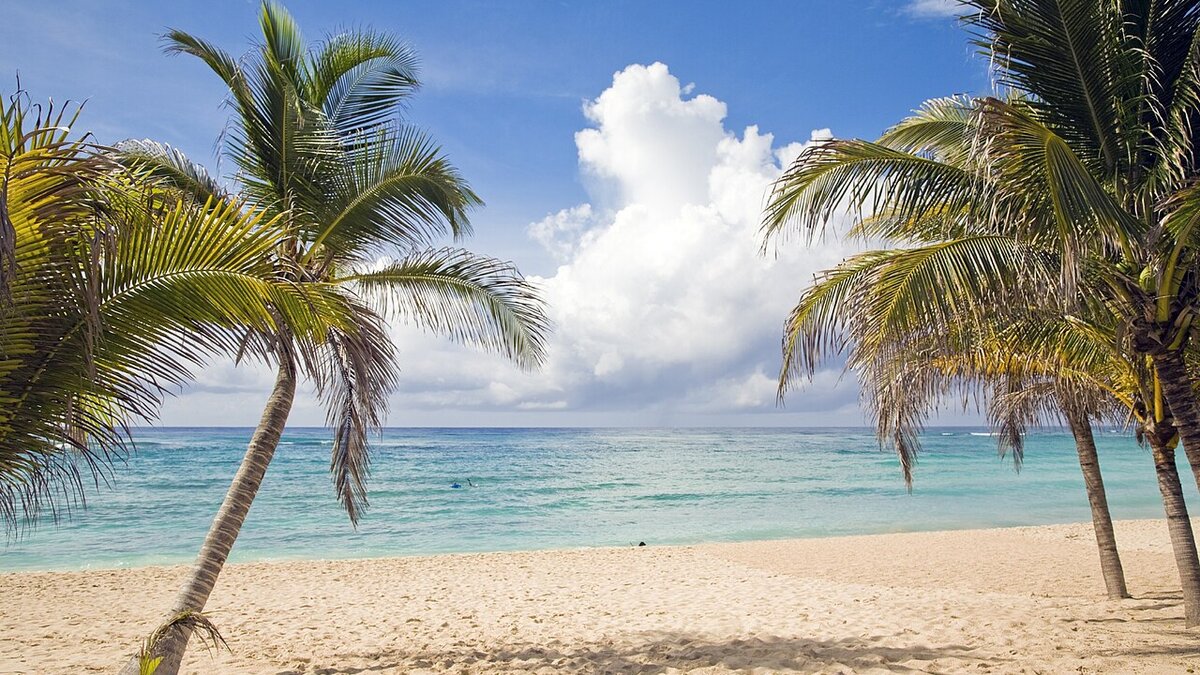
Cover image: caribbean shoreline under gathering storm clouds — photo by Grand Velas Riviera Maya, CC BY-SA 2.0, via Wikimedia Commons.
Travellers weighing a summer or autumn Caribbean trip have the most favourable storm outlook in years. NOAA, the US National Oceanic and Atmospheric Administration, is forecasting a below-normal 2026 Atlantic hurricane season: 8 to 14 named storms, of which 3 to 6 are expected to become hurricanes and just 1 to 3 to reach major (Category 3+) strength. The agency puts the chance of a below-normal season at 55%, against 35% for near-normal and only 10% for above-normal, with 70% confidence in those ranges. The season runs from 1 June to 30 November, with activity historically peaking between mid-August and mid-October.
The main driver is El Niño, the Pacific warming pattern that increases wind shear over the Atlantic and tears developing storms apart. Colorado State University (CSU), whose seasonal forecasts are closely watched by insurers and tour operators, cut its own outlook in June to 11 named storms, 5 hurricanes and 2 major hurricanes, down from 13 and 6 in its April forecast, as El Niño conditions officially arrived. Both outlooks sit well below the 1991-2020 seasonal average of 14.4 named storms and 7.2 hurricanes. The caveat every forecaster repeats: it only takes one landfalling storm to wreck a season for a given island, so booking discipline still matters.
What is NOAA forecasting for the 2026 hurricane season?
NOAA's Climate Prediction Center issued its outlook in late May, and it is the calmest headline forecast the agency has published in several seasons. Alongside the developing El Niño, forecasters note that Atlantic sea-surface temperatures are only slightly warmer than normal, a marked change from the record-hot basins that fuelled recent hyperactive years.
CSU's team issues further scheduled updates in early July and early August, and its guidance points to a moderate-to-strong El Niño holding through the September peak. Here is how the two benchmark forecasts compare with the long-term average:
| Forecast | Named storms | Hurricanes | Major hurricanes |
|---|---|---|---|
| NOAA (May 2026) | 8-14 | 3-6 | 1-3 |
| Colorado State University (June 2026 update) | 11 | 5 | 2 |
| 1991-2020 average | 14.4 | 7.2 | 3.2 |
Is it safe to book a Caribbean holiday during hurricane season 2026?
The trade context is bullish. The Caribbean Tourism Organization (CTO), the region's inter-governmental tourism body, reported that international arrivals reached roughly 35 million in 2025, up 2.5% on 2024 and comfortably above pre-pandemic levels, and it projects stay-over arrivals to grow a further 3% to 4% in 2026, with cruise arrivals up 5% to 7%. That momentum mirrors the broader pattern of steady but cooling global tourism growth seen in early 2026.
Hurricane season is also the Caribbean's value window. Room rates and airfares from June to November routinely undercut winter peak pricing by a wide margin, which is why the period features heavily in shoulder-season travel strategies. A below-normal forecast does not eliminate risk, but it shifts the odds meaningfully in the traveller's favour, particularly for June, July and November trips that fall outside the statistical peak.
How do airline and hotel rebooking policies work when a storm threatens?
When a named storm approaches, major carriers serving the region typically issue weather waivers that allow passengers booked to affected airports to rebook without change fees, usually within a defined travel window. Airlines are not generally obliged to pay compensation for weather cancellations, so the waiver is the main protection; watch carrier advisories from about five days out.
Resort policies vary far more, and travel advisers recommend checking the fine print before paying a deposit. Look for:
- The free-cancellation cut-off: how close to arrival you can cancel without penalty.
- Explicit hurricane or named-storm language: some resort groups offer "hurricane guarantees" that refund or re-credit nights lost to a storm-forced closure or evacuation.
- Interruption terms: what happens if a storm hits mid-stay, including whether unused nights are refunded or banked as a future credit.
- Package protections: tour-operator bookings often carry stronger consumer protections than separately booked components.
Does travel insurance cover hurricanes in 2026?
Yes, but timing is everything. Standard trip-cancellation and interruption policies cover hurricane disruption only if the policy was purchased before the storm was named, a point insurance marketplace InsureMyTrip stresses every season. Once the US National Hurricane Center names a system, it becomes a "known event" and new policies will not cover it. The practical rule: buy cover the day you book, not the week you fly.
Travellers wanting maximum flexibility can pay extra for "cancel for any reason" (CFAR) upgrades, which typically refund 50% to 75% of trip costs regardless of the trigger. For a fuller breakdown of what policies do and do not pay out, see our guide to travel insurance coverage. Product innovation is also accelerating across the sector, as shown by Emirates' launch of a conflict-inclusive travel insurance policy earlier this year.
Which Caribbean islands are outside the hurricane belt?
Geography offers the simplest hedge. The so-called ABC islands of Aruba, Bonaire and Curaçao, sitting just north of the Venezuelan coast, lie south of the main hurricane track and have the lowest historical strike rates in the region. Bonaire has never recorded a direct hurricane landfall, and Aruba has not taken a direct hit in more than a century, according to compiled storm-track records cited by Frommer's and Afar.
Trinidad and Tobago, at the region's southern tip, is similarly rarely brushed, while Barbados and Grenada sit at the southern edge of the belt with materially lower odds than the northern arc running from the Leewards through Puerto Rico, Hispaniola, Cuba and the Bahamas. Lower risk is not zero risk anywhere in the basin, but for August-to-October travel, the southern islands are the resilient picks.
Frequently asked questions
When is the peak of the 2026 Atlantic hurricane season?
The season runs from 1 June to 30 November, and activity historically peaks between mid-August and mid-October, with the statistical high point around 10 September. Trips in June, July or late November carry the lowest storm odds within the season.
Will my travel insurance pay out if a hurricane is already named?
No. Policies bought after a storm has been named treat it as a known event and exclude it. Purchase insurance at the time of booking, or add a cancel-for-any-reason upgrade if you want flexibility against storms named later.
Does a below-normal forecast mean the Caribbean is storm-free in 2026?
No. NOAA's outlook still allows for up to 14 named storms and as many as 3 major hurricanes, and forecasters stress that a single landfall can devastate one island in an otherwise quiet year. Book flexible rates, insure early and favour southern islands for peak-season dates.
Sources
- NOAA — NOAA predicts below-normal 2026 Atlantic hurricane season
- Colorado State University — Seasonal hurricane forecasting (2026 Atlantic outlook and updates)
- Caribbean Tourism Organization — Caribbean tourism shows resilient growth amid global headwinds in 2025
- InsureMyTrip — Hurricane season increases the need for travel insurance




Post a comment