Emirates has unveiled Comprehensive Travel Cover, a world-first package that adds conflict-related protection, disruption support and free rebooking for every passenger.
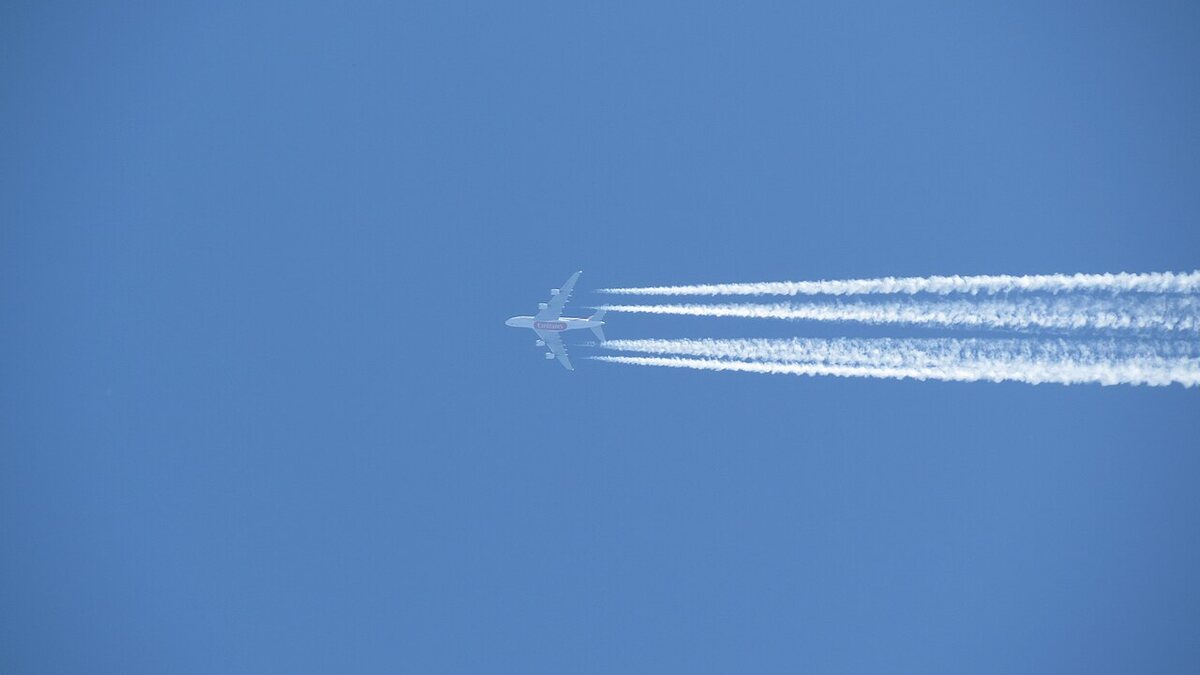
Cover image: an Emirates Airbus A380 in cruise — photo by GT1976, CC BY-SA 4.0, via Wikimedia Commons.
Emirates has become the first airline in the world to bundle conflict-related protection into a standard travel insurance product, a move that quietly rewrites one of the oldest exclusions in the insurance rulebook. Launched on 17 June 2026, the Dubai carrier's new Comprehensive Travel Cover is designed for a decade in which airspace closures, sudden route suspensions and geopolitical shocks have become a routine part of long-haul flying rather than rare exceptions.
For an industry that has spent years competing on seat width, lounge access and loyalty points, Emirates is making a different bet: that in 2026, the most valuable thing an airline can sell alongside a ticket is certainty.
What the cover actually includes
On paper, the package looks like a conventional premium travel policy — until you reach the fine print. The standard benefits are comprehensive in their own right: trip cancellation cover, compensation for baggage delay or loss, unlimited medical expense cover, and emergency medical evacuation anywhere in the world.
The headline addition is a dedicated conflict-related section that reimburses medical expenses of up to US$25,000 and grants a free trip extension of up to 30 days if travellers are caught up in an unfolding situation abroad. Crucially, the cover is not restricted by government travel advice — the clause that typically voids a standard policy the moment a foreign ministry issues a "do not travel" warning.
- Up to US$25,000 in conflict-related medical reimbursement.
- Free trip extension of up to 30 days when conflict disrupts a return.
- Rebooking on other airlines at no extra cost when Emirates flights are cancelled because of conflict-related disruption.
- Airline-managed hotel accommodation during disruptions, including airspace closures.
- Trip cancellation, baggage, unlimited medical and worldwide emergency evacuation as standard.
The clause that breaks with industry norms
Most travel insurance treats war, invasion and civil unrest as hard exclusions. The reasoning is simple: these are correlated, catastrophic risks that are difficult to price. By explicitly covering conflict-related medical costs and honouring the policy even where governments advise against travel, Emirates is absorbing a category of risk that insurers have historically pushed back onto the traveller.
The promise to rebook stranded passengers on rival carriers is just as notable. Airlines rarely volunteer to put paying customers on a competitor's metal, yet Emirates is committing to do exactly that when its own flights cannot operate because of conflict. It is a tacit acknowledgement that, in a disrupted corridor, getting the passenger home matters more to the brand than protecting a single fare.
Why Emirates, and why now
The timing is not accidental. Emirates' entire business model runs through a single super-hub in Dubai, funnelling traffic between Europe, Africa, Asia and the Americas across some of the world's most geopolitically sensitive airspace. When regional tensions flare, the airline's network is among the most exposed in the world — and so are its passengers' plans.
Against that backdrop, a cover that reassures travellers their trip is protected even if a corridor closes is as much a commercial shield as a customer benefit. It turns a network vulnerability into a marketing message, and it lands at a moment when surveys across the industry show travellers ranking disruption and safety alongside price when they choose who to fly.
Backed by Travel Guard, rolled out in phases
The product is underwritten by Travel Guard, a recognised name in the travel insurance market, which gives the proposition the balance-sheet backing it needs to be credible. Travellers can add the cover during booking on emirates.com or attach it to an existing reservation through Manage Booking.
Availability is being switched on market by market rather than all at once. The initial rollout spans a broad list of Europe, Middle East, Africa and Asia-Pacific countries — including Austria, Belgium, France, Germany, Ireland, Italy, the Netherlands, Portugal, Spain, Sweden, Switzerland, the United Arab Emirates, the United Kingdom, South Africa, Singapore and New Zealand — with more expected to follow. As ever with a phased launch, exactly what is covered, and where, will depend on the market in which the ticket is bought.
What it means for rivals — and for travellers
For the rest of the Gulf's premium carriers, Emirates has just reset the benchmark. Qatar Airways, Etihad and the wider long-haul field will now have to decide whether conflict-aware protection is a feature they can afford to ignore, or one they must match to keep parity on the routes where disruption is most likely. The competitive logic of the airline relationship is shifting from a seat transaction toward an end-to-end promise of care.
For travellers, the sensible response is curiosity tempered with diligence. A first-of-its-kind product is only as good as its definitions: what counts as a "conflict", how claims are assessed, and where the geographic limits sit will all matter the first time a major disruption tests the policy at scale. Read the terms for the market you are booking in, and treat the cover as a meaningful upgrade rather than a blanket guarantee.
The bottom line
Emirates has the first-mover headline and a genuinely novel proposition. Whether "comprehensive" holds up under pressure will be decided not in a press release but in the messy reality of the next airspace closure. For now, the airline has done something rare in a mature industry: it has changed what a plane ticket is allowed to promise.