

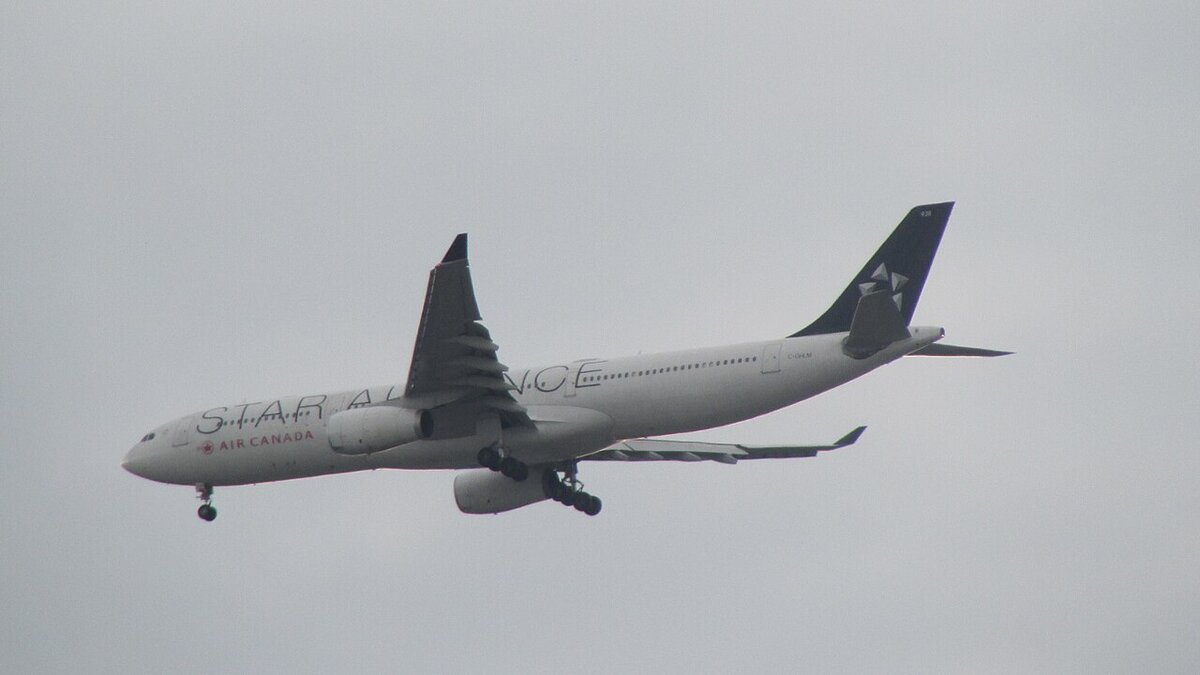
Three alliances carry more than half of global air traffic. Here is how Star Alliance, oneworld and SkyTeam compare in 2026 on members, lounges and status perks, how joint ventures differ, and which network wins by region.
Cover image: aircraft in alliance liveries lined up at an airport — photo by Eileen dover019, CC0, via Wikimedia Commons.
Three global airline alliances dominate long-haul flying in 2026: Star Alliance, with 26 member airlines after ITA Airways joined on 1 April 2026; SkyTeam, with 18 members; and oneworld, with 16 members following Hawaiian Airlines' accession on 22 April 2026. Founded in 1997, 2000 and 1999 respectively, the three groupings together account for well over half of global air traffic, according to alliance and OAG network data. Star Alliance remains the largest by reach, serving roughly 1,360 destinations in 195 countries, against about 1,060 for SkyTeam and around 1,000 for oneworld. For travellers, membership matters in three concrete ways: connecting itineraries sold as a single ticket via codeshares, lounge access and priority services through status reciprocity, and the ability to earn and redeem frequent-flyer miles across every carrier in the group. Which alliance is "best" depends almost entirely on where you live and where you fly, as the regional breakdown below shows.
What does an airline alliance actually get you?
An alliance is a marketing and operational partnership, not a merger. Member airlines keep their own fleets, brands and profit-and-loss accounts, but agree to a common set of customer benefits and connectivity standards.
The practical benefits for passengers fall into four buckets:
- Network and codeshares: one ticket, one check-in and through-checked bags across multiple carriers. A Lufthansa ticket can put you on United, Air Canada or Singapore Airlines metal, a mechanism explained in our guide to how codeshare flights work.
- Earning and burning miles: fly any member, credit the miles to a single loyalty programme, and redeem those miles for awards on any partner. Our primer on how airline miles work covers the mechanics.
- Status reciprocity: elite status with one member is recognised across the alliance. Star Alliance Gold, oneworld Sapphire/Emerald and SkyTeam Elite Plus unlock lounge access, priority check-in, extra baggage and fast-track security on every member airline.
- Irregular-operations protection: when flights are disrupted, alliance partners can rebook passengers onto each other's services more easily than unaligned carriers.
What an alliance does not guarantee is a consistent product. Seat comfort, catering and change fees still vary widely between members, because each airline prices and operates independently.
How do Star Alliance, oneworld and SkyTeam compare in 2026?
Membership has been unusually fluid over the past two years. Scandinavian carrier SAS defected from Star Alliance to SkyTeam in September 2024 after Air France-KLM took a stake in the airline. ITA Airways moved the other way, exiting SkyTeam on 30 April 2025 and joining Star Alliance on 1 April 2026 as part of its integration into Lufthansa Group. On the oneworld side, Fiji Airways and Oman Air became full members in 2025, Hawaiian Airlines joined in April 2026 alongside sister carrier Alaska Airlines, and Philippine Airlines is slated to join in 2027.
| Alliance | Founded | Members (July 2026) | Destinations | Anchor carriers | Top elite tier |
|---|---|---|---|---|---|
| Star Alliance | 1997 | 26 | ~1,360 in 195 countries | United, Lufthansa, Singapore Airlines, ANA, Air Canada, Turkish Airlines | Star Alliance Gold |
| SkyTeam | 2000 | 18 | ~1,060 in 175 countries | Delta, Air France, KLM, Korean Air, China Eastern, Saudia | SkyTeam Elite Plus |
| oneworld | 1999 | 16 | ~1,000 in 161 countries | American, British Airways, Qatar Airways, Cathay Pacific, Qantas, JAL | oneworld Emerald |
Scale is not everything. OAG, the aviation data firm, has noted that unaligned low-cost carriers now operate a larger share of global seats than any single alliance, and heavyweight independents such as Emirates and new entrant Riyadh Air prefer bilateral partnerships over full membership.
What is the difference between an alliance and a joint venture?
A joint venture (JV) is a far deeper form of cooperation than alliance membership, and the distinction matters when you compare fares. In a JV with antitrust immunity, airlines are legally permitted to coordinate schedules and prices and share revenue on a set of routes, effectively behaving as one airline. The US Department of Transportation granted exactly this immunity to the Delta, Air France-KLM and Virgin Atlantic transatlantic JV in November 2019, replacing two earlier parallel agreements.
Most JVs sit inside alliances, such as the Lufthansa Group-United-Air Canada transatlantic venture in Star Alliance, or American and British Airways across the Atlantic in oneworld. But they can cross alliance lines or ignore them entirely: Virgin Atlantic only joined SkyTeam in 2023, years after its JV with Delta began, while Qantas partners with unaligned Emirates. JVs are typically "metal-neutral", meaning the partners no longer care which airline's aircraft you fly, because the revenue is pooled. That is why routing options through partner hub airports multiply on JV routes.
Which airline alliance is best by region?
Europe: Star Alliance is hard to beat, with Lufthansa, SWISS, Austrian, Brussels Airlines, LOT, TAP and now ITA Airways feeding hubs from Frankfurt to Rome, plus Turkish Airlines' vast Istanbul network. SkyTeam counters with Air France, KLM, SAS and Virgin Atlantic; oneworld relies on British Airways, Iberia and Finnair.
North America: a three-way fight between United and Air Canada (Star), Delta and Aeroméxico (SkyTeam), and American, Alaska and Hawaiian (oneworld). oneworld's April 2026 addition of Hawaiian strengthens it materially across the Pacific.
Asia-Pacific: Star Alliance fields Singapore Airlines, ANA, Air India, Thai and EVA Air; oneworld has Cathay Pacific, Japan Airlines, Qantas and Malaysia Airlines; SkyTeam offers Korean Air, China Eastern, China Airlines, Vietnam Airlines and Garuda Indonesia. Depth is genuinely competitive here.
Middle East and Africa: oneworld leads the Gulf through Qatar Airways, Royal Jordanian and Oman Air, while SkyTeam has Saudia, MEA and Kenya Airways. Star Alliance dominates Africa via Ethiopian Airlines, EgyptAir and South African Airways.
Latin America: Star Alliance's Avianca and Copa give it the edge; LATAM, the region's biggest carrier, left oneworld in 2020 and remains unaligned, though it partners closely with Delta.
Frequently asked questions
Do I get lounge access just by flying an alliance airline?
No. Lounge access comes from cabin class or elite status, not the ticket alone. Business-class passengers and top-tier elites (Star Gold, oneworld Sapphire or Emerald, SkyTeam Elite Plus) can use partner lounges across the alliance; economy passengers without status generally cannot, regardless of alliance.
Can I earn miles on any airline in the alliance?
Yes, with caveats. Any alliance member's flights can credit to your chosen programme, but the earning rate depends on the fare class, and deeply discounted economy tickets sometimes earn little or nothing. Always check the partner earning chart before you book.
Which alliance is the biggest in 2026?
Star Alliance, on every headline measure: 26 member airlines serving roughly 1,360 destinations in 195 countries. SkyTeam is second with 18 members and oneworld third with 16, although oneworld's members skew towards highly rated premium carriers such as Qatar Airways and Cathay Pacific.
Why are Emirates and Riyadh Air not in any alliance?
Large hub carriers with strong global brands often calculate that bilateral codeshares give them network reach without sharing customers or constraining strategy. Emirates has stayed independent since its founding, and Riyadh Air launched in 2026 following the same partnership-led playbook.


Post a comment