Best time to visit Goa is November to February for dry beach weather; October and March are the value shoulders, June-September is monsoon deal season. Month table inside.
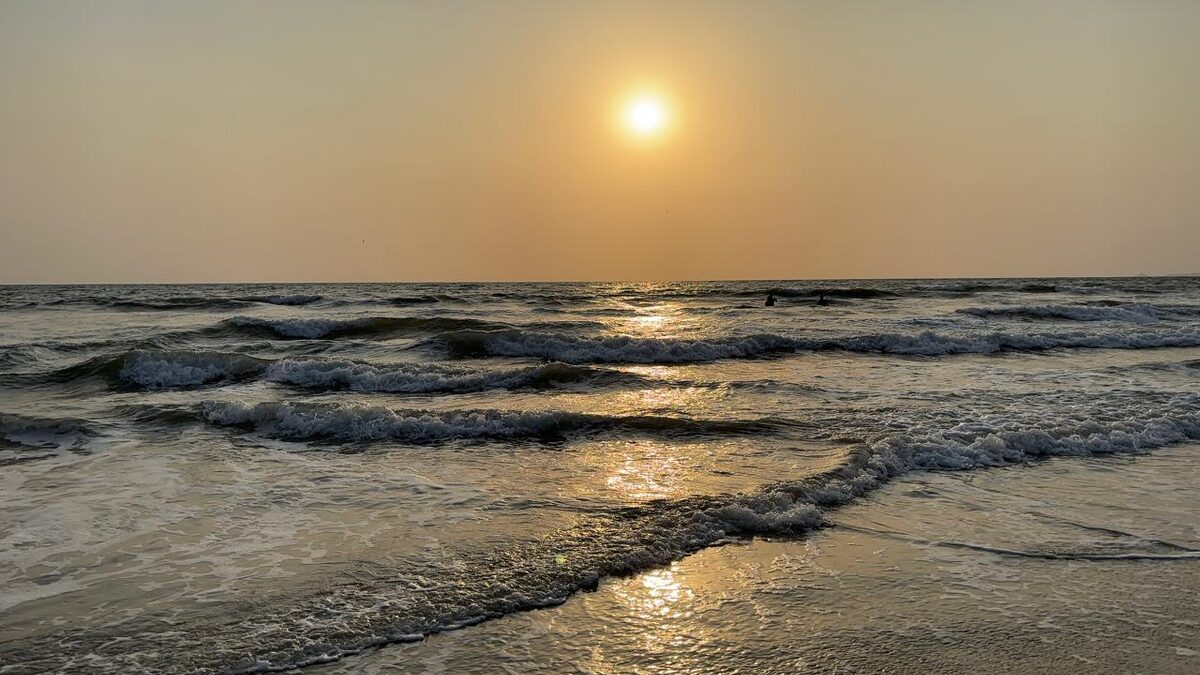
Cover image: Sunset waves rolling onto Colva beach in South Goa — photo by Ria Colva, CC0, via Wikimedia Commons.
The best time to visit Goa is November to February, when dry days, highs around 31-33°C and a calm sea line up with peak-season nightlife, flea markets and beach shacks. December and January are the busiest (and priciest) weeks of the year. October and March bookend the season with lower rates and nearly as good weather, while the June to September monsoon brings hotel deals of 30-50% off and a lush, crowd-free Goa where most watersports pause.
Goa runs on three seasons: pre-monsoon (February to May), southwest monsoon (June to September) and post-monsoon (October to January). The numbers below use long-run India Meteorological Department normals for the state, so you can compare months directly.
Goa weather by month: the full picture
| Month | Avg high / low | Rain / rainy days | Verdict |
|---|---|---|---|
| January | 31.6°C / 19.6°C | 0.2 mm / 0 | Peak: perfect beach weather, highest rates |
| February | 31.5°C / 20.5°C | 0.1 mm / 0 | Peak: Carnival month, slightly easier rates |
| March | 32.0°C / 23.2°C | 1.2 mm / 0.1 | Great value: warm seas, thinning crowds |
| April | 33.0°C / 25.6°C | 11.8 mm / 0.8 | Hot and humid: cheap, but afternoons are heavy |
| May | 33.0°C / 26.3°C | 112.7 mm / 4.2 | Hottest month: pre-monsoon showers begin |
| June | 30.3°C / 24.7°C | 868.2 mm / 21.9 | Monsoon arrives: green Goa, rough seas |
| July | 28.9°C / 24.1°C | 994.8 mm / 27.2 | Wettest month: cheapest stays, indoor days |
| August | 28.8°C / 24.0°C | 512.7 mm / 13.3 | Still wet: waterfalls at full flow |
| September | 29.5°C / 23.8°C | 251.9 mm / 13.5 | Monsoon retreats: gamble with big upsides |
| October | 31.6°C / 23.8°C | 124.8 mm / 6.2 | Season opens: shacks return, rates still soft |
| November | 32.8°C / 22.3°C | 30.9 mm / 2.5 | Sweet spot: dry, buzzing, pre-Christmas rates |
| December | 32.4°C / 20.6°C | 16.7 mm / 0.4 | Peak of the peak: book months ahead |
Two facts jump out. First, Goa gets about 2,926 mm of rain a year across roughly 90 rainy days, and more than 90% of it falls between June and September. Second, the December to February window is almost statistically rain-free, which is exactly why Christmas and New Year in Goa cost what they do.
November to February: peak season, and worth it
Daytime highs hover near 32°C with humidity at its lowest, the sea flattens out for swimming, parasailing and jet-skiing, and the full apparatus of the season is running: beach shacks from October, the Saturday night markets at Arpora and Anjuna, and sunrise flea markets. Evenings cool to around 20°C in December and January, which is why a light layer matters for open-air dinners.
February deserves special mention. The weather matches January almost exactly, the Christmas crowds have gone home, and Goa Carnival (the weekend before Lent, usually mid-February) fills Panaji and Margao with parades. If you want peak weather without peak prices, early February is the single smartest week to pick. For a winter trip shortlist, see our best places to visit in December from India.
June to September: the monsoon deal (with caveats)
July alone averages nearly a metre of rain over 27 rainy days, and the sea turns rough enough that lifeguarded swimming zones shrink and most motorised watersports shut down. Ferries to Divar and Chorao keep running, Dudhsagar Falls roars back to life, and the hinterland (spice plantations, Bhagwan Mahavir sanctuary, Tambdi Surla temple) is at its greenest.
The payoff is price. Monsoon hotel tariffs fall steeply from December levels, premium villas that need a month's notice in winter go for weekend rates, and you will share Baga with a fraction of its January crowd. Pick South Goa (Palolem, Colva, Benaulim) for calmer seas, choose a hotel with a pool and a generator-backed power supply, and keep two buffer days for travel disruption.
October and March: the shoulder months that regulars choose
October is when the shacks rebuild and the season flickers on, with about 6 rainy days early in the month tapering fast. March mirrors it from the other end: seas still warm, crowds thinning, and rates sliding week by week. Honeymooners who want Baga's energy without Baga's queues should look at the last week of October or the first fortnight of March. If the coast is an add-on to a longer trip, our Goa cruise and houseboat options from Karnataka pair well with shoulder-season dates.
Which month fits your trip?
Families with kids: November or February. Dry, calm seas for young swimmers, and you avoid the Christmas price spike. Carry sun protection anyway: the UV index stays high even in "winter".
Couples and honeymooners: December to early February for the full candlelit-shack experience, or March for the same beaches at gentler prices.
Budget travellers: late June to August for the lowest rates, or April to May if you want sun rather than rain and can handle the humidity.
Party season: the last two weeks of December, when the big-brand music festivals land. Book stays by September; the good hostels and mid-range hotels near Anjuna and Vagator sell out first. Pairing Goa with the hills? Our month-by-month Kerala guide runs on the same October-to-March logic.
Frequently asked questions
Which month is best for Goa?
November to February for weather, with December and January at the very top. For the best balance of weather, crowds and price, pick November or February.
Is December too crowded in Goa?
Christmas week and New Year are genuinely packed, with peak pricing and booked-out stays. If you travel in December, book accommodation months ahead and prefer the first fortnight over the last.
Is Goa worth visiting in the monsoon?
Yes, if your trip is about food, waterfalls, green hinterlands and cheap luxury rather than swimming and watersports. Expect daily downpours, rough seas and some shacks closed.
How many days are enough for Goa?
Four to five days covers North and South Goa's headline beaches, Old Goa's churches and a day trip inland. Add two days in the monsoon as a rain buffer.