Anak Krakatau ash has shut 8 Indonesian airports including Jakarta, hitting 764 Soekarno-Hatta flights. Five alternates are on 24-hour ops with free transfers.
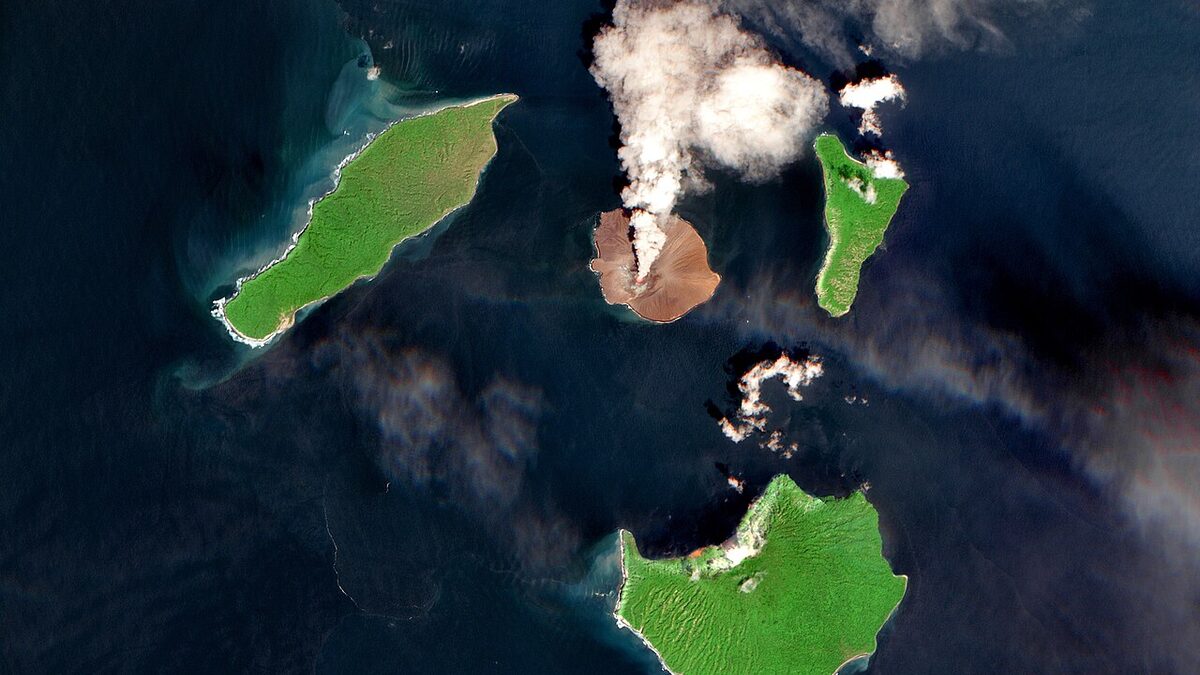
Cover image: a satellite view of Anak Krakatau erupting in the Sunda Strait — photo by European Union, Copernicus Sentinel-2 imagery, Attribution, via Wikimedia Commons.
Volcanic ash from Mount Anak Krakatau has shut eight airports across Java and Sumatra, including Jakarta's Soekarno-Hatta and Halim Perdanakusuma, with the airspace closure extended to 9:00am Monday, September 7. State operator InJourney Airports says 764 scheduled flights at Soekarno-Hatta alone were cancelled, delayed or diverted on Sunday. This is a sharp escalation from the 209 Jakarta cancellations first reported on September 5, which we covered when the ash first reached the capital's airspace.
The transport ministry has pushed five alternate airports onto round-the-clock operations and is laying on free rail and coach transfers for marooned travellers. The eruption episode itself has ended, but ash already in the atmosphere is still calling the shots.
Which airports are closed by the Krakatau ash?
Eight hubs are grounded, stretching from Jakarta across West Java, Lampung and South Sumatra. The closed airports are Soekarno-Hatta (Tangerang), Halim Perdanakusuma (Jakarta), Radin Inten II (Lampung), Husein Sastranegara (Bandung), Budiarto (Curug), Pondok Cabe (South Tangerang), Taufik Kiemas (Pesisir Barat, Lampung) and Atung Bungsu (Pagar Alam, South Sumatra).
The shutdown rests on a NOTAM from AirNav Indonesia that first ran through 11:59pm Sunday and was then extended to 9:00am Monday. Volcanic ash is treated as a no-go for jet engines, so the precaution bites even where skies look clear. Bali's airport has also cancelled flights as the ash drifts east, a fresh headache for the island's peak-season flow that recently added a returning Taipei connection.
How many flights are cancelled or delayed?
At Soekarno-Hatta, the country's busiest airport, Sunday's toll reached 764 scheduled flights: 570 domestic passenger services, 185 international passenger flights and 9 cargo movements. InJourney stresses that figure bundles cancellations, delays and diversions together.
Yudistiawan, the airport's Assistant Deputy for Communication and Legal Affairs, said passenger safety remains the top priority and confirmed the airport has activated its Service Recovery Action protocol with a coordination hub at Terminal 1B. Measures include meals and drinks for stranded travellers, shuttle buses to nearby hotels, special rest zones including the employee lounge, and retail and food outlets ordered to stay open 24 hours. Travellers are told to verify status through their airline or the InJourney contact centre on 172.
| Airport | Status | Notes |
|---|---|---|
| Soekarno-Hatta (CGK) | Closed | 764 flights hit on Sept 6; recovery hub at Terminal 1B |
| Halim Perdanakusuma | Closed | Jakarta's secondary airport, domestic and charter traffic |
| Husein Sastranegara (Bandung) | Closed | Key West Java gateway |
| Radin Inten II (Lampung) | Closed | Sumatra side of the Sunda Strait, closest to the volcano |
| Budiarto, Pondok Cabe, Taufik Kiemas, Atung Bungsu | Closed | Smaller regional and training airfields |
Where are flights going instead?
Five alternate airports are operating 24 hours to absorb diverted traffic: Kertajati (Majalengka), Ahmad Yani (Semarang), Juanda (Surabaya), Yogyakarta International and Adi Soemarmo (Solo). Transportation Minister Dudy Purwagandhi said the ministry is offering airlines these alternatives with full-day operations, and InJourney is arranging no-cost rail and coach transfers for passengers marooned at Soekarno-Hatta to the Java alternates.
The Java-heavy list tells its own story. With Jakarta and Bandung shut, Central and East Java are carrying the load, so passengers rerouted to Semarang, Solo, Yogyakarta or Surabaya should expect long surface transfers to reach the capital.
How long will the disruption last?
The current NOTAM runs to 9:00am Monday, but that is a review point, not a promise. Officials note a 25-hour eruption episode has ended, which stops new ash at the source, yet clearance depends on how fast the existing cloud disperses and on verification flights.
Indonesia's disaster agency BNPB is preparing weather modification operations to help clear the ash, a technique the country has used against haze and around other eruptions. Travellers with Java or Bali flights through at least Tuesday should treat schedules as provisional. Java's volcanoes disrupt aviation regularly; hikers will remember that Mount Semeru's trails were shut by an eruption the same week.
What should affected passengers do now?
Do not go to a closed airport on speculation. Confirm your flight's status with the airline before travelling, keep receipts for meals and hotels, and know that a NOTAM-driven cancellation generally puts rebooking and care duties on the carrier. Our guide to flight-delay compensation and passenger rights explains what to ask for at the counter.
Frequently asked questions
Is Jakarta airport open today?
Both Jakarta airports, Soekarno-Hatta and Halim Perdanakusuma, are closed under a NOTAM extended to 9:00am Monday, September 7. Check with your airline before travelling, as the closure can be extended again if ash persists.
Which airports can I fly into instead of Jakarta?
Five alternates are on 24-hour operations: Kertajati, Semarang, Surabaya (Juanda), Yogyakarta International and Solo (Adi Soemarmo). Free rail and coach transfers are being arranged from Soekarno-Hatta to the Java alternates.
Are Bali flights affected by the Krakatau ash?
Yes. Bali's airport has cancelled flights amid the volcanic activity, and schedules to Denpasar should be treated as provisional until the ash clears. Contact your airline for rebooking options.
When did the Anak Krakatau eruption start?
The current eruptive episode began on September 4, first cancelling around 209 Soekarno-Hatta flights on September 5 before escalating to eight closed airports and 764 affected flights on September 6. A 25-hour eruption episode has since ended.