Airbnb has signed a distribution agreement with Lark Hotels that brings more than 75 US boutique properties onto its platform — the clearest sign yet that its hotels strategy is moving from pilot to scale, and squarely onto Booking.com and Expedia's turf.
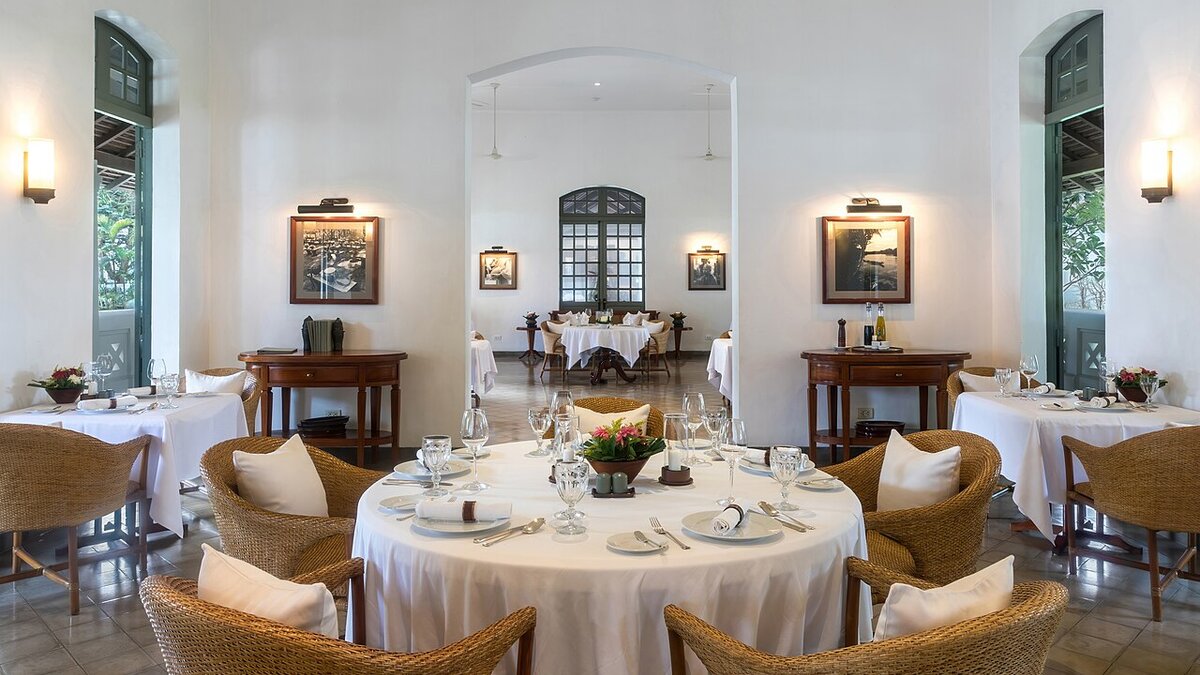
Cover image: Elegant dining room of a boutique heritage hotel with period furnishings — photo by Basile Morin, CC BY-SA 4.0, via Wikimedia Commons.
Airbnb has signed a distribution agreement with boutique operator Lark Hotels that will bring more than 75 independent US properties onto its platform, the companies confirmed on 4 August 2026. Portsmouth, New Hampshire-based Lark operates five brands and close to 100 hotels across the United States and Mexico, each with fewer than 150 rooms, and Airbnb's global head of hotel enterprise and connectivity partnerships, Lou Zameryka, told PhocusWire that all of Lark's US properties will be listed.
The deal lands in classic Airbnb leisure territory — Stowe in Vermont, Asheville in North Carolina, Kennebunkport in Maine, Nantucket and the Hamptons, according to Hotel Dive — and it is the most concrete evidence yet that the hotels strategy Airbnb unveiled in its May 2026 Summer Release is moving from pilot to portfolio deals. For Lark founder and chairman Rob Blood, the tie-up "gives our owners something rare: a diverse channel mix and direct access to guests who already love what we do".
What exactly is the Airbnb–Lark Hotels deal?
The agreement is a distribution partnership: Lark's boutique inventory becomes bookable through Airbnb alongside its core homes supply. Neither company has disclosed the commission structure or the connectivity route — trade reports from PhocusWire and Hotel Dive carried no commission or channel-manager detail — but Zameryka's "hotel enterprise and connectivity partnerships" remit signals Airbnb is now building formal pipes for multi-property operators rather than onboarding hotels one by one.
Lark is a meaningful catch. The group formed a joint venture with lifestyle operator Life House in late 2024, creating a combined portfolio of roughly 100 hotels, per Hotel Dive. Zameryka called the deal "a strong step forward in our mission to help guests discover properties with soul, personality, and a real sense of place", adding that Lark's "thoughtfully designed properties that break the mold" are "exactly the kind of unique, hospitality-driven experience we're focused on as we grow our Hotels business".
| Deal at a glance | Detail |
|---|---|
| Announced | 4 August 2026 |
| Properties joining Airbnb | 75+ (all US Lark properties) |
| Lark portfolio | Five brands, ~100 hotels, US and Mexico, all under 150 rooms |
| Key markets | Stowe, Asheville, Kennebunkport, Nantucket, the Hamptons |
| Commission terms | Not disclosed |
Why is Airbnb pushing into hotels now?
Chief executive Brian Chesky reset the ambition in February 2026, saying the hotels strategy "used to be" about "filling in network gaps" but had "evolved" into "a much bigger, a much more expansive strategy" — one where getting "more aggressive in hotels" also "strengthens homes", per Skift. The May Summer Release then launched thousands of boutique and independent hotels across 20 destinations — including New York, Paris, London, Madrid, Rome and Singapore — each "selected by Airbnb, with no big chains", with more cities rolling out through 2026.
The hiring pattern tells the same story. Zameryka joined Airbnb in January 2026 from Booking.com, and former Booking.com executive Andrea D'Amico arrived in May as vice president of hotels, PhocusWire reported. None of this is entirely new ground: Airbnb bought last-minute hotel-booking app HotelTonight in March 2019, praising its "deep relationships with boutique hotels", but the category was left to idle for years. Understanding how online travel agencies actually make money from hotel distribution explains why Airbnb wants back in: hotels are a high-frequency, high-margin booking stream its homes-only model never captured.
What does short-term rental regulation have to do with it?
Quite a lot. Skift notes Airbnb is concentrating its hotel effort on independent and boutique properties in supply-constrained, highly regulated cities — precisely the urban markets where short-term rental crackdowns have thinned its home listings. New York's Local Law 18 registration regime has stripped most conventional short-term rentals from the city since 2023, and European capitals are moving the same way, as our roundup of Europe's tourist rules, fees and rental bans in force this August details, from Barcelona's phase-out of tourist-flat licences to tighter registration rules across the EU.
Hotels are the regulatory-proof answer. A boutique inn in Nantucket or a design hotel in Madrid cannot be legislated off the platform, and it fills exactly the urban and resort gaps where Airbnb's home supply is shrinking or capped.
What do boutique hotels get from listing on Airbnb?
For independent operators, the appeal is incremental demand from a guest pool that skews younger and books on brand feel rather than points. Blood put it plainly: "Airbnb travelers seek out unique, characterful stays, exactly the guests our hotels are built for." Unlike the big chains, independents have no giant loyalty programme funnelling members to a brand.com app, so third-party channels do more of the heavy lifting.
- Channel diversification: less dependence on Booking.com and Expedia, which dominate independent-hotel distribution.
- Merchandising perks: Airbnb's launch included a price-match guarantee and up to 15% Airbnb credit toward future home bookings for featured hotels in major cities, per its Summer Release.
- Curation as marketing: Airbnb's "no big chains" selection positions each listed property as hand-picked, a halo independents rarely get on legacy OTAs.
The unresolved question is economics. Until Airbnb's hotel take rate is public, operators cannot fully weigh it against the 15–25% typically cited for legacy OTAs — or against the maths in our analysis of direct booking versus OTA distribution.
Should Booking.com and Expedia be worried?
Not yet — but the direction of travel is unmistakable. Seventy-five inns will not dent Booking Holdings' millions of listings, and Airbnb has deliberately narrowed its lane: Zameryka told PhocusWire the company is not trying to be the "everything store" that other online travel agencies have become, but wants "unique, localized-feeling, hospitality-driven hotel partners". That is a flanking move, not a frontal assault.
The threat is structural rather than immediate. Airbnb is poaching Booking.com's own distribution executives, building enterprise connectivity, and courting exactly the independent boutique segment where legacy OTAs earn their richest commissions. If portfolio deals like Lark's become the template — and Chesky's "much more expansive" framing suggests they will — the fight for independent hotel inventory just gained a third global bidder.
Frequently asked questions
How many Lark Hotels properties will appear on Airbnb?
More than 75 boutique properties — every US hotel in Lark's portfolio, according to Airbnb's Lou Zameryka. Lark operates close to 100 hotels overall across five brands in the US and Mexico, each with fewer than 150 rooms.
Does Airbnb list normal hotel chains?
No. Airbnb says every hotel on the platform is individually selected, with no big chains, judged on neighbourhood, design and hospitality standards. Its May 2026 launch covered thousands of boutique and independent hotels in 20 destinations, with more cities being added through the year.
What commission does Airbnb charge hotels?
Neither Airbnb nor Lark has disclosed the commission terms of this deal, and Airbnb has not published a standard hotel take rate for its 2026 programme. Independent hotels typically pay legacy OTAs roughly 15–25% per booking, so pricing will be a key competitive lever.
Hasn't Airbnb tried hotels before?
Yes. It acquired last-minute hotel-booking app HotelTonight in March 2019, but the hotels business stayed peripheral for years. In February 2026 CEO Brian Chesky said the strategy had shifted from "filling in network gaps" to "a much more expansive strategy".
Sources
- Hotel Dive — Airbnb furthers hotel strategy with Lark Hotels partnership
- PhocusWire — Airbnb partners with boutique hotel operator Lark
- Airbnb Newsroom — 2026 Summer Release: Now there's even more to Airbnb
- Skift — Airbnb's Hotel Strategy Is Now 'Much Bigger'
- Airbnb Newsroom — Airbnb signs agreement to acquire HotelTonight