IndiGo's Doha to Bengaluru service diverted to Muscat on 2 September 2026 after a crew member fell ill, landing safely and continuing after a crew change.
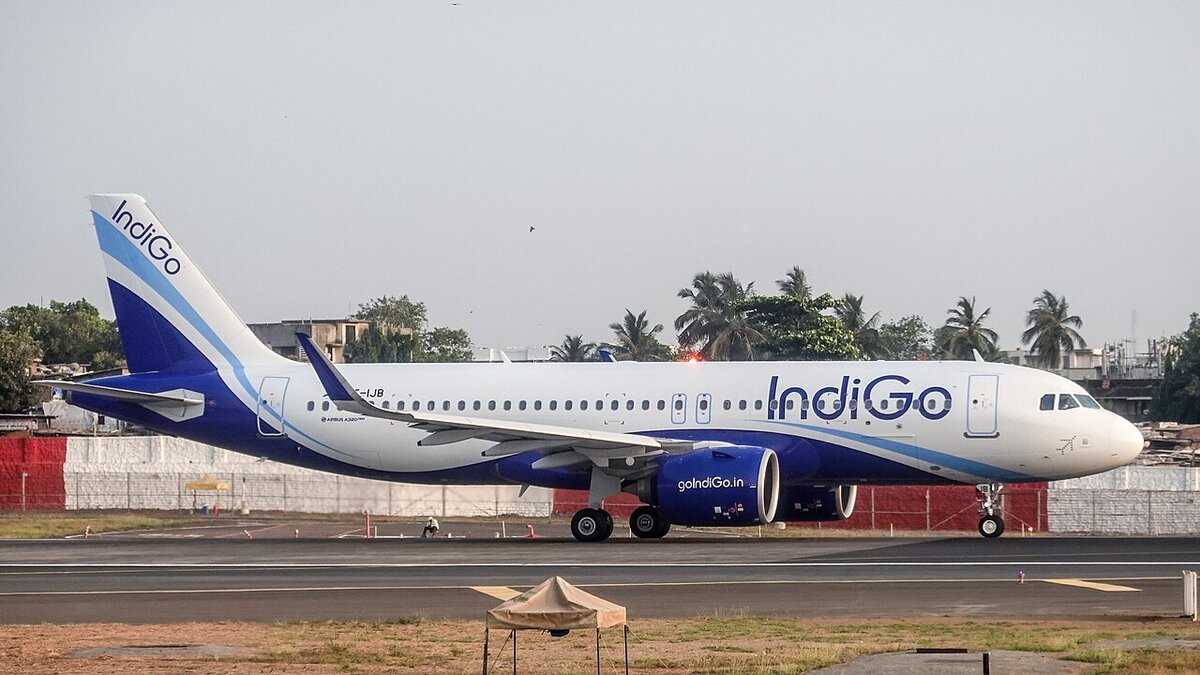
Cover image: IndiGo Airbus A320 on tarmac at Muscat — photo by This Photo was taken by Timothy A. Gonsalves. Feel free to use my photos, but please mention me as the author. I would m, CC BY-SA 4.0, via Wikimedia Commons.
IndiGo's Doha to Bengaluru service diverted to Muscat on 2 September 2026 after a crew member fell ill in flight, with the aircraft landing safely and passengers continuing to Bengaluru after a crew change. The airline said the diversion was precautionary, medical assistance was provided on arrival in Oman, and an alternate crew was positioned to operate the onward sector. No injuries to passengers were reported and the aircraft later completed the journey to Karnataka's capital.
The incident occurred the same week Indian aviation is under close scrutiny over operational strain. It follows a Goa-Delhi engine snag that forced a return in early September and a DGCA audit that flagged training and fatigue-related findings across carriers, while IndiGo is also expanding with new daily Mumbai-Hanoi flights from 25 October and additional Itanagar services from 10 October. For travellers, the Muscat diversion is a reminder that crew medical protocols are designed to put a landing before a schedule.
What happened on the Doha-Bengaluru service?
According to reports from Livemint and India Today on 2-3 September, the Bengaluru-bound flight from Doha diverted to Muscat after a crew member reported feeling unwell. The flight deck coordinated with air traffic control to land at the nearest suitable airport with adequate medical and ground support. Muscat International Airport, a regular diversion point on the Gulf-India corridor, was selected.
The crew executed a normal descent and landing. Omani airport medical teams met the aircraft. The affected crew member was taken for evaluation. The aircraft, reported to be an Airbus A320 family jet on the short Gulf sector, remained on the ground in Muscat pending crew legality and a replacement operating crew. IndiGo's ground team in Muscat assisted passengers with transit formalities. The airline has not published a separate flight number change, describing the event as a diversion of the scheduled Doha-Bengaluru service.
Such diversions are procedure-driven. When a operating crew member cannot continue, the flight cannot legally or safely proceed with reduced crew. Landing promptly, even at a foreign station, is the conservative and correct decision. The choice of Muscat over continuing to Bengaluru reflects standard risk management on the Doha route, where Muscat lies along the great-circle track and offers long runways, IndiGo handling and medical facilities.
How were passengers handled after landing in Muscat?
Passengers remained on board or in the transit area while IndiGo activated its irregular-operations plan. The airline arranged a replacement crew to operate Muscat to Bengaluru, subject to flight-time limitations and pre-flight checks. Customers were updated through the airport displays and the IndiGo app, and rebooked automatically to the resumed departure. Where the delay extended, refreshments and assistance were provided in line with the airline's customer support policy.
Travellers on diverted flights do not need to clear Omani immigration unless an overnight stay is required. Transit passengers are typically held airside with boarding passes revalidated for the new departure time. IndiGo's team also coordinated with Bengaluru arrivals to manage onward connections, including late-night domestic transfers. The aircraft, once released by engineering after routine checks, continued to Bengaluru and was not reported to have required a technical fix beyond standard transit inspection.
For anyone caught in a diversion, the practical steps are straightforward. Keep your mobile boarding pass available, monitor the airline app for a revised departure time, and retain receipts for meals or transport if you are asked to re-enter the terminal. Under India's passenger charter, airlines provide meals and refreshments for extended delays and rebooking on the next available service without extra fare.
Why crew medical diversions happen
Crew incapacitation, even partial, is treated as a safety event. Guidance from the International Civil Aviation Organization and airline operations manuals requires that if a flight crew member cannot perform duties, the flight must land as soon as practicable at a suitable aerodrome. Symptoms that trigger a diversion include chest discomfort, severe headache, dizziness, or persistent nausea that could worsen at altitude.
Cabin pressure and dry air at cruise can exacerbate dehydration and fatigue, particularly on night departures from the Gulf. Doha-Bengaluru is a night-heavy market, often departing after midnight Gulf time. Airlines roster crews with regulated rest, but cumulative fatigue across a four-sector day can lower tolerance for minor illness. The decision to divert protects both the crew member and the remaining crew's workload, and removes any question of continuing with reduced redundancy in the flight deck or cabin.
Context: IndiGo network pressure and safety focus
The Muscat diversion comes as IndiGo operates at record utilisation. The airline is India's largest by market share and has been adding international spokes, including the Mumbai-Hanoi daily launch on 25 October 2026, while also managing operational spares during engine inspections on parts of the A320neo fleet. Each aircraft and crew tail is tightly turned, so a single diversion can ripple into the next rotations.
Regulatory attention is also high. Indian media reported on 1-2 September that a DGCA audit found serious findings at Indian carriers ahead of a Federal Aviation Administration assessment, with focus on training records and fatigue management. Separately, seven A321neo tailstrike incidents were flagged by a pilots' association in late August, prompting calls for additional training. None of these link directly to the Muscat medical event, but they shape the environment where any diversion receives extra scrutiny. The carrier's conservative call to land reinforces that medical protocols are being applied as written.
Operationally, Muscat is a sensible diversion base. Oman airports have handled Gulf-India diversions before, and IndiGo maintains handling there for its existing Muscat-India services. The availability of engineering, catering and a relief crew pool within the region limited the delay compared with a more remote alternate. For the network, the cost is a swapped aircraft and crew duty, not a prolonged aircraft-on-ground event.
What this means for flyers on Gulf-India routes
For travellers between the Gulf and India, diversions remain rare but routine in the sense that crews train for them. The Gulf-India corridor is one of the busiest for Indian carriers, with multiple daily frequencies from Doha, Dubai and Bahrain to South Indian metros. On-time performance is usually high, but summer heat, night operations and tight connections elevate the chance of a medical or technical divert.
If you are booked Doha-Bengaluru in the coming weeks, no schedule change has been published linked to this event. Standard advice applies: check in online, arrive with extra buffer for security at Hamad International, and keep a transit visa requirement check for unscheduled landings. Oman allows airside transit without a visa for most nationalities, though an entry stamp is required if an overnight hotel is needed. Travel insurance that covers delay and missed connections remains the most effective way to hedge a long Gulf itinerary.
For IndiGo, the operational test is recovery. The airline's ability to re-crew quickly in Muscat and return the aircraft to the Bengaluru rotation without cancelling the return leg will be watched internally as a measure of resilience heading into the winter schedule ramp.
| Detail | What is known |
|---|---|
| Route | Doha (DOH) to Bengaluru (BLR), scheduled Gulf-India service |
| Date | 2 September 2026, diverted to Muscat (MCT) |
| Reason | Crew member fell ill in flight; precautionary diversion |
| Outcome | Landed safely; alternate crew operated Muscat to Bengaluru |
| Aircraft | Airbus A320 family, no damage reported |
Frequently asked questions
What happened on the IndiGo Doha-Bengaluru flight?
The Doha to Bengaluru service diverted to Muscat on 2 September 2026 after a crew member reported feeling unwell in flight. The crew elected to land at the nearest suitable airport. The aircraft landed normally at Muscat and passengers were attended to on the ground.
Were passengers at risk and how did they reach Bengaluru?
No passenger injuries were reported. The diversion was precautionary for the crew member. After medical assistance and mandatory crew rest checks, IndiGo arranged an alternate crew to operate the aircraft from Muscat to Bengaluru, with the delay communicated to passengers in transit.
Does a crew illness count as an emergency landing?
It is classified as a precautionary diversion, not an emergency landing with aircraft damage. Pilots declare PAN or coordinate with ATC to prioritize landing when a crew member cannot safely continue duties. Muscat was chosen as the closest airport with IndiGo support.
What should travellers do if their flight is diverted?
Follow crew instructions, keep your boarding pass and check the airline app for updates. IndiGo rebooks diverted passengers on the same aircraft or next available connection and provides duty-of-care on longer delays under Indian DGCA rules. Keep receipts if you incur costs.