A CDC order requires everyone flying to the US from abroad after 11:59pm Eastern on 3 November to sign that they have not been in the DRC in the past 21 days.
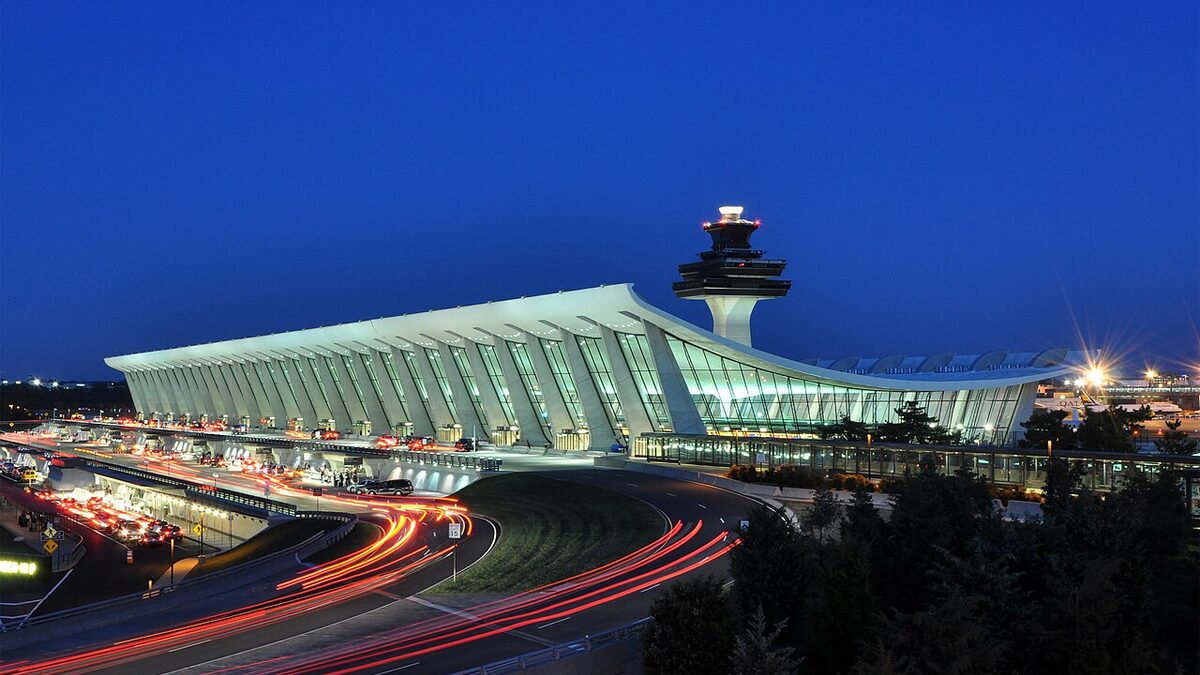
Cover image: Washington Dulles International Airport at dusk (file photo) — photo by Joe Ravi, CC BY-SA 3.0, via Wikimedia Commons.
Every passenger boarding a flight to the United States from abroad on or after 11:59pm US Eastern time on 3 November must sign a statement that they have not been in the Democratic Republic of the Congo (DRC) in the previous 21 days. The US Centers for Disease Control and Prevention (CDC) order, signed on 22 October, covers every nationality and departure airport, including US citizens, green-card holders and passengers only connecting in the US.
Airlines collect the declaration and must refuse boarding to anyone without one. The cut-off is 04:59 UTC on 4 November (08:59 in Dubai, 12:59 in Singapore). The order runs until 18 December unless the CDC rescinds or modifies it sooner.
What exactly must passengers sign?
The form, titled "Passenger Disclosure and Attestation to the United States of America", asks about travel history, not health. The CDC accepts a paper signature, an authenticated digital signature or an electronic tick-box.
Presence in the DRC includes connecting through one of its airports "even if the passenger did not disembark the plane or leave the airport"; overflights do not count. The day a traveller leaves the DRC is Day 0, and they may board for the US from Day 22.
"Willfully providing false or misleading information may lead to criminal fines and imprisonment," the CDC warns.
What do airlines have to do, and from when?
From the cut-off, each airline or aircraft operator must review every attestation, confirm to the US government "at or before the time of boarding" that all passengers have completed one, and refuse boarding to anyone without one unless they hold a US government exemption. Copies must be kept for at least 42 days and handed over on request, with details such as PNR numbers. Commercial, general aviation and private flights are covered, including those from US preclearance airports.
An operator that cannot give that confirmation will not receive "controlled free pratique", the public-health permission to enter a US port of entry and disembark passengers. Organisations that fail to comply may also face criminal fines of up to $200,000.
Each airline chooses how to collect the form; the CDC encourages building it into check-in websites and apps, and its form is currently English-only (airlines may translate it).
In May, US Customs and Border Protection stopped Air France flight AFR378 from landing in Detroit and diverted it to Montreal after a passenger covered by the entry restrictions boarded in Paris "in error", the Associated Press reported. It later continued to Detroit without that passenger.
What should travel agents and travel managers tell clients?
Brief every US-bound client, not only those with links to Africa; a family of four needs four forms.
Check itineraries for any DRC stop in the 21 days before the US-bound flight, including connections where the passenger stays on board; those travellers cannot board. Our layover and transit rules guide covers other connection checks.
Under Attachment A to the order, agents may sign only for a client they are authorised to act for who cannot attest, for example because of age or impairment.
Which Ebola travel rules were already in force?
The attestation adds a check at every departure point to earlier CDC measures; the order says the DRC is linked to the US through "a series of regional and international transit hubs".
| Measure | Who it covers | Status as of 25 October 2026 |
|---|---|---|
| Attestation order | Every passenger flying to the US from abroad, including connections | Takes effect 11:59pm Eastern, 3 November; due to end 18 December |
| DRC boarding bar | Anyone in the DRC in the past 21 days, US citizens included | In force since May; extended to US citizens in July |
| Entry suspension, with exceptions | Foreign nationals, including green-card holders, in the DRC, Uganda or South Sudan in the past 21 days | Current order runs to 10 November unless amended |
| Designated screening airports | US citizens and nationals in Uganda or South Sudan, but not the DRC, in the past 21 days | In force: entry only via Washington Dulles, Atlanta or New York JFK |
The order cites 9,455 confirmed cases and 4,561 deaths in the DRC as of 18 October, from the Bundibugyo strain; the CDC said no cases linked to the outbreak had been reported in the US. More in our 2026 entry requirements roundup.
Frequently asked questions
Do I need to sign the Ebola declaration if I have never been to Africa?
Yes. The CDC order covers every passenger boarding a flight to the United States from a foreign country, whatever their nationality, including US citizens. Travellers with no link to the DRC confirm they have not been there in the previous 21 days.
Does the rule apply if I am only connecting through a US airport?
Yes. The CDC says the attestation is needed for any flight landing in the United States, even if the passenger is only transiting to another country. Flights that cross US airspace without landing are not covered. Airlines will ask for it before boarding.
Can one person sign the declaration for a whole family or group?
Not on one form. Each passenger needs a separate attestation, though a parent or other authorised individual can sign for travellers under 18, and a family member, legal guardian or travel agent may attest for someone unable to do so, for example because of a physical or mental impairment.
How long will the US Ebola attestation requirement last?
The order runs until 18 December 2026 unless the CDC rescinds or modifies it sooner. The CDC says any amendment or extension will depend on outbreak metrics, including case counts and geographic spread, so late-December travellers should check its status before flying.
Sources
- CDC, Ebola attestation order and FAQs
- CDC, signed order and Attachment A (PDF)
- CDC, Level 4 travel notice for Ebola in the DRC
- Federal Register, entry suspension order, 15 October
- NBC News (Reuters), US to tighten Ebola screening
- CDC, designated airports for returning travellers
- WTOP (AP), Air France flight to US diverted to Montreal