

Europe's entry rules have changed more in twelve months than in the previous decade. This guide covers who needs a Schengen visa in 2026, the 90/180 rule, the now-live EES biometric border system, the ETIAS timeline, fees and common refusal reasons.
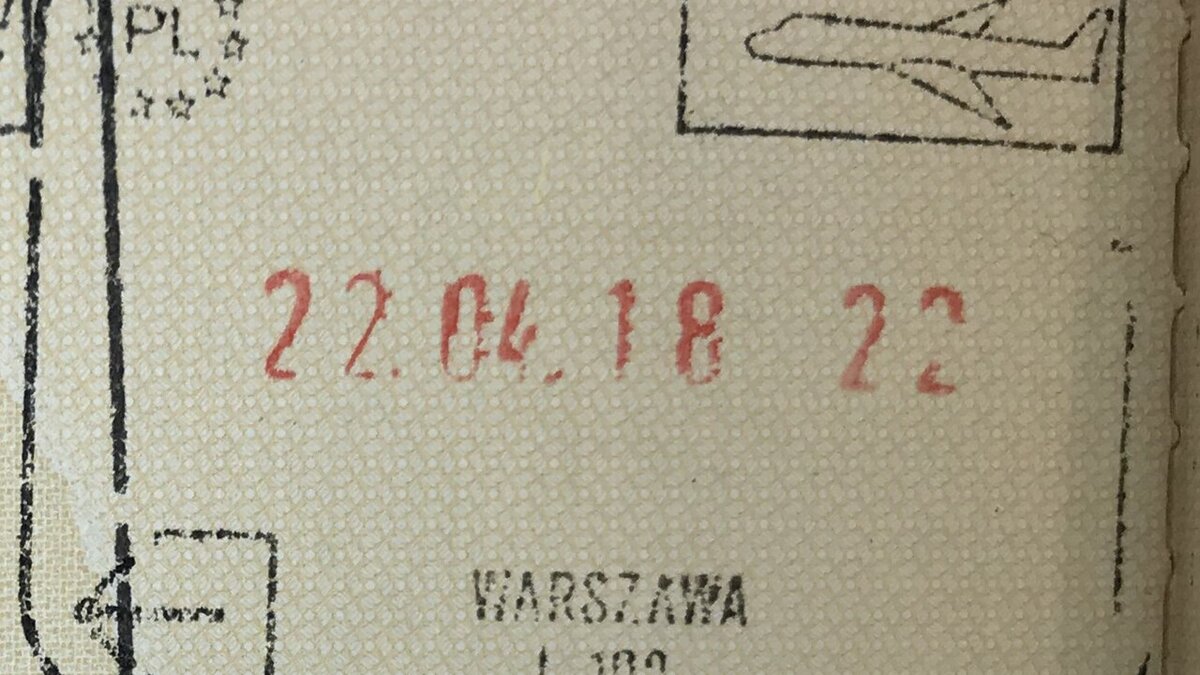
Cover image: passport being stamped at a european border control desk — photo by Wanam767, CC BY-SA 4.0, via Wikimedia Commons.
Travellers from countries such as India, China, Türkiye, South Africa and the Philippines still need a short-stay Schengen visa to visit the 29-country Schengen Area in 2026, while nationals of around 60 visa-exempt states, including the United Kingdom, United States, Canada, Australia and Japan, do not. The visa costs €90 for adults and €45 for children aged six to twelve, allows stays of up to 90 days in any 180-day period, and consulates must normally decide within 15 calendar days, extendable to 45 in complex cases. Two bigger changes frame this year: the EU's Entry/Exit System (EES), which began its phased rollout on 12 October 2025 and became fully operational at all external borders on 10 April 2026, now records fingerprints and facial images in place of passport stamps; and ETIAS, a €20 online travel authorisation for visa-exempt visitors, is scheduled to start in the last quarter of 2026.
Who needs a Schengen visa in 2026?
The Schengen Area now covers 29 countries: 25 EU member states plus Iceland, Liechtenstein, Norway and Switzerland. Ireland runs its own visa regime, and Cyprus is not yet a full member, so neither is covered by a Schengen visa.
Whether you need a visa depends on nationality, not residence. Citizens of visa-required countries must obtain a short-stay (Type C) visa before travelling for tourism, business, family visits or transit. Of the more than 12 million applications the European Commission counted in 2025, the largest applicant nationalities were China (1.9 million), Türkiye (1.26 million) and India (1.15 million).
Visa-exempt nationals can still enter on a passport alone, though ETIAS, covered below, will change that — mirroring schemes such as the UK's Electronic Travel Authorisation and the US ESTA.
How does the 90/180-day rule work?
Both visa holders and visa-exempt visitors are limited to 90 days of presence within any rolling 180-day window across the whole Schengen Area combined, not per country. The window is not a calendar reset: on every day of a stay, you look back 180 days and count the days spent inside the zone.
Practical consequences trip up frequent travellers:
- Days are cumulative across all 29 countries; three weeks in Spain and ten weeks in Italy within the same 180 days is an overstay.
- Arrival and departure days each count as full days.
- Overstays are now flagged automatically by the EES database and can lead to fines, deportation or multi-year entry bans.
The European Commission publishes a free short-stay calculator for checking remaining days.
What is the EES, and how has biometric border control changed arrivals?
The Entry/Exit System is the EU's digital border register for non-EU short-stay travellers. It replaces manual passport stamping with a record of fingerprints, a facial image, travel-document data and the time and place of each crossing. After a phased rollout from October 2025, the system became fully operational at every external air, sea and land border on 10 April 2026.
The Commission says the system logged more than 45 million border crossings during the rollout phase, during which more than 24,000 people were refused entry and over 600 were flagged as security risks. First-time registration takes a few extra minutes; later trips use biometric verification against the stored record. The wider industry is heading the same way, as detailed in this report on digital travel credentials going mainstream.
When does ETIAS start for visa-exempt travellers?
ETIAS, the European Travel Information and Authorisation System, is a pre-travel screening for visa-exempt nationals. The European Commission's current schedule puts the start in the last quarter of 2026, with the exact date to be announced closer to launch; see the rolling ETIAS launch timeline update for the latest.
Key parameters confirmed so far: the application is online, costs €20 (waived for under-18s and over-70s), and the authorisation is valid for three years or until the passport expires, whichever comes first. Enforcement starts soft: a six-month transitional period in which travel without an ETIAS is still allowed, then a further six-month grace period for first-time arrivals, meaning hard enforcement is not expected before 2027. ETIAS is not a visa: it does not change the 90/180 limit and does not guarantee entry.
How do you apply for a Schengen visa, and what does it cost?
Applications go to the consulate, or its outsourced visa application centre (VFS Global, TLScontact and similar), of the country that is your main destination, or of first entry if stays are equal. You can apply up to six months before travel and no later than 15 days before departure. The standard file includes a passport issued within the last ten years and valid three months beyond exit, the form, a photo, biometrics, proof of accommodation, transport and funds, evidence of ties to the home country, and travel medical insurance with at least €30,000 in cover across the Schengen Area, a requirement explained in this travel insurance guide.
| Item | Cost (2026) | Notes |
|---|---|---|
| Schengen visa, adult | €90 | Non-refundable, even if refused |
| Schengen visa, child 6–12 | €45 | Under-6s free |
| EES registration | Free | Done at the border, all non-EU visitors |
| ETIAS (from Q4 2026) | €20 | Visa-exempt nationals; free under 18 and over 70 |
Book appointments early for summer travel: peak-season demand can push appointment waits well beyond the legal decision clock.
Why do Schengen visa applications get refused?
The Commission reports a global refusal rate of 14.6% in 2025, slightly better than 14.8% in 2024, though outcomes vary sharply by consulate and nationality. The most common grounds cited on refusal forms are:
- Insufficient proof of funds, or bank statements inconsistent with declared employment.
- Unclear purpose of travel: vague itineraries, unverifiable hotel bookings or inconsistent dates.
- Non-compliant travel insurance, below €30,000 or not covering the full trip and area.
- Doubts about intention to leave, usually weak employment, family or property ties to the home country.
- Passport problems: less than three months' validity beyond departure or issued more than ten years ago.
Refusals must state their reasons in writing and can be appealed in the refusing country; the fee is not refunded.
Frequently asked questions
Do British and American travellers need a Schengen visa in 2026?
No. UK and US passport holders remain visa-exempt for stays up to 90 days in 180. They register biometrics under EES on arrival and will need a €20 ETIAS authorisation once enforcement begins after the late-2026 launch.
Does the EES replace passport stamps?
Yes. Since 10 April 2026, entries and exits of non-EU short-stay travellers are recorded digitally with fingerprints and a facial image instead of ink stamps, and the 90/180 count is tracked automatically.
How long does a Schengen visa take to process?
Consulates must decide within 15 calendar days of a complete application, extendable to a maximum of 45 days when further scrutiny is needed. The bigger real-world delay is often securing a biometric appointment, so apply as early as possible within the six-month window.






Post a comment