

No vaccinations are mandatory for Thailand unless you arrive from a yellow-fever country. Here is what the CDC actually recommends — hepatitis A, typhoid, Japanese encephalitis — and the only places malaria pills matter.
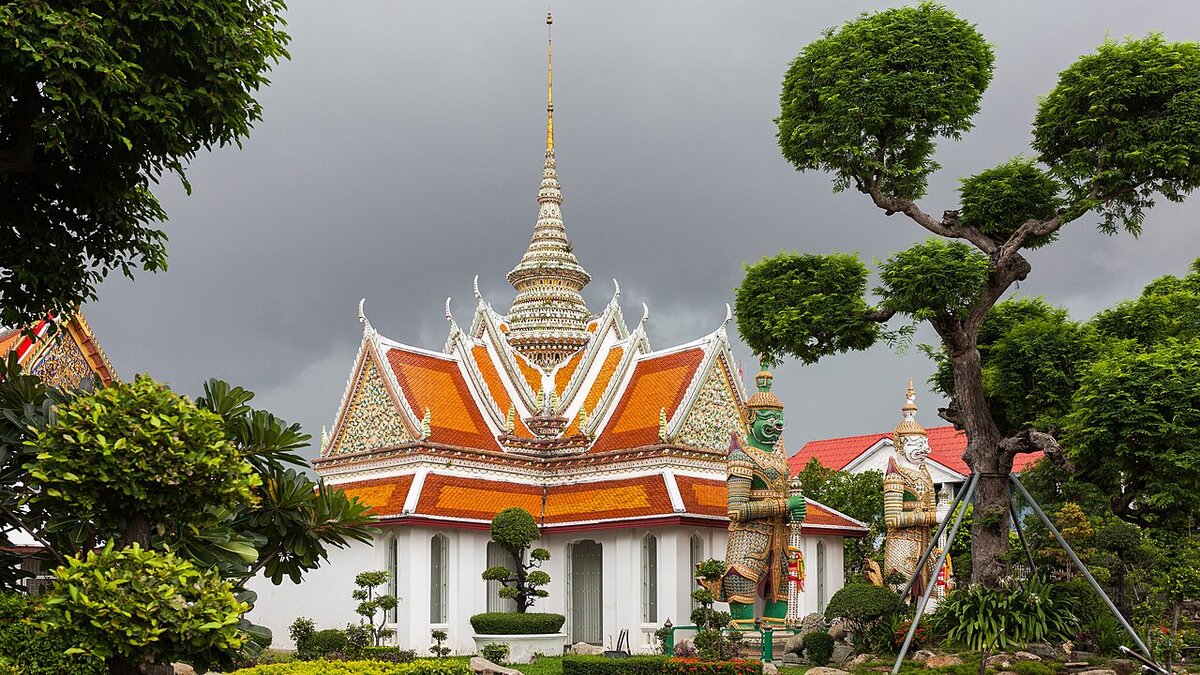
Cover image: Wat Arun temple on the Chao Phraya river in Bangkok, Thailand — photo by Diego Delso, CC BY-SA 3.0, via Wikimedia Commons.
No — Thailand requires no vaccinations from travelers arriving directly from Europe, the Americas, Australia or most of Asia. The only entry rule is a yellow fever certificate, and it applies solely if you have travelled from or through a country on Thailand's yellow-fever list. What you should get is a short, standard list of recommended vaccines — led by hepatitis A and typhoid — plus the right answer on malaria, which for most Thailand holidays is "not needed".
Thailand is one of the most visited countries on earth (it welcomed nearly 40 million foreign arrivals in 2019 and has been rebuilding since — see our coverage of Thailand's tourism surge), and the health picture for a standard two-week city-and-beach trip is straightforward. Below is exactly what the US CDC's Thailand page — last updated August 20, 2026 — recommends, and where the exceptions are.
Which vaccinations are mandatory for Thailand?
Only one, and it almost never applies. Under regulations from Thailand's Ministry of Public Health, travelers who have travelled from or through a declared yellow-fever-infected country must show an International Certificate of Vaccination for yellow fever — at visa application and again at immigration. The list is mostly African and South American countries (Angola, Brazil, Kenya, Peru, Uganda and roughly 40 others). Everyone else, including visitors flying in from Europe, North America, the Middle East or elsewhere in Asia, needs no vaccination certificate at all — the standard entry requirements are just passport validity and, for many nationalities, the visa-exemption scheme (our guide to Thailand's 30-day visa-free stay covers the current rules).
The vaccines the CDC recommends for Thailand
The CDC groups its advice into "make sure you're up to date" and "destination-specific". For Thailand that means:
| Vaccine | Who needs it | Why |
|---|---|---|
| Routine (MMR, tetanus, flu, polio…) | Everyone | Boosters lapse; measles is circulating globally (CDC Level 1 notice) |
| Hepatitis A | All unvaccinated travelers aged 1+ | Spread via contaminated food and water — the classic traveler vaccine |
| Typhoid | Most travelers, per CDC | Food- and water-borne; not 100% effective, so food hygiene still matters |
| Hepatitis B | Unvaccinated travelers under 60 (consider if older) | Blood/sexually transmitted; tattoos and medical care are exposure routes |
| COVID-19 / influenza | All eligible travelers | CDC advises staying current with both before any international trip |
| Japanese encephalitis | Stays of a month or more, rural travel, camping, or unsure itineraries | Mosquito-borne; not relevant for short urban/beach trips |
| Rabies (pre-exposure) | Consider for remote travel, animal contact, caving, long stays | Dogs with rabies are found in Thailand; treatment is widely available but pre-exposure shots buy time |
| Chikungunya | Consider only for stays of ~6 months or more | Elevated chikungunya risk in Thailand; a vaccine exists |
For a typical one- or two-week Bangkok-islands itinerary, the practical shortlist is routine boosters + hepatitis A + typhoid, with hepatitis B a sensible add for younger travelers. Japanese encephalitis and pre-exposure rabies are trip-shape decisions, not Thailand-in-general decisions — discuss them with a travel clinic if you'll trek, cave, cycle rural roads or stay months rather than weeks.
Do you need malaria tablets in Thailand?
This is the most over-feared item, and the CDC's map is precise. Malaria transmission in Thailand is confined mainly to rural, forested provinces that border Myanmar, Cambodia and Malaysia — with rare cases in Buri Ram province. There is no transmission in Bangkok, Chiang Mai or Chiang Rai, on Phuket, Koh Samui or Koh Pha Ngan, none on the Krabi islands (Koh Lanta, Koh Phi Phi, Koh Yao Noi/Yai), and none in Pattaya. If your trip is cities plus beaches, you need mosquito repellent, not antimalarial pills. If you are heading to border zones (say, Sangkhlaburi or the far-north hill country), a clinician may prescribe atovaquone-proguanil, doxycycline or tafenoquine — some must be started days before travel, another reason to book that clinic appointment early.
Dengue is the mosquito disease you can't tablet against — it is present across Thailand year-round with seasonal peaks. Daytime bite avoidance (DEET, long sleeves at dawn/dusk, screened rooms) is the whole strategy.
How far ahead should you book the travel clinic?
Four to six weeks before departure is the standard advice from the UK's National Travel Health Network (NaTHNaC), and the CDC tells travelers to see a doctor at least a month ahead. That window exists because multi-dose series (hepatitis B) need time and live-virus spacing matters. Left it late? Still go — hepatitis A and typhoid vaccines protect quickly, and a same-week appointment beats skipping them. Bring your itinerary: the malaria and rabies answers genuinely depend on where you're going.
The one thing more important than any jab
Private hospitals in Bangkok and Chiang Mai are excellent, but a medical evacuation or an extended stay can run into five figures, and the CDC explicitly advises travelers to consider travel health and medical evacuation cover. Before you fly, check that your policy includes medical treatment in Thailand and repatriation — our plain-English guide to what travel insurance actually covers walks through the fine print most people skip. If you're weighing a cheaper, airline-bundled product instead, we've also compared travel insurance vs flight insurance — the difference matters most for medical claims.
Frequently asked questions
Are any vaccinations mandatory to enter Thailand?
Not for travelers arriving directly from Europe, the Americas or most of Asia. Under Thai Ministry of Public Health rules, a yellow fever vaccination certificate is required only if you have travelled from or through a country on Thailand's yellow-fever list (mostly in Africa and South America).
Do I need malaria pills for Phuket, Bangkok or Koh Samui?
No. The CDC lists no malaria transmission in Bangkok, Chiang Mai, Chiang Rai, Phuket, Koh Samui or Koh Pha Ngan, and none on the islands of Krabi province (Koh Lanta, Koh Phi Phi) or in Pattaya. Prescription antimalarials are only advised for rural forest areas near the Myanmar, Cambodia and Malaysia borders.
How far in advance should I get travel vaccinations for Thailand?
See a travel clinic four to six weeks before departure. Some vaccine series (like hepatitis B) need multiple doses, and the CDC advises at least a month ahead. Even a last-minute appointment is worthwhile — some vaccines work within days.
Is hepatitis A vaccine recommended for Thailand?
Yes. The CDC recommends hepatitis A vaccination for all unvaccinated travelers one year of age or older visiting Thailand, because the virus spreads through contaminated food and water regardless of how upscale your trip is.
Sources
- US CDC — Thailand traveler view: vaccines and medicines (page updated August 20, 2026)
- Royal Thai Government (Thai Trade & Economic Office) — countries whose travelers need a yellow fever certificate for Thailand
- NaTHNaC / TravelHealthPro — pre-travel consultation timing guidance (four to six weeks)






Post a comment