

Whether you need a visa for Vietnam in 2026 depends on your passport: UK and most Western European citizens get 45 days free, while US, Canadian and Australian travellers need the US$25 e-visa.
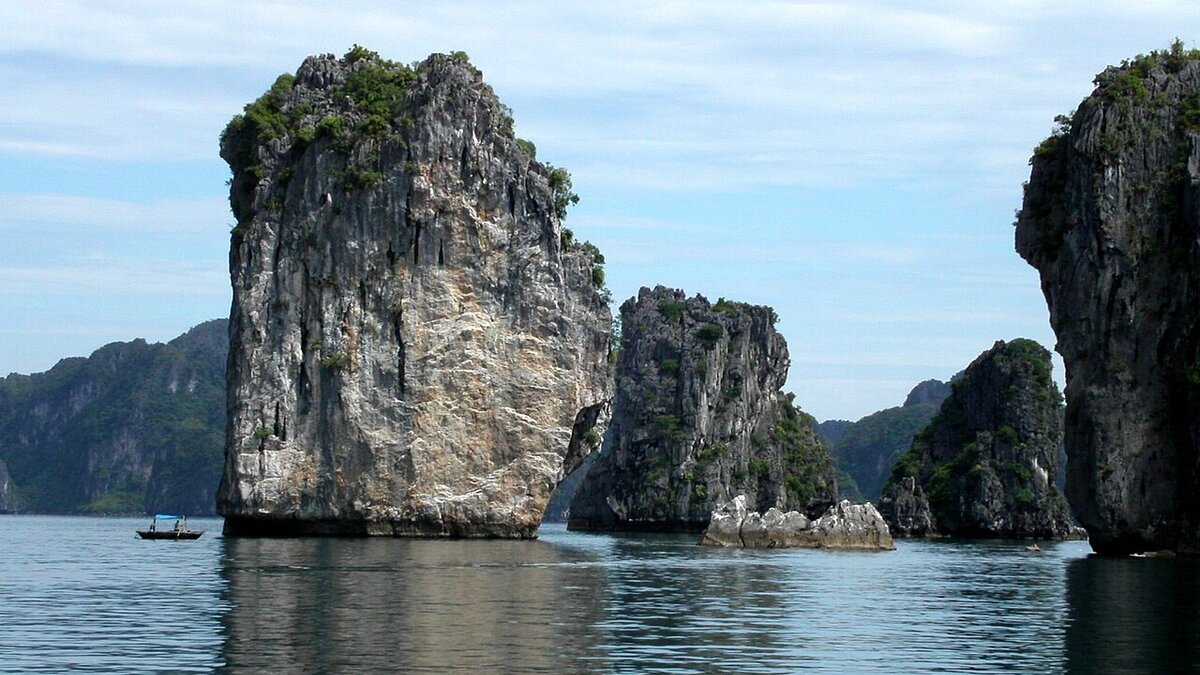
Cover image: Limestone karst islands rising from emerald water in Ha Long Bay, Vietnam — photo by Thomas Hirsch / User:Ravn, CC BY-SA 3.0, via Wikimedia Commons.
The short answer to "do I need a visa for Vietnam?" depends entirely on your passport. US, Canadian, Australian, New Zealand and Irish citizens all need a visa — the standard route is Vietnam's official e-visa, issued online for US$25 (single entry) or US$50 (multiple entry) and valid for stays of up to 90 days. UK citizens do not need a visa for stays of up to 45 days, and the same 45-day exemption covers France, Germany, Italy, Spain, Japan, South Korea and a growing list of other European countries. ASEAN neighbours get 14–30 days visa-free. Everyone entering needs a passport valid for at least six months with two blank pages.
Who can enter Vietnam without a visa in 2026?
Vietnam runs its visa waivers through time-limited government resolutions, and the list expanded significantly through 2025. Under Resolution 44/NQ-CP, citizens of 12 countries get 45 days visa-free regardless of travel purpose until at least 14 March 2028: the UK, Germany, France, Italy, Spain, Denmark, Sweden, Norway, Finland, Russia, Japan and South Korea. UK entry applies to full British citizen passports only — British National (Overseas) passports are excluded.
A second tranche arrived in August 2025. Under Resolution 229/NQ-CP, a tourism-stimulus measure running to 14 August 2028, citizens of Belgium, Bulgaria, Croatia, the Czech Republic, Hungary, Luxembourg, the Netherlands, Poland, Romania, Slovakia, Slovenia and Switzerland get 45 days visa-free for tourism. Because this scheme is tourism-specific, business travellers from these countries should confirm their status on the official portal before flying.
Chile and Panama enjoy 90-day exemptions under bilateral deals, while most ASEAN passports (Thailand, Malaysia, Singapore, Indonesia and others) get 30 days, the Philippines 21 and Brunei and Myanmar 14. Exemption stays generally cannot be extended in-country, though there is no mandatory gap between visits — leaving and re-entering resets the clock. Rules change frequently; always verify against the official portal before booking.
How does the Vietnam e-visa work?
If your passport is not on the exemption list — including the US, Canada, Australia, New Zealand, Ireland, India and China — you apply for the e-visa, which has been open to all nationalities since August 2023. The application is fully online at the government portal evisa.gov.vn (also reachable at evisa.xuatnhapcanh.gov.vn and thithucdientu.gov.vn). You upload a passport scan and photo, pay by card, and receive a PDF to print and present on arrival.
Two practical points trip up first-timers. The e-visa is tied to the entry and exit checkpoints you select in the application, so choose the airport or land border you will actually use. And the name, passport number and dates must match your document exactly — small typos are a common rejection reason, and the fee is non-refundable.
The old visa-on-arrival route, which required a pre-approval letter arranged through an agent, has been largely superseded by the e-visa and is now mainly relevant for last-minute cases handled by travel companies.
How much does a Vietnam visa cost — and how do you avoid fake sites?
The official fee is US$25 for a single-entry e-visa and US$50 for multiple entry, both valid for up to 90 days. Anything above that is a middleman markup. Search results for Vietnam visas are crowded with lookalike "visa service" sites — many with official-sounding .org or .com domains — charging US$75–250 for the same document, sometimes with slower turnaround than applying directly. Some are legitimate agencies; many add no value. Unless you need hand-holding or genuine urgent processing, apply only at evisa.gov.vn. Vietnam is far from alone here — the same fee-inflation problem shadows Thailand's 30-day visa-free regime and most e-visa systems worldwide.
Vietnam visa rules by passport: 2026 at a glance
| Nationality group | Visa-free days | Notes |
|---|---|---|
| US, Canada, Australia, NZ, Ireland | E-visa required | US$25/$50 at evisa.gov.vn, up to 90 days |
| UK, Germany, France, Italy, Spain, Nordics, Japan, South Korea, Russia | 45 days | Any purpose; confirmed to March 2028 |
| Belgium, Netherlands, Switzerland, Poland, Czechia + 7 others | 45 days | Tourism purposes; scheme runs to August 2028 |
| Chile, Panama | 90 days | Bilateral agreements |
| ASEAN neighbours | 14–30 days | Philippines 21; Brunei, Myanmar 14 |
| Most other passports | E-visa required | All nationalities eligible online |
How early should you apply?
Official processing is quoted at three working days, with 3–5 the realistic norm; around Tet (Lunar New Year) and Vietnamese public holidays it can stretch beyond a week. Apply at least two weeks before departure and print a paper copy — some airlines still ask for it at check-in. Whatever your route in, your passport needs six months' validity from arrival and at least two blank pages, and damaged passports are refused. Vietnam's paperwork remains cheaper and simpler than much of the region — compare Japan's visa fee increases from July 2026 or the tightening documented in our guide to new entry requirements for 2026. Long-stayers should note Vietnam still has no dedicated remote-work permit — see our digital nomad visa country guide for alternatives.
Frequently asked questions
How long does the Vietnam e-visa take?
The official processing time is three working days from submission, though 3–5 working days is typical and applications lodged around Vietnamese public holidays, especially Tet, can take longer. Apply at least two weeks before departure to be safe.
Can I extend a Vietnam e-visa?
Not reliably. E-visas and visa-exempt stays are generally not extendable in-country under current rules; the standard workaround is to exit Vietnam — for example to Laos or Cambodia — and apply for a fresh e-visa. There is no mandatory gap between entries, but immigration officers can question rapid back-to-back visa runs.
Do children need their own e-visa?
Children with their own passport need their own e-visa at the full fee. Children under 14 who are included on a parent's passport can be added to that parent's e-visa application rather than filing separately.
Which website is the official Vietnam e-visa portal?
The Vietnam Immigration Department's portal at evisa.gov.vn — also reachable via evisa.xuatnhapcanh.gov.vn and thithucdientu.gov.vn. It charges US$25 single entry or US$50 multiple entry. Third-party sites charging more are resellers, not the government.
Sources
- Vietnam Immigration Department — National e-visa portal
- GOV.UK — Vietnam entry requirements
- VnExpress International — Vietnam extends visa waiver for citizens of 12 countries until 2028
- Embassy of Vietnam in Japan — Visa exemption under the tourism development stimulus programme (Resolution 229/NQ-CP)
- Vietnam Tourism — Viet Nam waives visas for citizens from 12 countries
- U.S. Embassy in Vietnam — Vietnamese visas and entry/exit




Post a comment