

Royal Caribbean beat Q2 2026 estimates with $4.21 adjusted EPS and raised full-year guidance to $17.73–$17.87, while Norwegian Cruise Line topped its quarter but cut its 2026 outlook to about $1.50, sending NCLH shares down more than 8%.
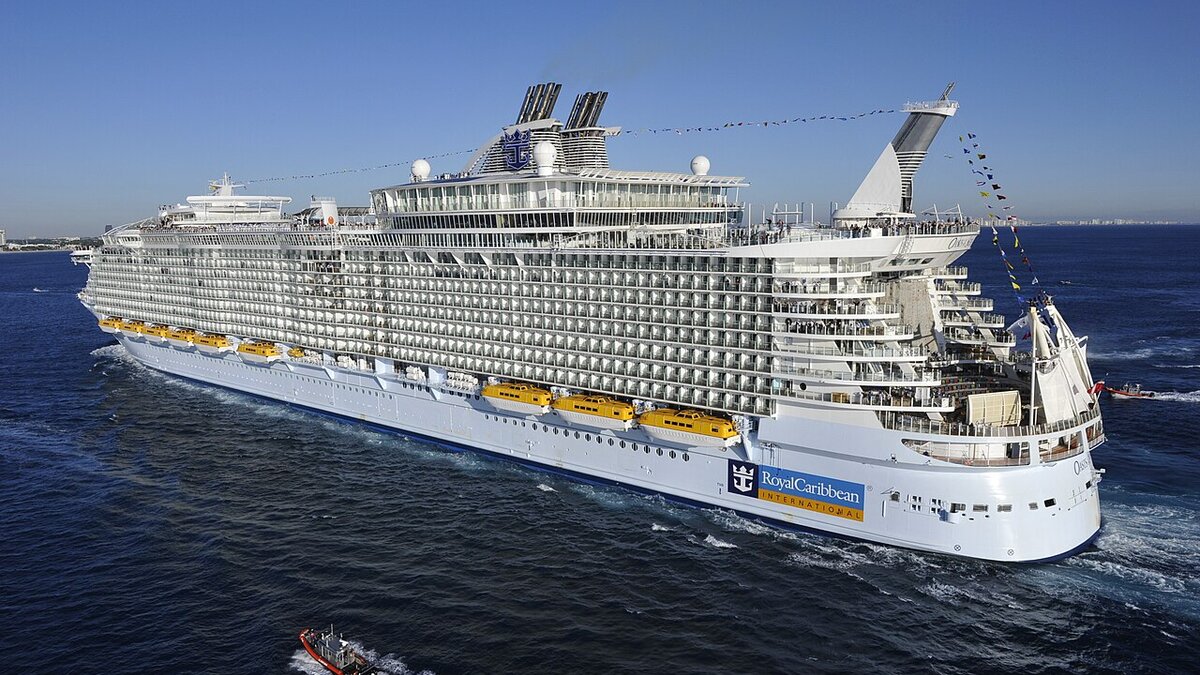
Cover image: Royal Caribbean's Oasis of the Seas cruise ship sailing on open water — photo by Barry Bena, Public domain, via Wikimedia Commons.
The cruise industry's second-quarter 2026 earnings season delivered a split verdict. Royal Caribbean Group reported adjusted earnings of $4.21 per share on 28 July, beating the roughly $3.98 Wall Street consensus cited by Benzinga, and raised its full-year adjusted EPS guidance to $17.73–$17.87 — up from the $17.10–$17.50 range it guided to previously, and representing 14% growth over 2025. Two days later, Norwegian Cruise Line Holdings also beat its quarter, posting adjusted EPS of $0.48 against a consensus near $0.38, but cut its full-year outlook to approximately $1.50 from a prior $1.45–$1.79 range, below the $1.67 analysts expected.
The market reaction told the story: NCLH shares closed down 8.35% at $19.04 on 30 July, according to Benzinga, while Royal Caribbean stock rose about 4.6% on results day. Norwegian blamed softer demand at its flagship brand on "company-specific execution challenges" as well as the ongoing conflict in the Middle East — a rare admission that its problems are not purely macro. Together with Carnival Corporation's record March–May quarter reported in June, the results show a widening gap between the industry's strongest operator and its turnaround story.
How did Royal Caribbean perform in Q2 2026?
Royal Caribbean's revenue rose 6% year on year to $4.83 billion, with net yields up 1.9% as reported (1.2% in constant currency), according to its earnings release. Load factor hit 110%, and management said ships remain booked at record prices with booking volumes running above prior-year levels.
The group did acknowledge "a modest, near-term impact on bookings for select itineraries, primarily due to prolonged geopolitical activity", but strong close-in demand and cost control more than offset it. For the third quarter, Royal Caribbean guided to adjusted EPS of $6.26–$6.36. The results land in a year when the group is also absorbing the high-profile debut of Legend of the Seas, its newest Icon-class ship, into a fleet growing capacity 6.6% in 2026.
Why did Norwegian Cruise Line cut its 2026 guidance?
Norwegian's quarter itself was respectable: revenue grew 4.9% to $2.6 billion, adjusted EBITDA reached $666 million and occupancy was 102.4%. Onboard and other revenue was a bright spot, jumping 12.6% to $910.7 million, according to the company's release — evidence that passengers who do sail keep spending, a dynamic central to how cruise lines make money.
The problem is pricing. Net yield fell 2.6% in constant currency in the quarter, and NCLH now expects full-year net yield to decline about 5%. Management attributed the weakness to soft demand at the Norwegian brand caused by its own execution missteps plus Middle East disruption to itineraries, and conceded the company "remains below its optimal booked position for the next 12 months". In response it identified another $100 million in annualised cost savings — on top of the $125 million announced with first-quarter results.
How do the Q2 2026 cruise earnings compare?
Carnival Corporation, whose fiscal second quarter runs March–May, set the tone in late June with record revenue of $6.7 billion, adjusted EPS of $0.41 — up 15% on the prior year — and record adjusted net income of $569 million, up more than 20%, per its earnings release. But even Carnival is guiding to constant-currency net yield growth of only about 1.75% for the full year, citing "extreme geopolitical volatility" that hit booking trends for its European deployments, particularly in the Mediterranean.
| Line | Quarterly revenue | Adjusted EPS | Full-year guidance |
|---|---|---|---|
| Royal Caribbean Group (Q2, 28 Jul) | $4.83bn (+6%) | $4.21 vs ~$3.98 consensus — beat | Raised: $17.73–$17.87 |
| Carnival Corp (FY Q2, Mar–May) | $6.7bn (record) | $0.41 (+15% YoY) | EPS ~$2.22; net yield growth ~1.75% |
| Norwegian Cruise Line Holdings (Q2, 30 Jul) | $2.60bn (+4.9%) | $0.48 vs ~$0.38 consensus — beat | Cut: ~$1.50 from $1.45–$1.79 |
The divergence is striking in a year when the industry is carrying record passenger volumes in 2026. Demand is not the sector's problem; converting it into pricing is — and that increasingly separates the winners.
What did the calls say about 2027 bookings and private destinations?
Royal Caribbean said "booking trends for 2027 are encouraging and pacing ahead of historical levels", with capacity growth of 4% planned for 2027, then 6% and 7% in the following two years as a heavy orderbook of new ship deliveries works through. The group is also expanding from three to eight private destinations by 2028 across its Perfect Day and Royal Beach Club collections, headlined by Perfect Day Mexico — a 200-plus-acre site at Mahahual on the Costa Maya opening in autumn 2027, serving Western Caribbean sailings from Galveston, New Orleans and Florida homeports. Celebrity River Cruises launches in 2027 as well.
How did investors react?
Norwegian took the punishment. NCLH closed 8.35% lower at $19.04 on 30 July, per Benzinga, as the guidance cut overshadowed the in-quarter beat; adjusted EPS was also down from $0.51 a year earlier. Management's own framing — "still in the early stages" of a turnaround — gave the market little reason to look through the reset.
Royal Caribbean, by contrast, drew coverage of chief executive Jason Liberty's message that the group expects "another year of approximately double-digit growth in revenue and earnings", with Benzinga noting record pricing across the book and shares up 4.6% at $319.57 on the day. The print widened the valuation gap between the sector's premium operator and its turnaround story.
Frequently asked questions
Did Norwegian Cruise Line actually miss its second quarter?
No. NCLH beat on the quarter itself — adjusted EPS of $0.48 against a consensus near $0.38, with adjusted EBITDA of $666 million. The stock fell because the company cut full-year 2026 guidance to about $1.50 in adjusted EPS and now expects net yield to decline roughly 5%.
What is driving the gap between Royal Caribbean and Norwegian?
Pricing power. Royal Caribbean's net yields rose 1.9% in the quarter and it is booked at record prices, while Norwegian's constant-currency yields fell 2.6%. Norwegian attributed part of the weakness to its own execution problems at the flagship brand, not just external factors like the Middle East conflict.
When does Perfect Day Mexico open?
Royal Caribbean's Perfect Day Mexico at Mahahual, on Mexico's Costa Maya, is scheduled to open in autumn 2027. It will span more than 200 acres and serve Western Caribbean itineraries from Galveston, New Orleans and Florida homeports.
Did Carnival cut guidance too?
Partially. Carnival guided full-year adjusted EPS to approximately $2.22 with adjusted EBITDA above $7 billion, but it expects constant-currency net yield growth of only about 1.75%, citing geopolitical volatility that weighed on booking trends for European itineraries, particularly the Mediterranean.
Sources
- PR Newswire — Royal Caribbean Group Reports Second Quarter Results Above Expectations and Raises Full Year Guidance
- GlobeNewswire — Norwegian Cruise Line Holdings Reports Second Quarter 2026 Financial Results
- Investing.com — Norwegian Cruise Line falls on weak guidance despite Q2 earnings beat
- Benzinga — Norwegian Cruise Says Middle East Conflict, Execution Challenges Continue To Hurt Demand
- Benzinga — Royal Caribbean CEO Touts 'Double-Digit Growth' As Record Pricing Boosts Q2 Results
- PR Newswire — Carnival Corporation Delivers Record Second Quarter Revenues, Net Yields and Adjusted Net Income
- PR Newswire — Royal Caribbean Gives Thrilling First Look at Perfect Day Mexico


Post a comment