

AirAsia Group and the Tourism Authority of Thailand signed a 2026–2029 MoU on 9 July in Kuala Lumpur, witnessed by PM Anutin Charnvirakul, covering joint marketing, route development into secondary cities such as Hat Yai, and market-data sharing.
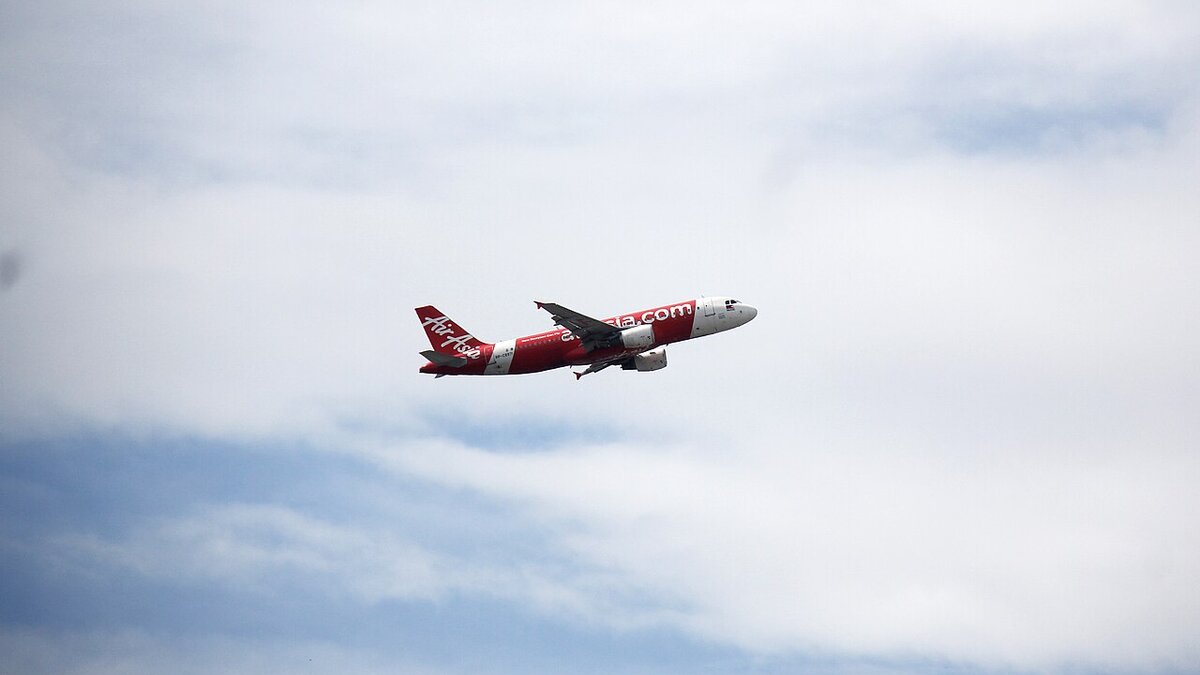
Cover image: Red-liveried AirAsia Airbus A320 cruising in flight against the sky — photo by TheNuggeteer, CC BY-SA 4.0, via Wikimedia Commons.
AirAsia Group and the Tourism Authority of Thailand (TAT) have signed a three-year memorandum of understanding running from 2026 to 2029, formalising joint marketing, route development and data sharing to push Thai tourism beyond its established gateways. The MoU was signed on 9 July 2026 at the Park Hyatt Kuala Lumpur by Pattaraanong Na Chiangmai, TAT Deputy Governor for International Marketing – Asia and South Pacific, and Ahmad Al Farouk Bin Ahmad Kamal, Deputy Chief Executive Officer of AirAsia Group, and was witnessed by Thai Prime Minister Anutin Charnvirakul alongside four senior cabinet members, according to the TAT.
The timing is deliberate. Malaysia is Thailand's second-largest source market after China, delivering 2,135,591 arrivals between 1 January and 7 July 2026 against a full-year target of 4,825,000, TAT figures show. AirAsia carried more than one million passengers between the two countries in the first half of 2026 across 123 weekly flights on eight direct routes from Kuala Lumpur, Penang and Johor Bahru — making the low-cost group the single most important air bridge for a market where roughly 70% of arrivals still cross by land.
What does the AirAsia and TAT partnership actually cover?
The MoU sets out five workstreams, according to the TAT's announcement: joint marketing and communications, route development, tourism trade engagement, media and influencer campaigns, and the exchange of market insights. AirAsia says the tie-up will also amplify TAT's global "Amazing Thailand, Feel All the Feelings" campaign across the group's network and digital channels.
It is a textbook example of how a national tourism board leverages airline partnerships: the destination marketer buys reach and seat capacity it cannot create itself, while the carrier gets co-funded demand stimulation on routes it wants to fill. The data-sharing clause matters most for the trade — TAT gains booking-curve visibility from one of Asia's largest low-cost carrier groups, while AirAsia gets destination-level insight to guide where it points aircraft next.
Which secondary Thai cities will benefit?
The TAT release singles out Hat Yai as a springboard into southern provinces including Yala, Satun, Phatthalung, Nakhon Si Thammarat and Trang, alongside the established Andaman trio of Phuket, Phang-nga and Krabi. AirAsia's Malaysia–Thailand network already serves Bangkok Don Mueang, Chiang Mai, Phuket, Krabi and Hat Yai, giving the partnership immediate distribution into second-tier gateways rather than a promise of routes to come.
Dispersal is the strategic point. TAT frames the deal as a mechanism for spreading tourism revenue to secondary cities in line with its "Value over Volume" direction — a priority as Bangkok continues to dominate regional booking charts while provincial destinations chase incremental airlift. Thai AirAsia, the group's largest affiliate, held the highest share of Thailand's domestic market at 42% in the first quarter of 2026, operating an all-Airbus A320-family fleet of 58 aircraft, according to parent Asia Aviation's quarterly results — meaning an international arrival at Don Mueang or Hat Yai can be connected onward within the same group.
How is Thailand's 2026 tourism recovery tracking?
The backdrop is a market working harder for its numbers. Thailand welcomed 17.36 million foreign visitors between 1 January and 18 July 2026, down 3.05% year on year, generating THB 838.73 billion in spending, according to Nation Thailand citing Ministry of Tourism and Sports data. China has rebounded to reclaim the top spot, but the overall pool has shrunk — which is why TAT is squeezing more from reliable short-haul markets like Malaysia, as we reported in our analysis of Thailand's 2026 tourism surge and its soft spots.
| Source market | Arrivals, 1 Jan–18 Jul 2026 | Rank |
|---|---|---|
| China | 2,862,241 | 1 |
| Malaysia | 2,250,015 | 2 |
| India | 1,307,959 | 3 |
| Russia | 1,061,349 | 4 |
| South Korea | 631,777 | 5 |
Source: Nation Thailand, citing Ministry of Tourism and Sports data.
How does the deal fit AirAsia's post-restructuring strategy?
The MoU lands roughly six months after one of Asia's most complex airline restructurings closed. Capital A completed the disposal of its airline businesses to AirAsia X Berhad in mid-January 2026, consolidating every AirAsia-branded carrier under the entity now trading as AirAsia Group, the company announced — a structure built to run the network as one system rather than a federation of national franchises.
A single group signing a single MoU with TAT means campaigns and capacity decisions can span its Malaysian, Thai, Indonesian, Philippine and Cambodian carriers at once. For a group whose low-cost economics depend on keeping aircraft full and flying, co-funded destination marketing is cheap load-factor insurance. The July MoU also stacks on top of a separate three-year deal TAT signed with AirAsia MOVE, the group's travel platform, announced on 23 June 2026 — the "TAT x MOVE: Seamless Journey, Amazing Thailand" campaign, which puts Thai content in front of the app's more than 17 million monthly active users, per the TAT.
What does the partnership mean for tour operators and the trade?
The tourism trade engagement workstream is the practical hook. Expect the pattern seen in previous TAT airline pacts:
- Co-op campaign windows — tactical fare promotions into Thai secondary cities that operators and OTAs can piggyback with land packages.
- Fam trips and trade events — joint TAT–AirAsia roadshows in Malaysia and other short-haul source markets, with media and influencer programmes attached.
- New route intelligence — the insights exchange should surface secondary-city route launches earlier, giving DMCs in the south lead time to build product around Hat Yai connectivity.
- Higher-value segmentation — TAT says the deal explicitly targets higher-value visitor segments, suggesting premium add-ons and longer-stay itineraries will get marketing support over volume-led day-trip traffic.
Frequently asked questions
When was the AirAsia–TAT partnership signed and how long does it run?
The memorandum of understanding was signed on 9 July 2026 at the Park Hyatt Kuala Lumpur and runs for three years, from 2026 through 2029. It was witnessed by Thai Prime Minister Anutin Charnvirakul, three deputy prime ministers and the tourism minister, according to the TAT.
Which Thai cities does the partnership focus on?
Beyond Bangkok, the TAT names Hat Yai as the key southern gateway, with onward dispersal to Yala, Satun, Phatthalung, Nakhon Si Thammarat and Trang, plus the Andaman destinations of Phuket, Phang-nga and Krabi. AirAsia already flies from Malaysia to Don Mueang, Chiang Mai, Phuket, Krabi and Hat Yai.
How big is AirAsia in the Malaysia–Thailand market?
AirAsia carried more than one million passengers between Malaysia and Thailand in the first half of 2026, operating 123 weekly flights across eight direct routes from Kuala Lumpur, Penang and Johor Bahru, according to the airline. Malaysia delivered 2,250,015 Thai arrivals by 18 July 2026, second only to China.
Is Thailand meeting its 2026 tourism targets?
Not yet. Foreign arrivals reached 17.36 million between 1 January and 18 July 2026, down 3.05% year on year, per Nation Thailand. Malaysia stood at about 2.25 million arrivals against a full-year target of 4,825,000 — which is precisely why TAT is co-investing in demand stimulation with its biggest low-cost carrier partner.
Sources
- TAT Newsroom — TAT and AirAsia Group sign three-year tourism partnership
- AirAsia Newsroom — AirAsia and Tourism Authority of Thailand strengthen strategic partnership
- Nation Thailand — Thailand's foreign tourist arrivals reach 17.36 million (1 Jan–18 Jul 2026)
- TAT Newsroom — TAT and AirAsia MOVE partner to boost travel to and across Thailand
- AirAsia Newsroom — Capital A completes aviation business disposal to AirAsia X
- AirAsia Newsroom — AAV announces financial results for the first quarter of 2026
Related coverage
 India's Travel and Tourism Economy Hits Record $263.6 Billion, WTTC Says — But Inbound Still Lags
04 Aug 2026
India's Travel and Tourism Economy Hits Record $263.6 Billion, WTTC Says — But Inbound Still Lags
04 Aug 2026
 India's 2026 Inbound Reset: Culture, Cuisine and a Marketing Budget Paradox
04 Aug 2026
India's 2026 Inbound Reset: Culture, Cuisine and a Marketing Budget Paradox
04 Aug 2026
 Visit Malaysia 2026 at Mid-Year: 43 Million Target Still in Reach, but the Growth Engine Is Cooling
04 Aug 2026
Visit Malaysia 2026 at Mid-Year: 43 Million Target Still in Reach, but the Growth Engine Is Cooling
04 Aug 2026



Post a comment