

New research from Mindtrip, Sabre, Sojern and MMGY finds 54% of travellers already use AI to plan trips and 75% intend to, yet only 22% of destination marketing organisations offer AI trip-planning tools.
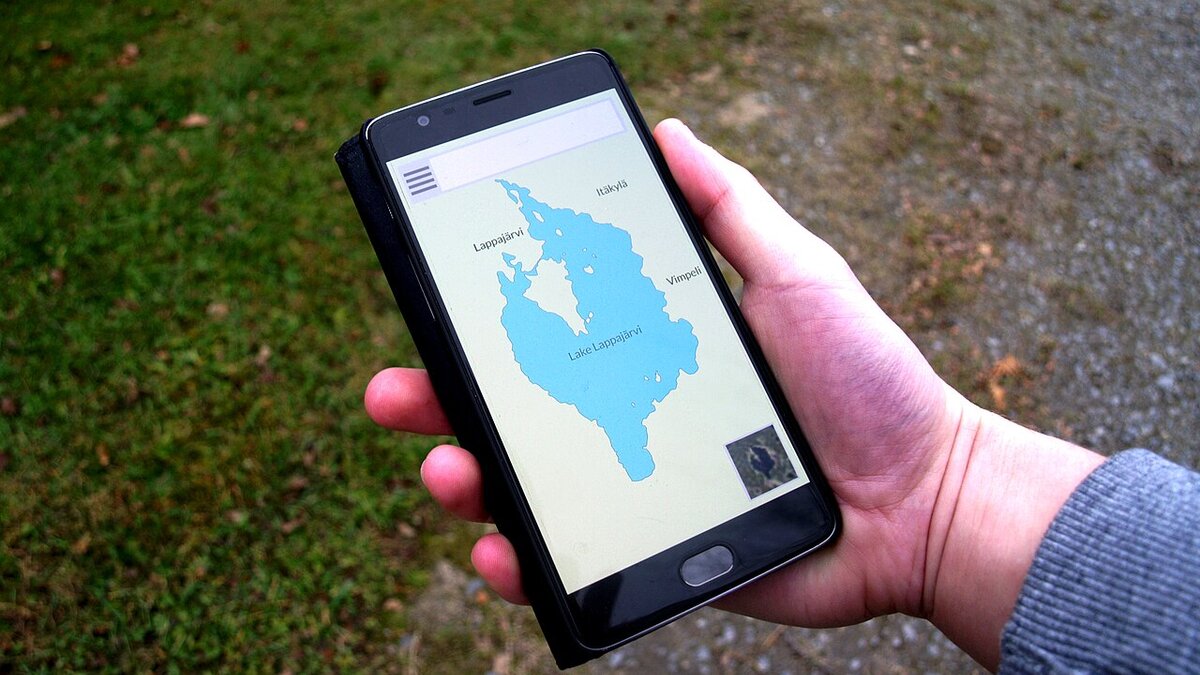
Cover image: Hand holding smartphone with map app for AI travel planning — photo by Santeri Viinamäki, CC BY-SA 4.0, via Wikimedia Commons.
Travellers have raced roughly two years ahead of the travel industry on artificial intelligence, according to research released on 19 August 2026 by AI trip-planning platform Mindtrip in partnership with Sabre, Sojern and MMGY Travel Intelligence. The study found that 54% of travellers have already used AI to plan a trip and 75% intend to use it for future travel — yet only 22% of destination marketing organisations (DMOs) offer AI trip-planning on their websites, and just 26% have a documented AI strategy.
The warning from inside the sector is blunt: 72% of DMO leaders surveyed said organisations that fail to adopt AI within the next two years risk becoming irrelevant in destination discovery. The research, fielded in April 2026 among 1,006 US adults who had taken or planned an overnight leisure trip, plus 103 DMO leaders, quantifies a demand-supply gap the industry has sensed for months: consumers are planning holidays with ChatGPT-class tools while the organisations paid to market destinations are still writing policy documents.
How many travellers use AI to plan trips?
A majority, and rising fast. Beyond the headline 54% adoption figure, 40% of travellers said they had discovered a destination through AI, and 29% had changed travel plans based on an AI recommendation — evidence that these tools are shaping demand, not merely summarising it.
The generational split is stark. Among millennials, 69% now use AI assistants as frequently as social media for trip planning; for Gen Z the figure is 63%. For a cohort that DMOs spent a decade chasing on Instagram and TikTok, the discovery battleground has quietly moved to the chat window. Our guide to the leading AI trip-planning tools of 2026 maps who is competing for that conversation.
What are travellers actually using AI for?
The study suggests AI has spread across the whole planning funnel, from inspiration to logistics:
- 60% research attractions, restaurants and local transport with AI
- 56% use it to compare prices
- 43% build itineraries and organise trip details
- 32% compare flights, hotels and tours side by side
- Around one-third say they are comfortable with AI playing a role in the booking process itself
Crucially, travellers want these capabilities from official sources, not only from general-purpose chatbots: 63% said they would use an AI trip planner directly on a destination's website, while 25% said they are less likely to use sites that lack AI features. That price-comparison behaviour also feeds directly into how suppliers set fares — a dynamic we unpack in our explainer on airline dynamic pricing and AI.
Why is the travel industry behind on AI?
The gap is one of readiness rather than awareness. DMO leaders overwhelmingly acknowledge the stakes — hence the 72% irrelevance warning — but execution lags. Only 22% have shipped a consumer-facing AI planner, only 26% have a documented strategy, and the study found DMO leaders undervalue the features travellers prize: just 20% ranked itinerary building as high value, even though 43% of travellers already use AI for exactly that.
| Metric | Travellers | Industry (DMOs) |
|---|---|---|
| Have used / offer AI trip planning | 54% | 22% |
| Intend to use AI / have documented AI strategy | 75% | 26% |
| Value itinerary building | 43% use AI for it | 20% rank it high value |
"Travelers aren't waiting for the industry to catch up," said Michelle Denogean, chief marketing officer at Mindtrip. "AI is already reshaping how people discover destinations." Sojern president Sylvia Weiler called it the "biggest shift in travel planning since online booking transformed the industry" — a pointed comparison, given how that earlier shift redistributed power towards the intermediaries described in our explainer on how online travel agencies work.
What should destinations and hotels do now?
The prescription emerging from the research is to meet travellers where they already are. That starts with making destination content machine-readable and accurate so AI assistants cite it correctly, then adding native AI planning tools to official websites — the feature 63% of travellers say they would use. Brad Johnson, vice-president of product at Sabre, noted that travellers are "already using AI to discover, compare, and decide", creating an opportunity for destinations that extends well beyond inspiration into conversion.
For DMOs — whose remit we break down in what a tourism board actually does — the two-year clock their own leaders describe is the operative deadline. A documented AI strategy, owned data feeds and a tested consumer-facing planner are fast becoming table stakes. Hotels face the same maths: with 56% of travellers price-checking via AI and a quarter penalising sites without AI features, absence from the AI layer increasingly means absence from the shortlist.
Frequently asked questions
What percentage of travellers use AI to plan travel in 2026?
According to April 2026 research by Mindtrip with Sabre, Sojern and MMGY Travel Intelligence, 54% of US travellers have already used AI to plan travel and 75% intend to use it for future trips. Among millennials, 69% use AI assistants as often as social media for trip planning.
How far behind are destinations on AI adoption?
Only 22% of destination marketing organisations offer AI trip-planning capabilities on their websites and just 26% have a documented AI strategy, even though 72% of DMO leaders say organisations that fail to adopt AI within two years risk becoming irrelevant in destination discovery.
What do travellers actually use AI for when planning trips?
The most common uses are researching attractions, restaurants and transport (60%), comparing prices (56%), building itineraries (43%) and comparing flights, hotels and tours (32%). Some 40% of travellers have discovered a destination through AI and 29% have changed plans based on an AI recommendation.
Who conducted the research and how big was the sample?
The study was conducted in April 2026 by Mindtrip in partnership with Sabre, Sojern and MMGY Travel Intelligence. It surveyed 1,006 US adults who had taken or planned an overnight leisure trip in the previous 12 months, alongside 103 destination marketing organisation leaders.
Sources
- PR Newswire — New Research Reveals Travelers Are Two Years Ahead of the Travel Industry on AI
- Sojern — New Research: Travelers Are Two Years Ahead of the Travel Industry on AI
- Hotel Online — New Research Reveals Travelers Are Two Years Ahead of the Travel Industry on AI
- Hotel News Resource — New Research Shows Travelers Surpass the Travel Industry by Two Years in AI Adoption




Post a comment