For Indian travellers the best time to visit Singapore is February to April for drier days and lower hotel rates, with year-round 27-32C, wettest November to January and driest February at 105 mm over 9 days.
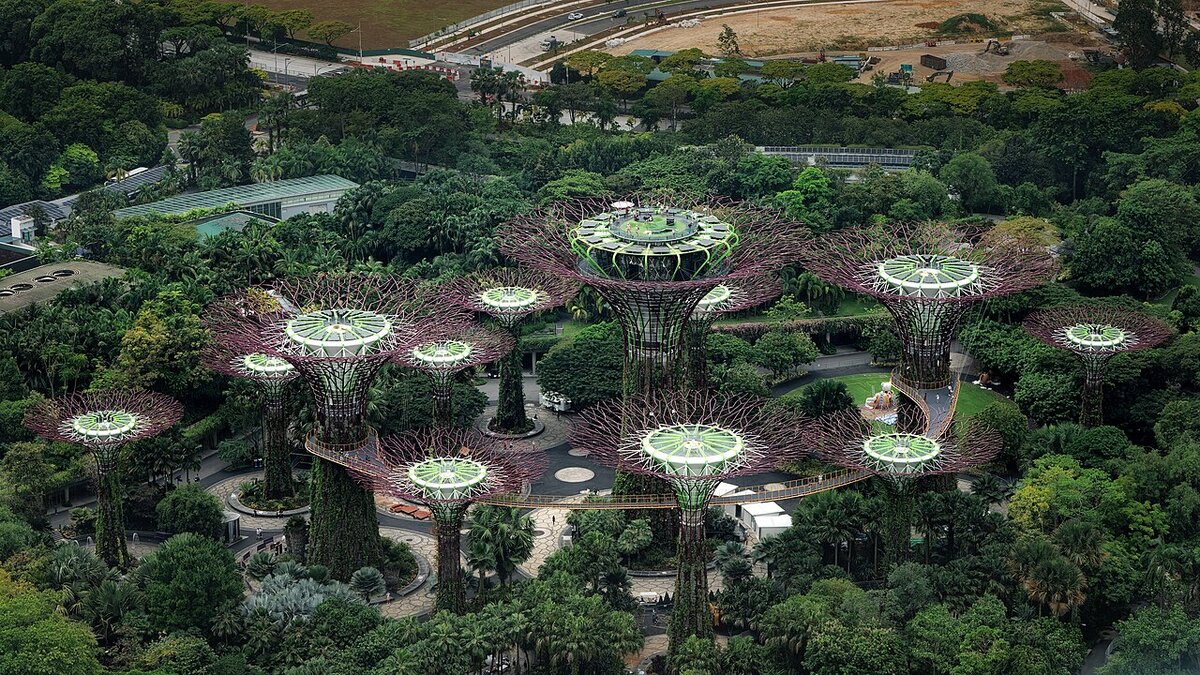
Cover image: Gardens by the Bay and Marina Bay Sands in Singapore — photo by Mustang Joe, CC0, via Wikimedia Commons.
The best time to visit Singapore from India is February to April, when rainfall is lightest at about 105 to 152 mm over 9 to 12 rain days, humidity dips slightly and outdoor sights such as Gardens by the Bay, the Zoo and the Marina Bay waterfront are most comfortable, while still sitting inside Singapore's year-round 27 to 32 degree range. Singapore has no true winter; the annual mean is about 27.8 degrees with average highs of 30.5 to 32.4 degrees and lows of 24.3 to 25.7 degrees. The feel changes instead with monsoon-driven rain and occasional haze, so picking the right month is more about rain days and indoor fallback than temperature.
November to January is the wettest stretch under the Northeast Monsoon, with December peaking at 332 mm over 19 rain days and November at 252 mm over 19 days. February, at 105 mm over nine days, is the driest month nationally, followed by the relatively settled June to September period trapped at 125 to 146 mm. For Indians using Diwali, winter break, summer vacation or Dussera windows, February to April hits the overlap of acceptable heat, least rain and softer hotel rates before the mid-year family-travel surge from Europe locks up Sentosa inventories.
Trip-planning links for Indians: do I need a visa for Singapore from India covers the 96-hour transit and e-Visa, is Singapore expensive for Indian tourists sets the daily budget, and is Singapore safe for Indian tourists answers safety and nightlife questions for families and solo travellers.
What is Singapore's weather like month by month from India?
Singapore is classified as a tropical rainforest climate — almost always warm and wet, with two monsoons and an inter-monsoon — and the 1991 to 2020 climate normals illustrate why February to April wins for many Indian visitors. Use this month-by-month table drawn from the Climate of Singapore page which lists monthly rainfall and rain days alongside humidity and temperature context:
| Month | Rainfall and rain days | Temperature guide | What it means for sightseeing |
|---|---|---|---|
| January | 222 mm, 13 days | Highs ~30.7, lows ~24.6, mean ~27.3 | Northeast Monsoon tail, heavy spells possible, indoor backup useful |
| February | 105 mm, 9 days — driest | Highs ~31.6, lows ~25.0, driest and relatively less humid | Best odds for outdoor days, good for Zoo and Gardens |
| March | 152 mm, 12 days | Highs ~32.0, lows ~25.5, inter-monsoon starts | Warm, settled, afternoon thundershowers brief |
| April | 164 mm, 15 days | Highs ~32.2, warmest build-up, mean ~28.3 | Hot but manageable, frequent short showers late afternoon |
| May | 164 mm, 15 days, hottest month | Highs ~32.4, mean ~28.6 | Hot, humidity near 82 percent, carry water for Bay walks |
| June | 135 mm, 13 days | Highs ~31.7, Southwest Monsoon, morning squalls | Drier than year-end, good for Sentosa beach mornings |
| July | 147 mm, 14 days | Highs ~31.1 | Similar to June, Sumatran squalls early morning then clear |
| August | 147 mm, 14 days | Highs ~31.0 | National Day period crowded, weather similar to July |
| September | 125 mm, 13 days — joint driest after Feb | Highs ~31.2 | Good shoulder month before year-end rains, F1 period pricey |
| October | 168 mm, 15 days | Highs ~31.5 | Inter-monsoon thunderstorms, usually short and sharp |
| November | 252 mm, 19 days — second wettest | Highs ~31.0, cloudy spells 1-3 days | Wet, Deepavali and post-Diwali travel, pack ponchos |
| December | 332 mm, 19 days — wettest | Highs ~30.2, cloudy, 19 rain days | Year-end peak, heavy rain spells but city stays functional |
Annual average is about 2,113 mm over 171 rain days, with humidity averaging 82.2 percent and daily swing from high 90s at dawn to about 60 percent in mid-afternoon, occasionally dipping below 50 percent. The western side of the island receives more rain than the eastern side due to a rain-shadow effect, so a shower at Jurong does not guarantee rain at Changi or East Coast Park. For comparison with regional alternatives, best time to visit Thailand from India shows November to February as Thai cool-dry while Singapore is then entering its wettest quarter, and best time to visit Bali peaks June to August for dry weather versus Singapore's more even distribution.
Which months suit Indian school holidays and festivals?
February to April suits Indian travellers who can use late-winter break, Holi long weekends or pre-summer leave. It delivers the lowest rain days, so you maximise open-air time at the major Indian-favoured sights: Gardens by the Bay Flower Dome, Night Safari tram, Sentosa beaches and the river cruise from Clarke Quay. May is the hottest month by the normals, so families with infants may prefer February to March over May despite similar rain totals.
June to September is the next best compromise for Indian summer vacations. Rainfall at 125 to 147 mm with 13 to 14 rain days is markedly lower than November to January, and airfares from Delhi and Mumbai to Changi often soften outside the year-end surge. Sentosa remains beach-viable most mornings before the typical late-morning Sumatra squall. October brings more thundery inter-monsoon weather, still usable but with a higher chance of a half-day indoor switch to Jewel Changi, the ArtScience Museum or the National Gallery.
November to January is workable but wetter and pricier around Christmas and New Year when global demand lifts Orchard Road hotels and the Marina Bay countdown. If your India dates are fixed for Diwali in mid-October 2026 or the late-December break, expect 19 rain days in November and December and budget an extra indoor half-day in the itinerary. You will still get plenty of dry intervals; Singapore's showers are often intense for an hour then clear.
Festival calendar Indians often ask about
- Chinese New Year (January to February): Chinatown lights, river festivities and long hawker queues. It sits inside the driest window when you visit in February, so outdoor evening markets are comfortable.
- Deepavali (October to November): Little India lights and temple visits, but note November is second wettest at 252 mm. Carry a compact umbrella for evening walk-abouts along Serangoon Road.
- Great Singapore Sale (typically June to July): Falls in the Southwest Monsoon driest shoulder, so you get sale prices with relatively lower rain (135 to 147 mm) compared with year-end.
- Formula 1 Singapore Grand Prix (September): September is one of the driest months at 125 mm and 13 rain days, ideal for the Marina Bay circuit, but hotel rates spike sharply. If you go for the race, book eight to ten months ahead.
- Christmas and New Year at Marina Bay (December): Spectacular waterfront events but the wettest month at 332 mm and peak occupancy. Plan indoor views for the countdown as a wet backup.
Is February really the best month to visit Singapore from India?
For least rain it is, with 105 mm over only nine rain days, the lowest in the 1991 to 2020 normals, under a mean of 27.6 degrees. For many Indian visitors the answer is February or September, which pairs the two driest months (February 105 mm, September 125 mm) on either side of the year. September trades a little more humidity and the F1 premium for slightly lower flight costs from India than Chinese New Year week in February, when fares from Delhi and Mumbai rise.
If cost is the driver, target late January to early March before Chinese New Year week and early to mid-September before year-end school holidays. Both windows fall outside the December peak when 19 rain days and high occupancy push Orchard and Marina Bay rates to their annual high. Indians booking from Kolkata and Chennai see similar patterns with SilkAir and Scoot sale cycles that follow Singapore's exhibition and event calendar rather than Indian festivals.
Whatever month you choose, Singapore's equatorial rhythm means you should carry a strategy, not just an umbrella. Early mornings are usually dry and best for the Botanic Gardens and the Zoo, mid-afternoons bring the highest chance of a shower, and evenings often clear again for light shows at Marina Bay Sands and Gardens by the Bay. That pattern holds even in December's 19-day wet month, so you rarely lose a full day to rain, only an hour or two that can be spent in Jewel or a hawker centre.
Frequently asked questions
What is the best time to visit Singapore (best time to visit Malaysia from India) from India?
February to April is best for most Indian travellers, with the year's lowest rainfall in February at 105 mm over 9 days and settled inter-monsoon weather in March and April. Year-round highs remain 30 to 32 degrees, so the choice is driven by rain days and hotel rates rather than temperature.
Is November a good time to visit Singapore from India?
November is usable but wet, with 252 mm over 19 rain days and the Northeast Monsoon bringing 1 to 3 day heavy spells. Diwali travel often falls here, so pack ponchos and add an indoor half-day to your plan. Expect higher hotel demand than in February.
Which is the driest month in Singapore?
February at 105 mm over 9 rain days. September at 125 mm over 13 days is the next driest. December at 332 mm over 19 days is the wettest, followed by November at 252 mm.
Is June a good time to visit Singapore from India?
Yes for Indian summer holidays. June has 135 mm over 13 days under the Southwest Monsoon, drier than year-end, with morning squalls that clear and good beach mornings at Sentosa. It also captures the Great Singapore Sale with lower hotel rates than December.
Do I need warm clothes for Singapore?
No, Singapore's annual mean is about 27.8 degrees with highs of 30.5 to 32.4 and lows of 24.3 to 25.7. Pack light, breathable cotton, a compact umbrella and a light layer only for heavily air-conditioned malls and the MRT.
Sources
- Wikipedia — Climate of Singapore (1991-2020 normals, Feb 105.1 mm 9 days driest, Dec 331.9 mm 19 days wettest, Northeast Monsoon mid-Nov to early Mar, 2,113 mm annual, 27.8C mean)
- National Environment Agency Singapore — climate and monsoon overview
- UK FCDO — Singapore travel advice (entry, safety and seasonal notes)