Bali now has more registered vehicles than people, with gridlock in Canggu, Ubud and South Kuta fuelling a transport crisis and new tram debate.
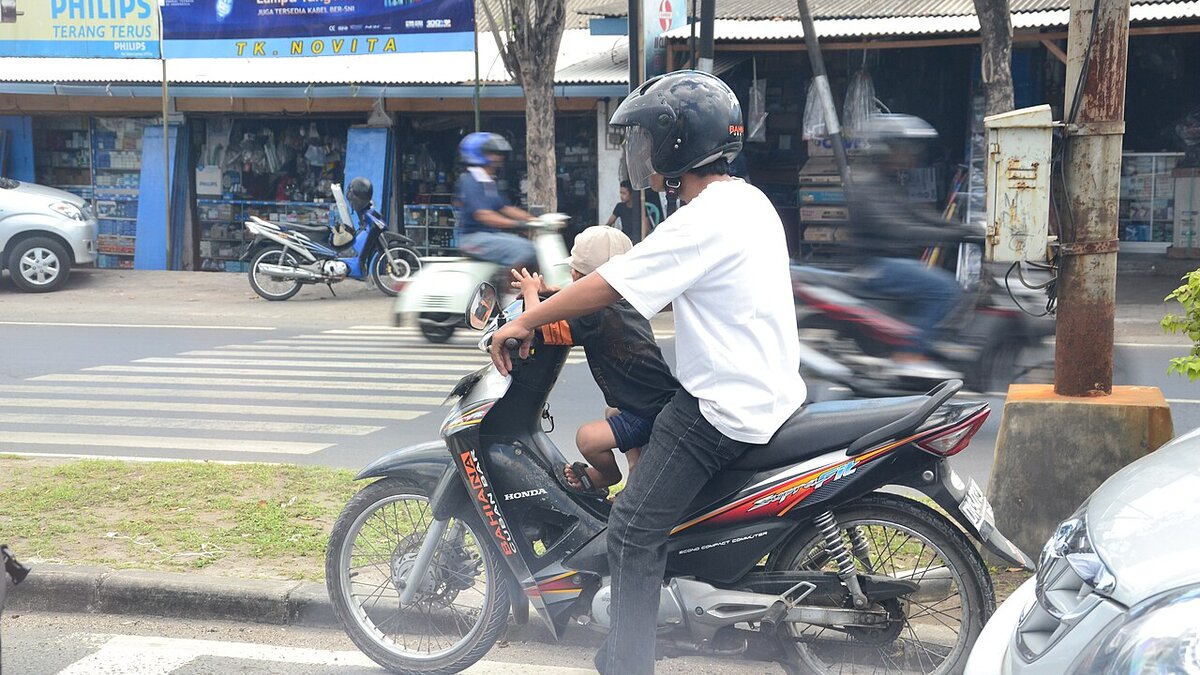
Cover image: Traffic congestion on a Bali road with scooters and cars — photo by Simon_sees from Australia, CC BY 2.0, via Wikimedia Commons.
Bali now has more registered vehicles than people, a milestone that explains why a 12 km ride in Canggu can take 90 minutes in high season. Data reported by Bali Discovery on 2 September, citing the provincial transport agency, puts the island's vehicle fleet above its resident population of about 4.3 million, with motorcycles accounting for the bulk of growth. The imbalance has turned traffic into the island's most pressing tourism constraint, with peak-season journeys doubling and a revived debate over a rail or tram link from the airport.
The finding comes as Bali handles record tourism alongside strained infrastructure. The island logged 9.83 million foreign arrivals through July 2026 and hotel occupancy led Indonesia at 67.29 percent in July, yet road capacity has not kept pace. The airport-to-Canggu battery tram proposal, announced as a plan linking Ngurah Rai to Canggu via Seminyak, is again in focus, but no tracks have been laid and buses remain limited. For visitors arriving in the next months, the transport crisis is not an abstraction but extra time in traffic.
How many vehicles does Bali have now?
The transport agency count reported this week exceeds the island's 4.3 million residents, a threshold not seen before. Motorcycles dominate, estimated at more than two-thirds of registrations, driven by local ownership, tourism rentals and delivery fleets. Cars have also grown with domestic tourism and ride-hailing. The fleet is not the same as vehicles on the road at one time, since many are parked, but the registration figure signals pressure on narrow roads built for a smaller island.
Growth accelerated after reopening. Bali added hundreds of thousands of motorcycles in 2023-25 as visitor numbers recovered and internal migration for tourism jobs increased. Rental shops, estimated in the thousands from Sanur to Ubud, add short-term supply that spikes with arrivals. Enforcement of registration and inspection has also improved, so part of the rise reflects better counting, but the transport agency notes that active vehicles per kilometre of road is at a record high.
The ratio matters because Bali's road network is fixed. The island has about 4,000 km of public roads, much of it two-lane with open drains and frequent ceremonies that close lanes. Car ownership per household in Badung and Denpasar now exceeds one, while public transport mode share remains in low single digits. The result is that peak-hour speeds in South Badung fall to 10-15 km/h, comparable to Jakarta's worst corridors, but without a rail alternative.
Where is gridlock hitting tourists hardest?
Three corridors dominate complaints. Canggu-Berawa to Seminyak via Batu Bolong and the Short Cut is the tightest, where beach clubs, line-ups and construction traffic overlap. Kuta-Legian to Ngurah Rai Airport via Sunset Road is second, with airport transfers backing up after flight banks. The third is the approach to Ubud via Mas and Tegallalang, where tour buses and trucks share a winding road with scooters.
Travel times tell the story. In low season, Canggu to Seminyak is 25-35 minutes. In August-September peak, the same trip is regularly 60-90 minutes, and on weekends 90-120 minutes. Airport to Canggu, mapped at 20 km, can be 60-90 minutes after 4 pm. Day trips from South Bali to Ubud and back, once sold as a half-day, now require a full day with early departure to avoid the 4-7 pm return crush. Drivers report fuel costs rising with idling, which is passed into charter rates.
The impact is uneven. Visitors who base in one area and walk or use short scooter hops feel it less than those who chase multiple beaches and temples in one day. Itineraries that pair Uluwatu and Ubud on the same day are the most exposed. Tour operators are adapting by sequencing Ubud early morning and Uluwatu for sunset on separate days, and by warning that a 10 am start for an airport transfer is late.
Why public transport has not kept up
Bali's bus network, Trans Metro Dewata, runs limited corridors with modest frequency and little priority at intersections. Coverage is thin in exactly the densest tourist zones, where demand is highest but roads are narrowest. The much-discussed airport tram, a battery-powered system proposed to link Ngurah Rai to Canggu via Kuta and Seminyak, was revived in provincial statements this year, yet feasibility, land acquisition and financing remain unresolved. No construction date has been set.
Political economy complicates reform. Motorcycle taxis and rental shops are livelihoods for many Balinese, and any formal bus or tram must coexist with them. Hotels have mixed incentives, as some offer shuttles that partially substitute for public transit, while others benefit from guests staying on site. Enforcement of illegal parking, a major cause of lane loss in Canggu, is intermittent, and road widening is constrained by built-up frontage and temple land.
The island's topography adds friction. Rice terraces, rivers and temples limit where a tram can run without major land take. Elevated options face height concerns near the airport flight path, while at-grade options face mixed-traffic delays. For the medium term, the practical fixes are bus lanes on Sunset Road, better signals, and parking management in Canggu and Ubud, rather than a single rail line.
What travellers and planners should do
The transport crunch does not make Bali unvisitable, but it changes how to plan. Choose a base that matches your activities: Canggu or Seminyak for beach clubs, Ubud for culture and rice fields, Uluwatu for surf and cliff stays. Avoid crossing the island in rush hours, especially 4-7 pm, and keep Weddings and ceremony days in mind, when roads close intermittently. For airport transfers, allow double the map estimate and book a driver the night before with flight tracking.
Cost is also affected. Charter car rates have edged up with fuel and time, so splitting a day trip into two half-days can be more expensive but less time in traffic. Scooter rental remains cheap and agile, but requires an international driving permit, helmet use and insurance that actually covers two-wheel use in Bali, which many standard policies exclude. For those who prefer not to ride, app-based cars are available but also sit in the same jam, so time saved is nil.
Longer term, the vehicle-to-resident milestone is a signal for policymakers as well as for tourism marketers who sell Bali as a relaxation product. Until a credible mass-transit spine exists, the best mitigation is sequencing itineraries by geography and setting expectations honestly. Travel sellers who quote map times without buffer risk poor reviews, while those who build in transfer padding and area-based stays protect both experience and safety.
| Corridor | Map distance | Peak travel time | Tip |
|---|---|---|---|
| Canggu to Seminyak | 12 km | 60-90 min, 120 min weekends | Walk or stay in one area |
| Airport to Canggu | 20 km | 60-90 min after 4 pm | Allow double map time |
| South Bali to Ubud | 35 km | 90-120 min return peak | Early start, avoid return 4-7 pm |
Frequently asked questions
How many vehicles does Bali have?
Bali's transport agency reports registered vehicles now exceed the island's resident population of about 4.3 million. The count includes motorcycles, which dominate the fleet, plus cars and rental vehicles. The figure has grown sharply since 2023 as tourism rebounded.
Where is Bali traffic worst for tourists?
The busiest corridors are Canggu-Berawa to Seminyak, Kuta-Legian-Ngurah Rai Airport, and the route to Ubud via Gianyar. In peak hours, a 12 km Canggu to Seminyak trip can take 60-90 minutes, and airport to Canggu can exceed an hour.
Is Bali building public transport?
The province has revived a battery-powered tram plan linking Ngurah Rai Airport to Canggu via Seminyak, plus improved bus services. No construction has started, so for now travellers should plan road transfers with buffer time and consider stays that match their daily activity base.
How can visitors avoid Bali gridlock?
Stay close to where you will spend most time, avoid crossing the island in rush hours (8-10am and 4-7pm), use scooters only if licensed and insured, and allow double the map time for airport transfers on weekends and holidays.