Hiking trails on Mount Tambora in West Nusa Tenggara have been closed from 1 September 2026 until fire risk eases, the national park announced.
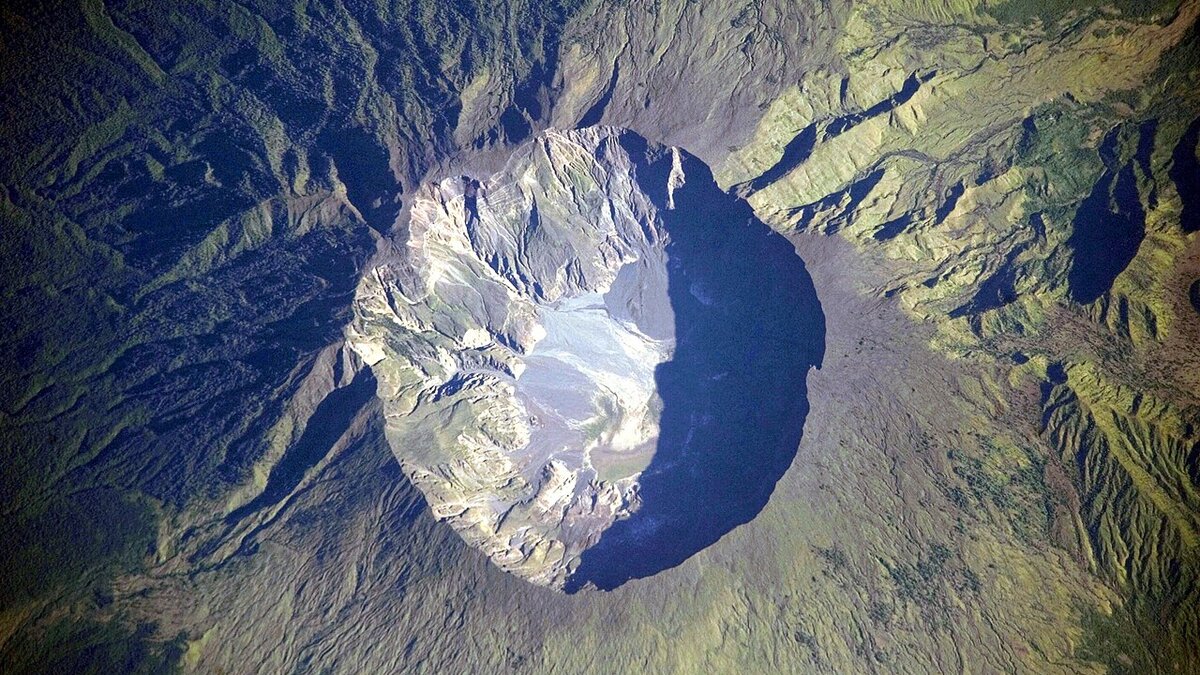
Cover image: Aerial view into Mount Tambora caldera on Sumbawa under dry season — photo by This image was taken by the NASA Expedition 20 crew., Public domain, via Wikimedia Commons.
Hiking trails on Mount Tambora in West Nusa Tenggara have been closed from 1 September 2026 until conditions improve, the Tambora National Park authority said. The Mount Tambora hiking closed September 2026 restriction is a preventive measure as dry-season forest-fire risk rises across Sumbawa, and follows national advisories that have already shut other high-risk routes.
Announcement details carried by ANTARA on 1 September 2026 note the closure covers all summit and crater approaches on the 2,722-metre stratovolcano that forms the Sanggar Peninsula on northern Sumbawa. No new trekking permits are being issued, and groups already in the booking pipeline are being notified to postpone. The park will review the ban once rainfall and fire-index forecasts improve. Related national context published 2 September shows 35 foreign aircraft were approved to fight Kalimantan fires and forest fires disruption to flights in Indonesia is under close watch, underscoring why high-altitude trails are being shut early rather than after a blaze starts.
Why is Mount Tambora closed to hikers now?
Tambora sits in a dry landscape where late-August and September winds and low humidity raise the chance of ground fires spreading fast. The ban from 1 September applies before any fire is reported on the massif, which is the point. Once a slope fire starts on Tambora's 6 to 7 km-wide caldera rim, evacuation and firefighting are difficult due to steep terrain and limited water. The closure also protects rescue capacity, which is already stretched on other volcanoes.
The decision sits within a broader national posture. On 1 September, park managers closed Tambora; days earlier, Mount Rinjani reopened on a limited basis from 1 September with tighter controls, showing that access is being tuned volcano by volcano rather than with a blanket rule. Travellers who had planned Tambora should not assume Rinjani or other peaks are automatically closed.
Where exactly is affected?
Mount Tambora (also called Tomboro) lies on the Sanggar Peninsula between the Flores Sea and Saleh Bay, at around 8°15′S 118°00′E, straddling Bima and Dompu Regencies. At 2,722 metres today, it is far lower than its pre-1815 height of about 4,300 metres before the VEI-7 eruption that created the vast caldera. All formal trailheads on both regency sides are under the same closure. Guided walks in the surrounding lowland savanna and coastal sections outside the national park boundary are not covered, but operators must still observe fire bans on burning and smoking.
For visitors weighing alternatives in West Nusa Tenggara, nearby coastal treks and cultural visits can substitute. Sumbawa's southern beaches and Moyo Island remain open, while on neighbouring Lombok, Bali and Lombok hotel occupancy trends and new things to do in Bali 2026 give a sense of capacity, though Tambora trekkers should target lower-altitude hikes until the all-clear.
How does this compare to other recent closures?
| Peak / park | Status from 1 Sep 2026 | Reason |
|---|---|---|
| Mount Tambora, West Nusa Tenggara | All hiking routes closed | Forest-fire threat, dry season |
| Mount Rinjani, Lombok | Limited reopening with controls | Calibrated wildfire risk management |
| Nine national parks (nationwide) | Earlier closures in late August | Preventive fire bans |
| Kalimantan forest zone | 35 foreign aircraft approved | Active firefighting support |
What should trekkers do if they booked Tambora?
- Contact the booking operator for rebooking to a later window; deposits are typically held as credit during fire closures.
- Switch to lowland itineraries such as Moyo Island or Komodo day trips that do not depend on high trails.
- Check daily forecasts with the park and avoid any open flame on savanna sections.
- Keep flexible flights: regional disruptions from haze have affected Mount Sinabung eruption flight cancellations at Kualanamu and could affect Sumbawa hops if fires spread.
Frequently asked questions
Is Mount Tambora closed in September 2026?
Yes. All hiking trails on Mount Tambora in West Nusa Tenggara have been temporarily closed from 1 September 2026 because of heightened forest-fire risks. The closure stays in place until the national park lifts the fire advisory.
Can I still visit Sumbawa without hiking Tambora?
Yes. Lowland beaches, Moyo Island and cultural villages remain accessible; the ban applies to national park summit and crater trails only. Operators must still follow fire bans on burning and smoking.
How long will the closure last?
No fixed end date was set. The park will reassess when humidity rises and the fire index improves, similar to how other parks tune reopenings in September.
What about Mount Rinjani and other volcanoes?
Rinjani is on a limited reopening from 1 September 2026 with tighter controls, so its status differs. Always check the specific national park notice for the volcano you plan to trek.